



As electronic devices become smaller, lighter, and more complex, circuit boards must not only fit into tight spaces but also withstand repeated flexing, vibration, and long-term use. Rigid-flex PCBs combine the structural strength of rigid boards with the routing flexibility of flexible PCBs, reducing the need for connectors and cables while enabling reliable, high-density interconnections in compact designs. However, achieving consistent quality requires precise control at every stage, from material selection and stackup design to lamination, drilling, and impedance control. Read on to explore PCBgogo's rigid-flex PCB manufacturing capabilities and how we turn complex designs into reliable, production-ready boards.
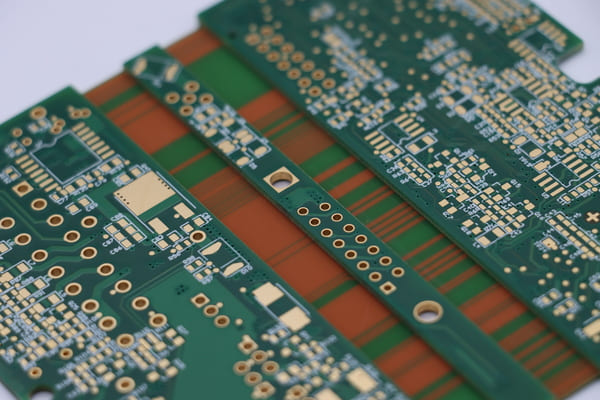
As the name implies, rigid-flex printed circuit boards(PCBs) are composite boards of rigid boards and flexible boards. Most rigid-flex circuits are multi-layered. A rigid-flex PCB can include one/several flex boards and rigid boards, which are connected through internally/externally plated-through holes.
When a design needs both solid component support and the freedom to bend through tight spaces, a rigid-flex PCB brings the two together in one seamless structure. Its rigid sections provide strength and stability, while the flexible sections fold, bend, and connect different areas of the device without extra cables or connectors. The result is a more compact assembly with fewer connection points and greater reliability. Turning that design into a dependable finished board requires precise control over materials, layer construction, copper thickness, and critical dimensions. With strong manufacturing expertise and careful process control, PCBgogo can deliver reliable, high-quality rigid-flex PCBs built to meet demanding design requirements. Explore the capabilities below to see how PCBgogo can support your next rigid-flex PCB project.
| No. | Item | Process Capability Parameter |
|---|---|---|
| 1 | PCB Type | Rigid-flex PCB |
| 2 | Layers | 1-26 layers |
| 3 | PCB size | Max: 250mm*700mm Min: 50*60mm |
| 4 | Material | Polyimide Flex+FR4 |
| 5 | Copper Thickness | 0.33-2OZ |
| 5 | Board Thickness | 0.3-2.0 mm |
| 6 | Board thickness tolerance | ±0.05 mm |
| 7 | Min Tracing/Spacing | ≥ 4/4 mil |
| 8 | Min. Hole Size | ≥0.1 mm |
| 9 | Impedance control tolerance | ±10% |
| 10 | Prototype lead time | As Fast as 24 Hours |
| 11 | Surface Finish | Immersion Gold (ENIG), OSP, Immersion Silver ENIG, Electric gold, IM-Ag, Electric Ag, Leaded/Lead-free HASL, IM-Sn, Electric Sn, OSP, Carbon, Pt, NI-Pd-Au |
| 12 | Special Specification | Half-cut/Castellated Holes, Impedance Control, Layer Stackup |
Note: If you have any special requirements regarding materials, stack-up, or other manufacturing processes, please specify them when requesting a quote. We can evaluate your specific needs and provide customized material selection and manufacturing solutions.
PCBgogo - Reliable, High-Quality PCB Manufacturing
Save time and money with an all-in-one solution for PCB fabrication, assembly, and parts. Reduce vendor coordination, avoid split shipments, and get consistent, reliable quality.
Get Free Quote >
Rigid-flex PCBs do more than combine rigid and flexible materials. They help designers create smaller, stronger, and more dependable products while simplifying the overall assembly.
Save space and reduce weight: Flexible sections can bend and fold around tight enclosures, eliminating bulky cables and connectors. This makes rigid-flex PCBs ideal for compact, lightweight devices.
Improve product reliability: Fewer connectors and solder joints mean fewer potential points of failure. The integrated structure also performs well in products exposed to vibration, movement, or repeated handling.
Offer greater design flexibility: Rigid-flex boards can connect components positioned at different angles or on multiple surfaces, giving engineers more freedom to work with complex product shapes.
Simplify assembly: A single rigid-flex PCB can replace multiple circuit boards, cables, and connectors. This reduces assembly steps, lowers the risk of wiring errors, and makes the final product easier to build.
Support stable electrical performance: Shorter signal paths and fewer interconnections can help reduce signal loss and connection-related interference in high-speed or high-frequency applications.
Lower total production costs: Although rigid-flex PCBs may cost more to manufacture than standard rigid boards, savings in connectors, wiring, assembly labor, testing, and maintenance can reduce the overall cost of the finished product.
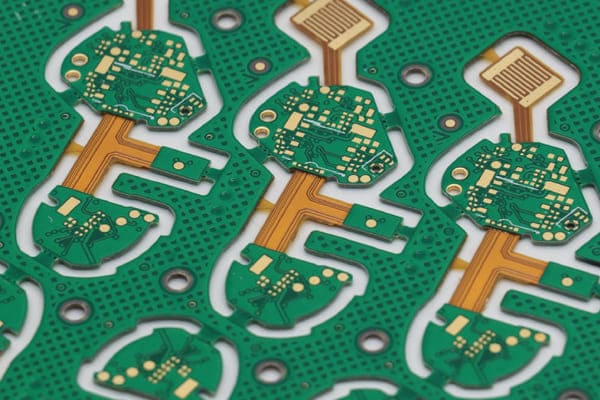
Because rigid-flex PCBs combine different materials in a complex multilayer structure, their quality depends on precise control at every stage of production. This makes the choice of manufacturing partner especially important, since material quality, production technology, delivery speed, and ongoing support can all affect the success of a project. PCBgogo provides one-stop rigid-flex PCB and PCBA manufacturing services, delivering a smooth, reliable experience from design review and fabrication to assembly, delivery, and after-sales support.
Quality materials: Carefully selected, quality-controlled materials help ensure dependable electrical performance, mechanical strength, and long-term durability.
Advanced manufacturing: Modern equipment and tightly managed processes support complex stackups, precise layer alignment, controlled impedance, and reliable rigid-to-flex transitions.
Thorough engineering support: Detailed file reviews and practical DFM feedback help identify potential production issues before manufacturing begins.
Fast, dependable delivery: Efficient production scheduling and order management help keep projects moving and reduce unnecessary delays.
24/7 customer service: PCBgogo's support team is available around the clock to answer questions, provide order updates, and help resolve technical or delivery concerns.
Responsive after-sales support: If an issue arises after delivery, a well-established support process ensures that it is reviewed carefully and handled promptly.
With advanced manufacturing capabilities, attentive service, and reliable after-sales support, PCBgogo makes it easier to move from a demanding rigid-flex design to a high-quality finished board. Whether quality, speed, or ongoing support matters most to your project, you can choose PCBgogo with confidence.
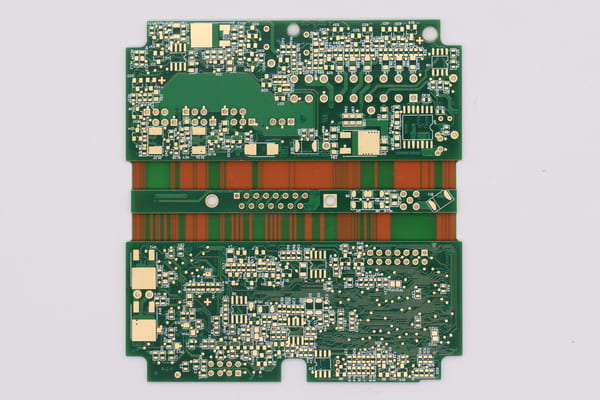
Rigid-flex PCBs are widely used in products where space is limited, components must fit at different angles, or reliable connections are essential. Their ability to combine structural support with flexible routing makes them well suited for both compact consumer devices and demanding industrial systems.
Wearables and portable electronics: Smartwatches, hearing aids, cameras, and compact handheld devices often leave very little room for separate boards and wiring. A rigid-flex PCB can fold around batteries, displays, sensors, and other internal components, helping designers use the available space more efficiently.
Medical devices: Patient monitors, diagnostic equipment, imaging systems, and wearable medical products require compact construction and dependable connections. Reducing connectors and soldered cable joints can simplify assembly and lower the risk of connection failures. Material selection and flex design should also match the product's operating environment and expected service life.
Automotive and aerospace systems: Camera modules, sensors, control units, navigation systems, and avionics must often operate in areas exposed to vibration, temperature changes, and limited installation space. Rigid-flex construction can reduce cable weight and keep connections secure, but the stackup, copper thickness, and material system must be selected for the actual environmental conditions.
Robotics and industrial equipment: Robotic arms, moving sensors, control panels, and automated machinery may require circuits that move repeatedly during operation. For these dynamic-flex applications, engineers must carefully consider bend radius, copper type, trace direction, and the placement of vias and components to prevent stress from concentrating in the flex area.
High-speed communication equipment: Rigid-flex PCBs can create shorter, more direct signal paths between interconnected sections. This can support better signal performance, but controlled impedance, reference-plane continuity, and the transition between rigid and flexible areas must be carefully designed.
From compact wearables to demanding automotive and industrial systems, rigid-flex PCBs give engineers more freedom to create smaller, lighter, and more reliable products. Their real value lies in turning complex internal connections into a simpler, more integrated design.
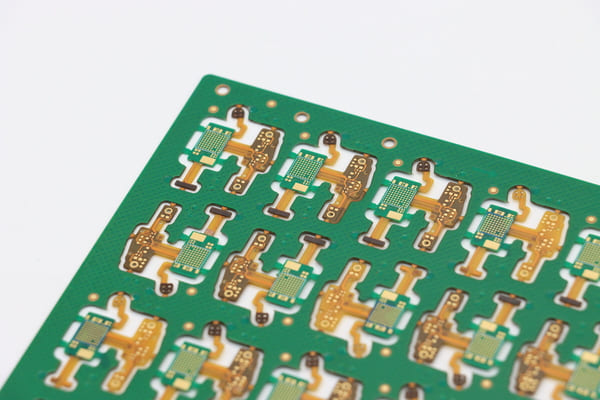
Reliable rigid-flex PCB manufacturing depends on how well every material, process, and design detail works together. With advanced production capabilities, quality-controlled materials, one-stop PCB and PCBA services, and responsive 24/7 support, PCBgogo helps turn complex designs into dependable finished boards. A well-made rigid-flex PCB does more than meet technical specifications; it gives your product the freedom to become smaller, lighter, and more integrated. Ready to move your project forward? Send your Gerber files to PCBgogo today and request a quote.
PCBgogo builds rigid-flex PCBs with 1 to 26 layers. Layer count depends mainly on routing density and how many rigid-to-flex transitions the design needs.
Prototype lead time starts at 24 hours. Actual turnaround varies with layer count, stackup complexity, and the surface finish selected.
Rigid-flex PCBs combine polyimide flex material with FR4 rigid layers. The polyimide sections allow folding and bending, while the FR4 sections provide the mechanical support needed for mounting components.
Rigid-flex PCBs usually cost more to manufacture than standard rigid boards. However, removing connectors, cables, and extra assembly labor can lower the total cost of the finished product.
Available finishes include immersion gold (ENIG), OSP, and immersion silver, along with electroplated gold, immersion tin, and leaded or lead-free HASL. The right choice depends on the board's application and reliability requirements.
Minimum trace width and spacing are 2 mil per 2 mil, and minimum hole size is 0.1mm. These tolerances support the fine-pitch routing that dense, multilayer rigid-flex designs typically require.

 日本語
日本語
 한국어
한국어

