Drag and Drop Upload
Or
All uploaded files are kept secure and strictly confidential.
We deploy advanced CNC lathes to fabricate high-precision machined components for diverse application scenarios. As a reliable manufacturer of CNC turned parts, we deliver customized CNC turning solutions tailored to your unique design specifications and performance requirements. Our top-grade CNC metal lathes guarantee tight dimensional tolerances, superior surface finish and consistent machining stability for both prototype validation and large-volume mass production.
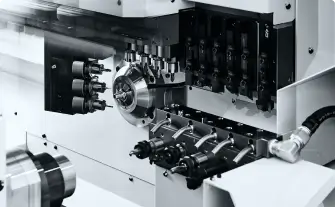
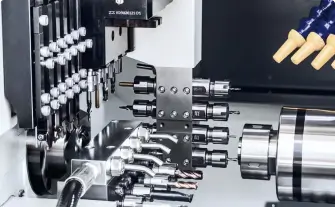
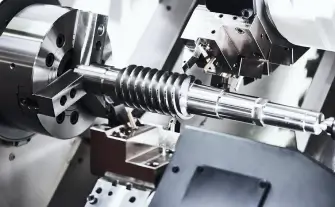
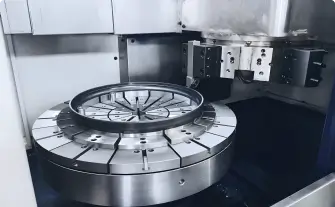
As an ISO 9001-certified partner, we manufacture components via CNC machining to meet your stringent specifications, guaranteeing precise fit and reliable performance. Our standard tolerances comply with ISO 2768-m for metals and ISO 2768-c for plastics. Ultra-tight precision down to ±0.005 mm is achievable according to your design requirements.
| Specifications | Metric | Imperial |
|---|---|---|
| Max. Machining Diameter | 431 mm | 17 in |
| Max. Machining Length | 990 mm | 39 in |
| Max. Swing Diameter | 350 mm | 13.7 in |
| Max. Spindle Bore | 40 mm | 1.5 in |
Review recommended and technically feasible values for the most common features of precision CNC turned parts.
| Feature | Recommended Dimensions |
Feasible Dimensions |
|---|---|---|
| Minimum Feature Size | Ø 2.5 mm | Ø 0.50 mm |
| Internal Edge Radius | R 8 mm | R 0.25 mm |
| Minimum Wall Thickness |
0.8 mm (Metals) 1.5 mm (Plastics) |
0.5 mm (Metals) 1.0 mm (Plastics) |
| Holes |
Diameter: Standard drill sizes Depth: 4 × diameter |
Diameter: Ø 0.5 mm Depth: 10 × diameter |
| Threads |
Size: M6 or larger Length: 3 × diameter |
Size: M2 |
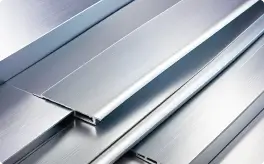
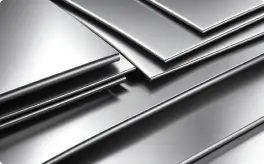
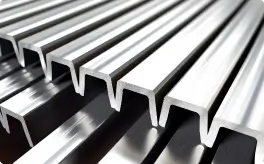
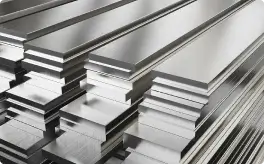
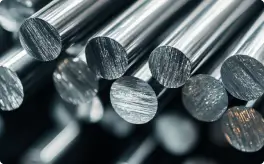
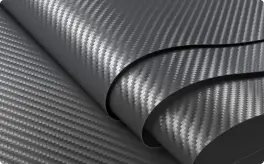
PCBgogo supports a wide range of industrial-grade materials for custom CNC turning services, including various metals and engineering plastics. All compatible materials offer stable machinability and consistent surface finish after precision turning. We select optimal raw materials according to your application scenarios, mechanical performance requirements, and budget, ensuring consistent part quality and long-term service stability for prototyping and mass production.




We conduct CNC machining in accordance with ISO 2768 standards.
| Nominal Size Range | Plastics (ISO 2768-m) | Metals (ISO 2768-f) |
|---|---|---|
| 0.5 mm up to 3 mm | ±0.1 mm | ±0.05 mm |
| Over 3 mm up to 6 mm | ±0.1 mm | ±0.05 mm |
| Over 6 mm up to 30 mm | ±0.2 mm | ±0.1 mm |
| Over 30 mm up to 120 mm | ±0.3 mm | ±0.15 mm |
| Over 120 mm up to 400 mm | ±0.5 mm | ±0.2 mm |
| Over 400 mm up to 1000 mm | ±0.8 mm | ±0.3 mm |
| Over 1000 mm up to 2000 mm | ±1.2 mm | ±0.5 mm |
| Over 2000 mm up to 4000 mm | ±2 mm | — |
Our comprehensive custom CNC turning solutions meet precision manufacturing requirements for high-specification industries. Outfitted with Swiss-type lathes, sliding head machines, vertical lathes and multi-axis turn-milling centers, we support prototype validation, low-volume trials and mass production. From micro-slender parts and standard shaft components to large-diameter heavy-duty workpieces, we adjust machining parameters, tolerances and surface finishes per your engineering drawings. We also arrange complete secondary treatments to deliver finished parts, streamline your supply chain and shorten lead times.
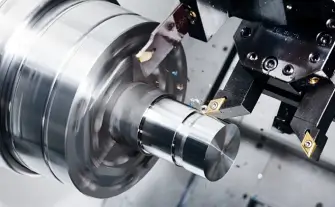
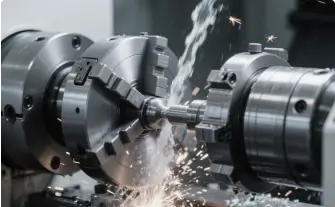
When you partner with PCBgogo for CNC turning, you gain access to comprehensive CNC turning capabilities. We combine ultra-stable precision, flexible lead times, and professional engineering collaboration to keep your product development on track, from prototype machining through mass manufacturing, with reliable on-time delivery even under tight schedules.






Generally, we recommend a minimum wall thickness of 0.5 mm for metal components and 1 mm for plastic components. However, these values largely depend on part dimensions; the larger the component, the greater the recommended minimum wall thickness. Please note that thinner walls are technically achievable. These values are only reference thresholds to minimize the risk of warping.
Please clearly specify if you require a defined fillet radius. Otherwise, machinable radii will be applied at the machinist’s discretion. As a general guideline, internal vertical edge fillets should be at least 1/3 of the depth. Internal horizontal edges can remain sharp or feature a fillet radius ranging from 0.5 mm to 1 mm.
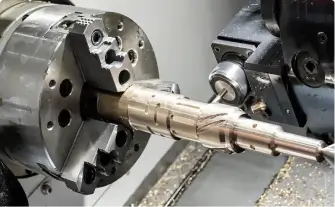
A CNC turning center performs turning operations. Also known as CNC lathes, these machines feature tooling mounted on a computer-controlled turret. CNC turning is a manufacturing process where the workpiece rotates while cutting tools remove material to form the target geometry.
Rough turning removes material at maximum volume without prioritizing precision or surface finish, bringing the workpiece close to its final shape. Finish turning completes the machining process to achieve the required dimensional accuracy and surface smoothness.
A standard CNC lathe typically features 2 axes with a single spindle, limited production capacity, and often lacks full enclosures. A CNC turning center is an upgraded version of a CNC lathe, supporting up to 5 axes with comprehensive cutting capabilities. It supports higher-volume production and commonly integrates milling, drilling and other secondary machining functions.
Beyond standard turning tools, CNC turning centers can be fitted with rotary tools such as end mills and drills, delivering greater machining flexibility to produce asymmetric features on parts. This boosts production speed and efficiency, lowers costs and improves operational safety. Compared with milling, turning has unique strengths: easy fabrication of radially symmetrical profiles, high precision from chuck-mounted workpieces, and superior surface finish.
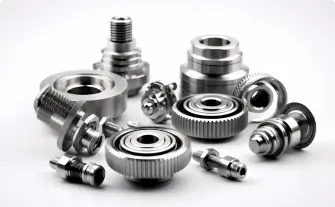
CNC turning produces a wide range of components including automotive fittings, knobs, tubing, gears, toy parts, flywheels, crankshafts, hubs and cam discs. It is widely used to manufacture precision components for automotive, aerospace, medical device, and other industries.

 日本語
日本語
 한국어
한국어