日本語
日本語
 한국어
한국어

Medical Device PCB: Types, Standards, and Design Guide
KEY DEFINITION A medical device PCB is a printed circuit board built to IPC Class 2 or Class 3 reliability standards for healthcare applications, including diagnostic systems and implantable devices. These boards use rigid, flexible, rigid-flex, and HDI structures, and must be manufactured under ISO 13485 quality systems with full material traceability before supporting FDA-regulated devices.
Ever wonder what actually keeps a pacemaker running for ten years without a single glitch? It is not magic, it is a printed circuit board engineered to a much higher bar than the one in your laptop.
In this article, we will look at where these boards get used, what they are made of, how they get designed, and the standards that hold the whole thing together.
Where Medical Device PCBs Are Used
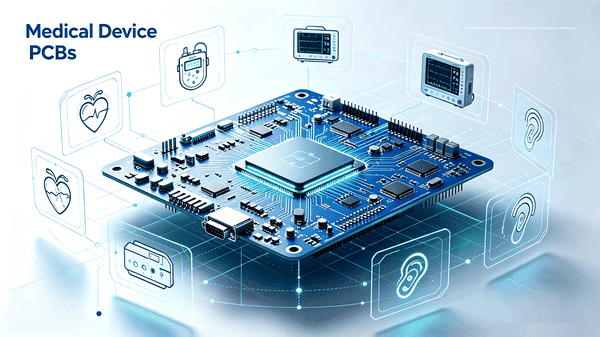
Medical device PCBs power equipment across three broad settings: diagnostic, therapeutic, and monitoring.
Different medical devices put different demands on a PCB, and matching the right construction to the right demand is where most design decisions start. Here are the applications where this matters most.
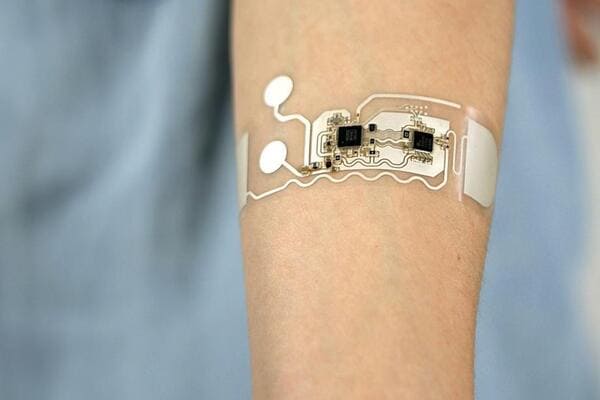
Wearables: Continuous glucose monitors, health bands, and ECG patches worn daily against the skin, where comfort and long battery life matter as much as accuracy. Flex and HDI constructions are the common fit.
Patient monitors: Bedside and wearable monitors tracking vitals like blood pressure and heart rate, where high reliability and stable signal integrity matter more than size. Rigid and multilayer boards typically handle this load.
Ventilators: Life support equipment where downtime is not an option and the board has to perform continuously under Class 3 reliability standards. Multilayer rigid construction is standard here.
Implantables and hearing aids: Devices placed inside or worn directly on the body, where size constraints and biocompatibility outweigh almost every other factor. Rigid-flex and HDI boards make the miniaturization possible.
Surgical lighting and imaging systems: High-power equipment that generates significant heat and needs to operate reliably through long procedures. These call for materials with stronger thermal management, like aluminum or copper core constructions, rather than standard FR4.
Medical PCB Materials: HDI, Rigid, Flexible, and Rigid-Flex
Medical PCBs are built on four core constructions, and the right one depends on where the device sits relative to the patient.
Rigid PCBs
Rigid PCBs use a solid FR4 or polyimide substrate that holds its shape permanently. They are the standard for benchtop monitors, infusion pump controllers, and cart-based diagnostic equipment where mechanical stability matters more than flexibility.
Flexible PCBs
Flexible PCBs are built on thin polyimide film that bends and folds without cracking. This is the default choice for wearable health bands and glucose monitors that need to move with the patient's body.
Rigid-Flex PCBs
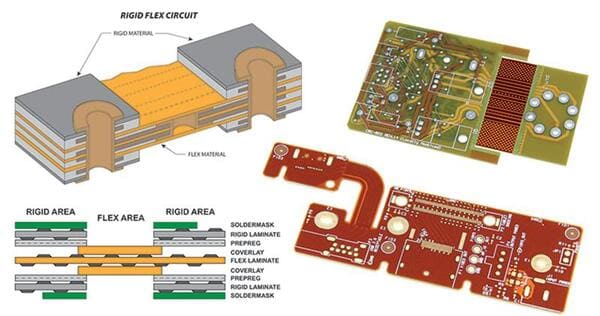
Rigid-flex PCBs combine rigid mounting sections with flexible interconnects, removing the cable connectors that would otherwise sit between separate boards. Fewer connectors means fewer failure points, which is why pacemakers and cochlear implants are built this way.
HDI PCBs
HDI (high-density interconnect) PCBs use laser-drilled microvias to pack more routing into less space. They support the dense sensor arrays and small processors found in modern wearables and portable diagnostic units.
A quick side-by-side makes the trade-offs easier to compare.
| Type | Flex Capability | Typical Use | Relative Cost |
|---|---|---|---|
| Rigid | None | Benchtop monitors | Low |
| Flexible | High | Wearables, patches | Medium |
| Rigid-Flex | Moderate | Implantables | High |
| HDI | Low to none | Compact diagnostics | Medium to high |
What Actually Drives the Design Decisions Behind a Medical PCB
Picking the right specs for a medical-grade PCB usually comes down to where the device sits relative to the patient and how it will be sterilized. Match these factors to your application and the right construction becomes obvious fast.
1. Patient contact and flexibility: Devices worn on or implanted in the body need a PCB that moves without cracking. Flexible and rigid-flex constructions handle this, while a board sitting inside a benchtop monitor has no reason to flex at all.
2. Heat dissipation: High-power applications like surgical lighting or imaging scanners generate more heat than a standard substrate can dump efficiently. These call for materials with stronger thermal transfer properties rather than standard FR4.
3. Footprint constraints: Hearing aids, sensors, and other miniature devices need PCBs that shrink without losing performance. HDI construction and finer microcircuit techniques are what make that miniaturization possible.
4. Sterilization and biocompatibility: Implants and prosthetics face repeated sterilization cycles and direct tissue contact, which rules out materials that degrade under heat or chemical exposure. Polyimide substrates hold up well here because of their thermal stability and chemical resistance.
5. Mechanical durability: Devices that get handled, dropped, or flexed repeatedly need a board that survives daily wear without delaminating. Rigid-flex designs are often the answer when a device needs more durability than a pure flex board can offer.
Quality Standards That Govern Medical PCB Manufacturing
Medical PCBs are manufactured under a stack of IPC standards layered with FDA design control expectations, not a single certification.
IPC-6012 (Revision F): Sets the qualification and performance specification for rigid boards across Class 1, 2, and 3.
IPC-6011A: Defines Class 3 as high-reliability electronics where downtime creates direct safety risk, a category that explicitly includes medical equipment.
IPC-A-600: Defines visual acceptance criteria for defects like pad lifting or plating voids, checked during incoming quality control.
ISO 13485:2016: The quality management certification most medical PCB fabricators hold, separate from FDA clearance itself.
Most medical PCB fabricators also hold ISO 13485:2016 certification, the quality management standard specific to medical device manufacturing. This does not replace FDA clearance for the finished device, but it shows the supplier's documentation and corrective action process aligns with what shows up in a device's design history file.
Challenges and Trends Shaping Medical PCB Design
The biggest challenge in medical PCB design right now is fitting more function into less space without compromising the inspection rigor Class 3 demands.
Miniaturization is pushing more designs toward HDI and rigid-flex construction, since both pack higher component density into the small footprints implantables and wearables require. At the same time, remote patient monitoring is driving demand for low-power flexible PCBs that can run on a coin-cell battery for months. Supply chain traceability has also become a bigger focus after recent component shortages, pushing manufacturers toward tighter lot-level documentation rather than relying on supplier assurances alone.
Final Takeaway
The true quality of a medical device PCB is not determined only by its copper routing layout, but by strict control over compliance and material standards. This includes IPC Class 3 inspection requirements, an ISO 13485-certified quality management system, and carefully selected base materials and surface finishes designed to meet sterilization processes (such as high-temperature autoclaving and chemical disinfection) as well as long-term biocompatibility requirements. Together, these factors define how reliably a PCB performs in complex medical environments, not just its electrical performance.
At PCBgogo, we follow strict medical industry standards and integrate quality control into every stage of production, from engineering review and material selection to process control and final inspection. With stable manufacturing capabilities and rigorous testing systems, we help customers reduce risks caused by material variation, process fluctuations, or assembly deviations, improving the long-term reliability and service life of medical devices.
If you are looking for a reliable manufacturing partner, PCBgogo can provide a one-stop medical PCB solution from design support to mass production, ensuring a balanced focus on performance, compliance, and reliability.
Frequently Asked Questions
What is the difference between Class 2 and Class 3 medical PCBs?
Class 2 covers dedicated commercial and industrial electronics with extended life expectations but no catastrophic failure risk. Class 3, required for most medical devices under IPC-6011A, applies stricter inspection and acceptance criteria because downtime can directly endanger patient safety.
Do medical device PCBs need ISO 13485 certified manufacturing?
FDA clearance applies to the finished device rather than the bare board, but most device makers require their PCB suppliers to hold ISO 13485 certification. This keeps the supplier's quality system aligned with the documentation expected in the device's design history file.
Can flexible PCBs be used in implantable medical devices?
Yes. Flexible and rigid-flex PCBs are common in implantables like pacemakers because they reduce connector count and fit compact, irregular spaces inside the body. They typically need additional encapsulation for long-term biocompatibility.
What surface finish works best for medical PCB connectors?
ENIG is the standard finish for general medical PCB pads because of its flat, stable surface. Hard gold plating is preferred for connectors and contacts that undergo repeated mechanical engagement since it resists wear better.
How long does it take to manufacture a medical-grade PCB?
Lead time depends on layer count and whether the design needs HDI or rigid-flex construction, and it varies by manufacturer. Confirm current lead times directly with your fabricator since medical-grade inspection typically adds time versus standard commercial boards.