日本語
日本語
 한국어
한국어

How to Choose the Right Automotive PCB Assembly Manufacturer
Modern vehicles run on code and copper as much as they do on fuel or batteries. A single mid-range car can carry dozens of electronic control units, and every one of them depends on a printed circuit board that has to survive vibration, heat, moisture, and years of daily abuse without failing. When a PCB in an infotainment system glitches, it's an annoyance. When a PCB in a braking, steering, or battery-management system glitches, it's a safety issue. That's why choosing the right automotive PCB assembly manufacturer is one of the highest-stakes sourcing decisions an automotive electronics team will make.
This guide walks through exactly what to look for, what questions to ask, and which red flags should send you looking elsewhere — so you can shortlist a partner with confidence instead of guessing from a website.
Why the Stakes Are Higher for Automotive PCB Assembly
Automotive electronics don't get the luxury of a controlled indoor environment. Boards inside the engine bay face temperature swings from well below freezing to over 125°C. Boards near the drivetrain absorb constant vibration. Boards throughout the cabin have to work reliably for 10-15 years, not the 2-3 year lifespan expected of a consumer gadget.
That's why the automotive industry holds PCB assembly to a different standard than general electronics manufacturing:
Zero-defect expectations. Automotive OEMs typically demand near-zero PPM (parts-per-million) defect rates, far stricter than typical commercial tolerances.
IATF 16949 compliance. This is the automotive industry's dedicated quality management standard, built on top of ISO 9001, with additional requirements around defect prevention, traceability, and continuous improvement.
Long product lifecycles. Automotive programs often run for a decade or more, meaning your manufacturer needs to guarantee component availability and process consistency for years after initial production.
Harsh-environment reliability. Conformal coating, thermal management, and rigorous stress testing aren't optional extras — they're baseline requirements.
Any manufacturer that treats an automotive PCB assembly order the same way it treats a consumer prototype run is not the right fit. Here's how to tell the difference.
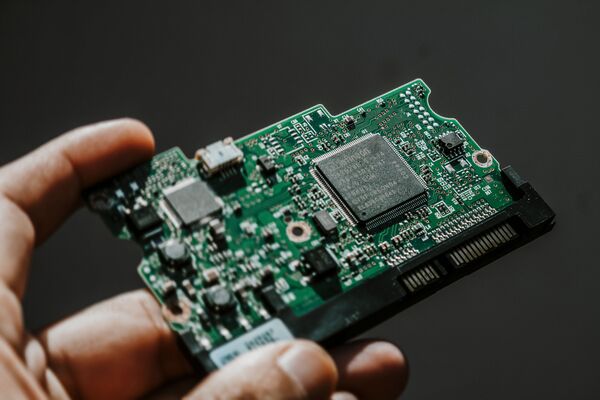
1. Verify Automotive-Grade Certifications, Not Just ISO 9001
ISO 9001 is a reasonable baseline, but it's not automotive-specific. Look specifically for:
IATF 16949 — the automotive quality management standard
UL certification for safety compliance
RoHS and REACH compliance for restricted substances
ISO 14001 if environmental responsibility matters to your supply chain policy
A certificate alone doesn't guarantee execution, though. Ask to see how the certification translates into actual shop-floor practice — traceability records, defect-rate data, and inspection reports for past automotive builds. A manufacturer confident in its process will share this without hesitation.
2. Confirm Real Automotive PCB Assembly Experience
Automotive PCBs aren't one uniform category — a manufacturer needs proven experience across the types of boards your program actually uses:
Multilayer and HDI (High-Density Interconnect) PCBs for compact ECUs and ADAS modules
Rigid-flex PCBs for space-constrained assemblies like dashboards and door modules
High-temperature and high-current boards for powertrain and battery-management applications in EVs
Ask for case studies or reference builds in categories close to your own application — infotainment, ADAS, EV battery systems, or body control modules are all quite different design challenges.
This is an area where PCBgogo has built a genuinely strong track record. As a factory that operates its own in-house facilities rather than outsourcing to third-party shops, PCBgogo has direct control over process consistency from prototype through mass production — a real advantage when an automotive program needs to scale without re-qualifying a new vendor partway through.
3. Look for True One-Stop, Design-to-Assembly Capability
Automotive projects rarely stay confined to “just assembly.” Somewhere along the way you'll need PCB fabrication, DFM (Design for Manufacturability) review, component sourcing, assembly, and functional testing — and every hand-off between separate vendors introduces delay, miscommunication, and quality risk.
A manufacturer that offers one-stop service, from design and fabrication through final assembly, removes those hand-off points entirely. This is exactly the model PCBgogo is built around: instead of splitting design, fabrication, and assembly across different subcontractors, PCBgogo runs the full pipeline in-house, which means:
Faster turnaround, since there's no waiting on external fabrication or assembly partners
Tighter quality control, since the same team that engineers the board also builds it
A single point of accountability if something needs troubleshooting
For automotive customers juggling tight development timelines, this consolidated approach often shaves weeks off a project compared to coordinating multiple separate suppliers.
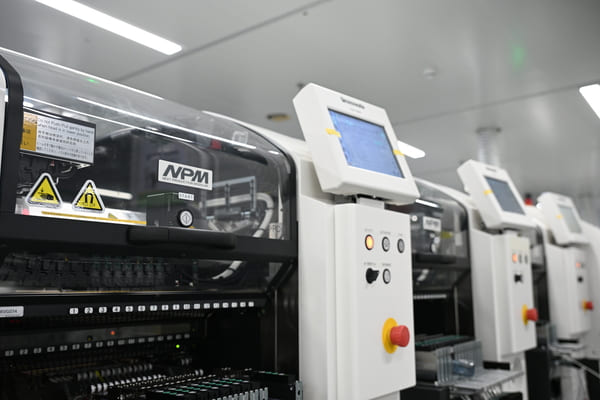
4. Scrutinize the Quality Control and Testing Process
Ask exactly how a candidate manufacturer verifies board quality before it ships — the answer should go well beyond a visual check. Look for a layered testing approach that includes:
Automated Optical Inspection (AOI) to catch placement and soldering defects
X-ray inspection for BGA and other hidden-joint components
In-Circuit Testing (ICT) and Functional Testing to confirm the board performs as designed
First article inspection for new builds before a full production run begins
For automotive-grade boards, ask specifically whether conformal coating, thermal cycling, and vibration testing are available — these aren't standard for consumer electronics, but they matter enormously for under-hood or safety-critical applications.
5. Evaluate Material and Process Flexibility
Automotive PCBs often call for materials beyond standard FR-4 — high-Tg laminates for heat resistance, metal-core boards for thermal dissipation in power modules, or ceramic substrates for extreme environments. A manufacturer's material catalog and process capabilities (surface finish options, controlled impedance, heavy copper, etc.) should match what your specific application demands, not just what's cheapest to stock.
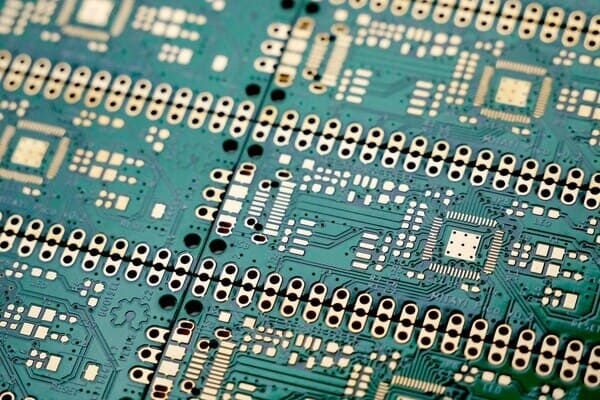
6. Check Lead Times and Production Scalability
Can the manufacturer support you from a handful of prototype boards through a production run of tens of thousands, without switching production lines or re-qualifying tooling? Automotive programs typically move through multiple stages — engineering validation, production validation, and full-volume manufacturing — and switching manufacturers between these stages is one of the most common ways defects resurface after they've already been solved once.
This is another area where an in-house, one-stop manufacturer has a structural advantage: PCBgogo's own facilities are set up to support everything from small-batch prototyping to volume production, so a program doesn't need to re-shop for a new vendor as it scales.
7. Ask About Component Sourcing and Supply Chain Transparency
The global chip shortage of recent years made painfully clear how much a PCB assembly partner's sourcing network matters. Ask:
Do they source components directly from authorized distributors?
Can they flag long-lead-time or end-of-life components early in the design process?
Is there a clear policy on counterfeit-part prevention?
A manufacturer with strong sourcing relationships can often save an automotive program from costly redesigns forced by component obsolescence.
8. Weigh Cost Against Total Value, Not Just Unit Price
The lowest quote per board is rarely the lowest total cost. A cheaper assembly run that fails incoming inspection, requires rework, or ships late can easily cost more once you factor in schedule delays and expedited freight. Request a transparent, itemized quote — tooling, unit price at your target volume, testing, and any material adders — and compare candidates on the same basis.
PCBgogo is known for pairing competitive, transparent pricing with the responsiveness of a factory-direct model — since there's no third-party markup layered on top of outsourced fabrication or assembly, quotes tend to reflect the actual cost of production rather than a distributor's margin.
9. Test Communication and Support Before Committing Volume
Before signing on for a full production run, run a small prototype or low-volume order and pay attention to:
How quickly and clearly they respond to technical questions
Whether they offer proactive DFM feedback rather than silently building whatever file you send
Whether you get a dedicated point of contact or get routed through a general inbox
A manufacturer that's slow or vague on a small order is unlikely to improve once the stakes — and the order size — go up.
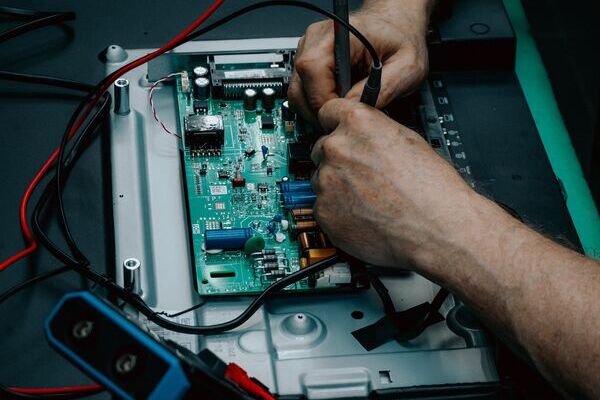
Quick Checklist: Choosing an Automotive PCB Assembly Manufacturer
IATF 16949 and relevant automotive certifications in place
Documented experience with your specific board type (HDI, rigid-flex, high-current, etc.)
One-stop capability from design through fabrication and assembly
Full testing suite: AOI, X-ray, ICT/functional test, and automotive-specific reliability testing
Proven scalability from prototype to full production volume
Transparent component sourcing and supply chain visibility
Transparent, itemized pricing and total-cost thinking
Responsive communication, validated on a small test order first
Final Thoughts
Choosing an automotive PCB assembly manufacturer isn't about finding the cheapest quote — it's about finding a partner whose certifications, process control, and scalability match the reliability your vehicle program actually requires. A one-stop manufacturer that keeps design, fabrication, and assembly under one roof, like PCBgogo, removes many of the hand-off risks that come with juggling multiple vendors, while still giving you the flexibility to scale from prototype to full production with the same trusted team.
If you're currently evaluating partners for an automotive PCB program, it's worth requesting a quote and a DFM review early — before your design is finalized — so any manufacturability issues surface while they're still cheap to fix.