日本語
 한국어

Anodized Aluminum Colors: Complete Guide to Options, Matching and Durability
QUICK ANSWER Aluminum can be anodized in clear, black, bronze, gold, red, blue, green, purple and many other colors. Type II sulfuric anodizing offers the widest color range, while Type III hardcoat is normally limited to natural gray, dark bronze and black. Final color varies with alloy, surface finish, coating thickness, coloring method and sealing, so a color code alone cannot guarantee an exact match.
Why do a camera housing, bicycle component, or laptop body keep its rich metallic finish without looking painted? The answer is often colored anodizing.
However, choosing a color is not as simple as picking one from a chart. The same black or blue can look different across alloys, surface finishes, and production batches. This guide explains which anodized aluminum colors are available, why they vary, and how to select and specify a finish that can be produced consistently.
What Is Anodized Aluminum?
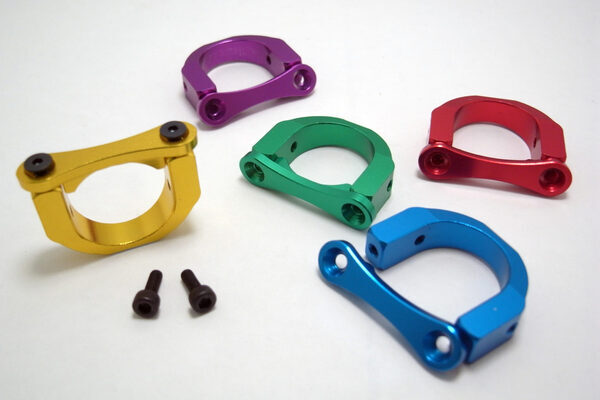
Anodized aluminum is aluminum whose natural oxide surface has been deliberately thickened through an electrochemical process. Unlike paint or plating, the anodic oxide is formed from the aluminum itself, so it becomes an integral part of the surface rather than a separate coating that can peel away.
During anodizing, the aluminum component is immersed in an electrolytic bath and connected as the anode in an electrical circuit. The resulting reaction creates a controlled aluminum oxide layer containing microscopic pores. These pores can absorb dyes or receive other coloring treatments, which is how manufacturers produce different anodized aluminum colors. A final sealing step closes the pores, locks in the color, and improves corrosion resistance.
Before treatment, machined aluminum normally has a silver gray appearance. Polishing creates a brighter, more reflective surface, while brushing, bead blasting, and chemical etching produce different textures. Because the anodic layer remains partly transparent, these underlying finishes continue to influence the final color and gloss.
What Are the Main Types of Anodizing?
The anodizing method determines the coating properties, available colors, and intended application:
Type I anodizing: This process uses chromic acid to create a relatively thin protective layer. It is commonly associated with corrosion-resistant aerospace components but is less suitable when a broad decorative color range is the main requirement.
Type II anodizing: This widely used sulfuric acid process creates a porous oxide layer that accepts dyes effectively. It is the standard choice for decorative finishes such as black, blue, red, green, gold, and many custom shades.
Type III anodizing: Also called hard anodizing, this process produces a thicker, harder surface designed primarily for wear resistance. Its natural tone is often darker, which can make bright or tightly controlled decorative colors more difficult to achieve.
The Aluminum Anodizers Council recommends specifying the alloy, temper, mechanical finish, chemical preparation, and anodic oxide type because each factor can change the finished appearance.
Anodized aluminum colors chart for practical selection
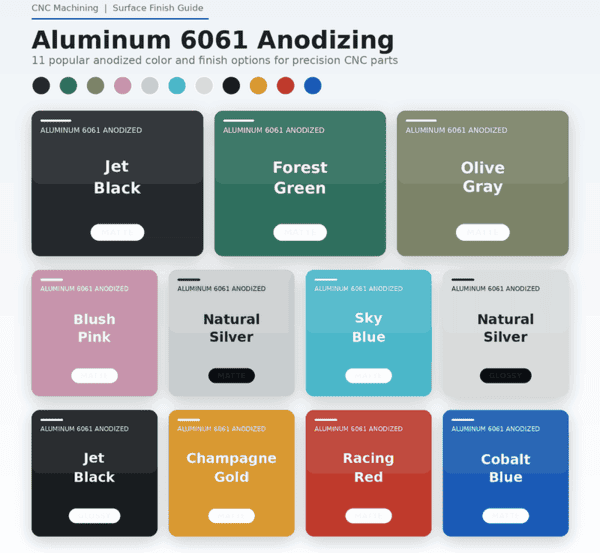
The most useful anodized aluminum colors chart compares visual effect with production behavior, not just hue. Availability varies by supplier, alloy, part size, and the coloring route, so treat this chart as a selection guide and confirm the final choice on representative samples.
| Color | Typical Method | Type II | Type III | UV Stability | Batch Consistency | Common Uses | Main Limitation |
|---|---|---|---|---|---|---|---|
| Clear/Natural | Undyed | Yes | Yes | Excellent | High | Industrial parts | Tone depends on alloy |
| Black | Dye/electrolytic | Yes | Common | Medium–excellent | High | Electronics, optical parts | May turn bronze/purple |
| Bronze/Champagne | Electrolytic | Yes | Limited | Excellent | High | Architecture | Limited shade range |
| Gold | Dye/electrolytic | Yes | Limited | Varies | Medium | Decorative parts | "Gold" covers many shades |
| Red | Organic dye | Yes | Rare | Low–medium | Medium | Branding, controls | UV fading risk |
| Blue | Organic dye | Yes | Rare | Medium | Medium | Electronics, sports | Can shift toward purple |
| Green | Dye/interference | Yes | Rare | Varies | Medium–low | Consumer products | Supplier dependent |
| Purple/Pink/Orange | Organic dye | Yes | Usually no | Low–medium | Low–medium | Decorative parts | Harder to repeat |
| White | Not normally achievable | No true white | No | — | — | — | Use coating instead |
How to Choose the Right Anodized Aluminum Color
The right anodized color must satisfy both appearance and performance requirements. Before selecting a shade, consider where the part will be used, how much wear it will experience, and how closely its color must match other components.
1. Consider the Operating Environment
For indoor products, Type II anodizing offers the widest range of decorative colors. Outdoor parts require greater attention to lightfastness because some organic dyes may fade under prolonged UV exposure. Clear finishes and electrolytic bronze or black are generally more suitable for long-term exterior use.
2. Decide Whether Appearance or Wear Resistance Matters More
Choose Type II anodizing when color variety and cosmetic quality are the priorities. Choose Type III hard anodizing when abrasion resistance and surface durability matter more. Because Type III produces a naturally darker oxide layer, it is normally limited to black, gray, brown and other dark tones.
3. Define the Required Color Consistency
Exact Pantone or RAL matching is difficult because the final shade depends on the alloy, surface texture and anodizing process. For brand-critical parts, use the color code as a target and approve physical limit samples before production. Parts that must match should also use the same alloy, surface preparation and production batch.
4. Confirm That Anodizing Is the Right Finish
Anodizing is ideal when a durable metallic appearance is required. However, powder coating, paint or PVDF may be more appropriate for opaque white, highly precise brand colors or finishes that must remain consistent across different aluminum alloys.
Recommended Anodized Finishes by Application
| Application | Recommended Finish |
|---|---|
| Consumer electronics | Type II anodizing with controlled dye and approved samples |
| Optical equipment | Matte black anodizing with a defined reflectivity requirement |
| Outdoor architecture | Electrolytic bronze or black, or a qualified interference color |
| High-wear components | Type III hard anodizing, with performance prioritized over exact color |
| Brand-critical products | Type II custom color with approved master and limit samples |
| White or exact opaque colors | Powder coating, paint or PVDF |
Design Guidelines for Colored Anodized Parts
Good color consistency starts with the part design, not the dye tank. Before releasing a cosmetic aluminum part for production, address these three points.
1. Use the Same Alloy for Matching Parts
Parts made from different aluminum alloys can develop noticeably different shades, even when anodized together. For components that sit next to each other, use the same alloy, temper, material lot, and surface preparation whenever possible. If mixed alloys are unavoidable, a seam or intentional color contrast can make the difference less obvious.
2. Define Cosmetic Surfaces and Rack-Mark Locations
Anodizing requires electrical contact between the part and the rack, so a small contact mark is usually unavoidable. Clearly identify primary, secondary, and non-cosmetic surfaces on the drawing, then specify where rack marks are acceptable. Hidden mounting faces, internal holes, and areas covered after assembly are usually practical locations.
3. Approve a Production-Representative Sample
A sample is only useful when it represents the final part. It should use the same alloy, machining process, surface texture, anodizing type, color, and sealing method planned for production. For example, a polished 6061 color chip will not accurately predict how a bead-blasted 7075 housing will look. For appearance-critical parts, approve an actual first article whenever possible.
Critical fits, threads, grounding points, and electrical contacts may also require machining allowance or masking. Once these design details are settled, they must be documented clearly to avoid confusion during production. Next, let’s look at how to specify these anodizing requirements on an engineering drawing.
How to Specify Anodized Color on an Engineering Drawing
A clear engineering drawing should define the anodizing type, class, color, surface preparation, coating thickness, masking, and cosmetic requirements. At a minimum, include the following information:
Material: Aluminum alloy and temper
Anodizing requirement: Applicable standard, type, and class
Color: Standard color or target Pantone/RAL reference
Coating thickness: Required range when functionally important
Surface preparation: As-machined, brushed, polished, bead-blasted, or etched
Appearance control: Approved sample and acceptable color range
Special instructions: Masked areas, cosmetic surfaces, and permitted rack-mark locations
Example Drawing Callout
Finish: Anodize per MIL-PRF-8625, Type II, Class 2, black. Bead blast before anodizing. Match approved sample [sample ID]. Mask identified threads and electrical contact surfaces. Rack marks are permitted only on non-cosmetic surfaces.
Use MIL-PRF-8625 for applicable non-architectural components. Architectural aluminum may require AAMA 611, while automotive, aerospace, and medical parts may be governed by separate industry or customer specifications.
This example is a starting point, not a universal specification. Confirm the coating thickness, color tolerance, inspection method, and masking requirements with the anodizer before releasing the drawing for production.
How Are Anodized Aluminum Colors Created?
Anodized aluminum colors are created through a controlled sequence of surface preparation, oxide formation, coloring, sealing, and inspection. Each stage influences the final shade, texture, durability, and consistency, so color anodizing is more than simply placing a finished part in dye.
Step 1: Prepare the Aluminum Surface
The final appearance begins before anodizing. Oils, machining residue, dirt, and natural oxide must be removed so the surface reacts evenly during treatment.
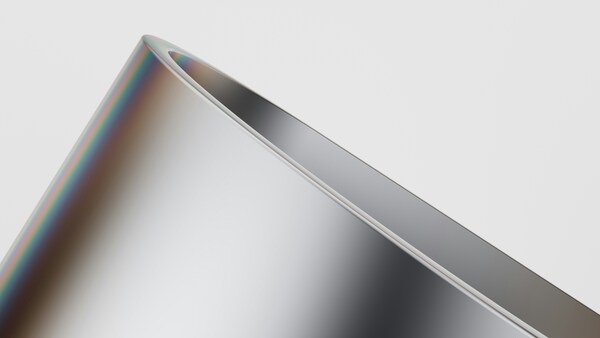
Depending on the desired look, the part may also be polished, brushed, bead blasted, or chemically etched. These treatments change how the aluminum reflects light:
Polishing produces a brighter, more reflective appearance.
Brushing creates a directional grain.
Bead blasting gives the surface a soft, matte texture.
Chemical etching helps create a more uniform satin finish.
Because the anodic layer follows the existing surface, scratches, tool marks, and inconsistent textures may remain visible after coloring.
Step 2: Form the Porous Oxide Layer
The prepared aluminum is immersed in an electrolyte bath and connected as the anode in an electrical circuit. Applying direct current converts the surface into a controlled aluminum oxide layer.
This layer contains microscopic pores that can receive dyes or metallic deposits. Its thickness, pore structure, and uniformity influence how much color the surface accepts and how dark the finished shade becomes.
Type II sulfuric acid anodizing is commonly used for decorative colors because its porous structure accepts dyes effectively. Type III hard anodizing creates a thicker, more wear-resistant layer, but its naturally darker appearance can make bright colors less predictable.
Step 3: Add the Color
After the porous oxide layer has formed, the manufacturer selects a coloring method based on the required shade, durability, environment, and production consistency.
Dye Coloring
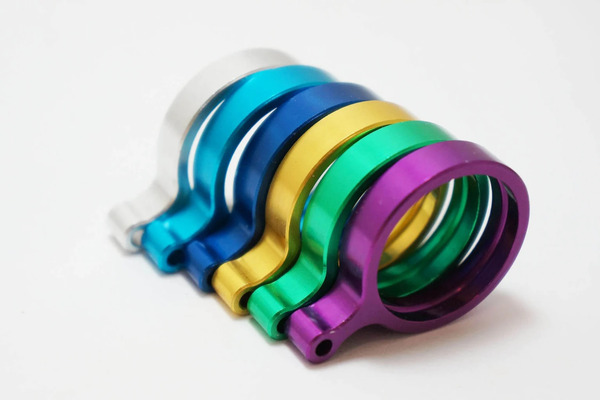
Dye coloring immerses the anodized part in an organic or inorganic dye bath. The open pores absorb the dye before the surface is sealed.
This method offers:
A broad selection of colors
Bright and saturated shades
Light, medium, and dark color options
Greater flexibility for decorative products
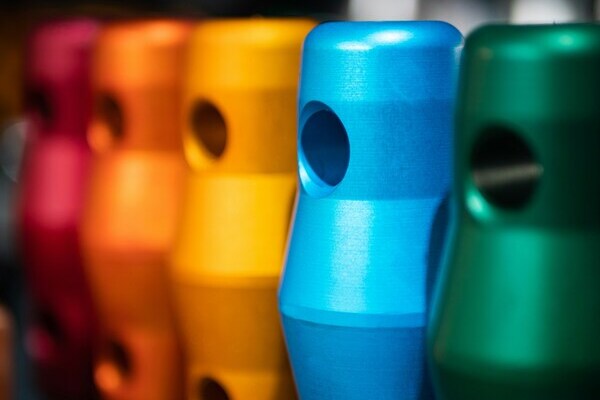
Common dyed colors include black, blue, red, green, gold, and brown. The final shade depends on the alloy, oxide thickness, dye formulation, bath temperature, immersion time, and sealing process.
Electrolytic Coloring
Electrolytic coloring deposits metallic salts near the bottom of the anodic pores. Tin, cobalt, and nickel are commonly used to produce champagne, bronze, gray, and black tones.
This method generally provides:
Strong resistance to ultraviolet exposure
Good outdoor color stability
Reliable dark and muted tones
Better long-term color retention
Electrolytic coloring is widely used for architectural components and exterior aluminum products where durability is more important than a large color range.
Integral Coloring
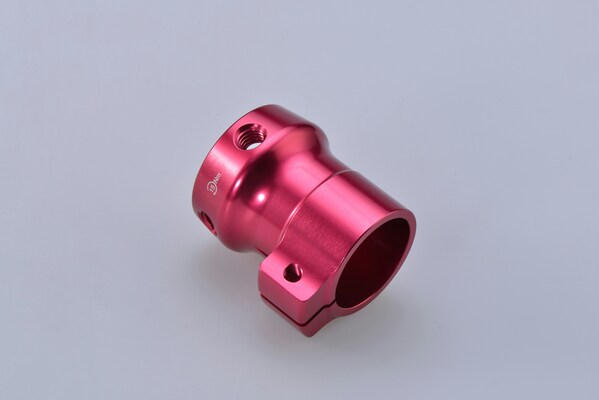
Integral coloring develops the color while the anodic oxide layer is being formed. The color becomes part of the anodizing process rather than being added through a separate dye bath.
Integral coloring can produce durable bronze, gray, brown, and black finishes. However, it offers fewer color choices and may cost more than conventional dye or electrolytic coloring.
Interference Coloring
Interference coloring modifies the pore structure and then deposits a small amount of metal inside it. The resulting color comes from the way light interacts with the modified surface.
This specialized method can create blue, green, yellow, gray, and red tones with good outdoor stability, although availability depends on the anodizing supplier.
Step 4: Seal the Anodized Surface
After coloring, the pores must be sealed to retain the color and improve corrosion resistance. Common options include hot water sealing, nickel acetate sealing, and other application-specific sealing processes.
Proper sealing improves:
Color retention
Corrosion resistance
Stain resistance
Long-term coating stability
An unsuitable or poorly controlled seal can change the shade or reduce performance, so the sealing method should match the product’s operating environment.
Step 5: Inspect the Finished Color
The anodized parts are inspected for shade, gloss, surface uniformity, coating thickness, and visible defects. Color-critical products should be compared with an approved physical sample under controlled lighting.
Why do anodized aluminum colors vary in production?
Anodized aluminum colors vary because material, surface, electrochemistry, geometry, and viewing conditions all influence appearance. A stable bath cannot correct a different alloy or texture.
Alloy and temper: Copper, silicon, magnesium, zinc, and other constituents affect oxide formation and base tone. Keep cosmetic parts in one assembly on the same alloy and temper whenever possible.
Surface preparation: The CNC surface finish affects how the anodized part reflects light. Polished and machined surfaces usually appear brighter, while blasted or etched surfaces often look darker and more matte. Keep the roughness and pretreatment consistent across all visible surfaces.
Oxide and bath conditions: Current, temperature, thickness, dye concentration, time, and sealing change dye uptake.
Racking and geometry: Contact points, sharp edges, deep pockets, and section changes affect current flow. Place rack marks on hidden faces.
Lighting and orientation: Texture changes perceived lightness by angle. Approve samples under controlled inspection conditions.
In short, anodized aluminum colors result from the complete finishing system. Surface preparation controls texture, anodizing creates the porous oxide, the coloring method establishes the shade, and sealing protects the result.
Common Anodized Color Problems, Causes and Solutions
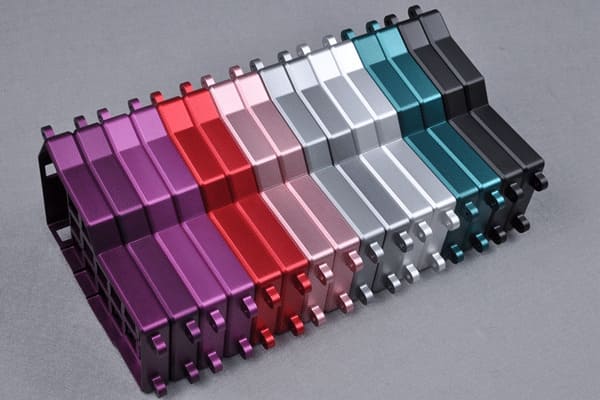
Color variation is not always a defect, but uneven tones, fading, stains, or unexpected color shifts may indicate problems with the material or anodizing process. The table below summarizes the most common appearance issues, their likely causes, and practical ways to prevent or correct them.
| Problem | Likely Causes | Prevention/Corrective Action |
|---|---|---|
| Uneven or blotchy color | Alloy segregation, poor cleaning, uneven etching | Verify material and pretreatment |
| Black looks purple/bronze | Insufficient dye loading, thin film, lighting | Adjust process and approve samples |
| Color differs between batches | Material lot, bath drift, surface variation | Same lot, same batch, limit samples |
| Fading | Low-lightfastness dye, UV, poor sealing | Select tested dye or electrolytic color |
| Streaks on extrusions | Metallurgical or extrusion pattern | Cosmetic-grade material, controlled etch |
| Rainbow/iridescent appearance | Thin-film or sealing variation | Review coating and sealing process |
| White spots or stains | Rinsing, contamination, handling | Improve rinsing and handling |
| Rack marks | Required electrical contact | Predetermine hidden contact locations |
| Color inside cavities differs | Current and solution-flow variation | Modify geometry or acceptance criteria |
Ready to Achieve Consistent Anodized Aluminum Colors?
Choosing an attractive color is only the beginning. A successful anodized finish also depends on the aluminum alloy, surface texture, anodizing type, coating thickness, masking requirements, and acceptable color variation. Defining these details early can prevent shade mismatches, dimensional problems, and costly rework.
PCBgogo provides professional CNC machining services for custom parts, helping customers turn digital designs into production-ready components. Our engineering team can review your CAD files, drawings, material requirements, and cosmetic expectations before production. From precision CNC machining and surface preparation to color sampling and anodizing coordination, we help align every stage with the appearance and performance your parts require.PCbgogo
Have an anodized aluminum project in mind? Send us your design and finishing requirements to discuss material selection, available colors, tolerances, and the most practical route from prototype to production.
PCBgogo - Precision Custom CNC Machining
Save time and money with reliable CNC milling & turning. Get tight-tolerance custom parts, streamlined sourcing, and consistent production quality for your projects.
Get a Free Quote >
Frequently asked questions about anodized aluminum colors
1. What is the most common anodized aluminum color?
Black is the most common anodized aluminum color because it provides a clean appearance, hides minor shade variations, and is relatively easy to reproduce. Clear or natural anodizing is also widely used for industrial parts that need corrosion protection without a dyed finish.
2. Can aluminum be anodized white?
Traditional anodizing cannot produce a true, opaque white because the anodized layer is translucent and white pigments do not work well inside its microscopic pores. Clear anodized aluminum may look silver or light gray, but powder coating or painting is usually a better choice when a solid white finish is required.
3. Can anodized aluminum match a Pantone or RAL color?
Anodized aluminum can be made close to a Pantone or RAL color, but an exact match is difficult. The final appearance changes with the alloy, surface texture, coating thickness and lighting. Use the color code as a target, then approve physical samples and an acceptable color range before production.
4. Does colored anodized aluminum fade in sunlight?
Some anodized colors can fade under prolonged sunlight, especially colors produced with organic dyes. The rate of fading depends on the dye, sealing quality and UV exposure. For outdoor applications, clear anodizing, electrolytic bronze or black, and other finishes with verified lightfastness are generally safer choices.
5. Why do two anodized parts have different shades?
Anodized parts may have different shades because of variations in aluminum alloy, material lot, surface preparation, coating thickness, dye conditions or sealing. Even parts processed together can look different if their geometry or surface texture is not the same. Using the same alloy, finish and production batch improves consistency.
6. Is Type III anodizing available in bright colors?
Type III hard anodizing is generally not suitable for bright colors. Its thick oxide layer naturally appears gray, brown or nearly black and can affect the appearance of added dyes. Black and other dark shades are possible, but Type II anodizing is normally the better choice for bright red, blue, green or gold finishes.
7. Which aluminum alloy produces the best cosmetic color?
6061 aluminum is usually the best choice for color-anodized CNC parts because it produces a clean, relatively uniform and repeatable finish. The 6063 alloy also performs well, particularly for extrusions. Alloys such as 2024, 7075 and many cast aluminums are more likely to produce darker, duller or uneven colors.