日本語
 한국어

Security System Components PCB Assembly Guide
KEY TAKEAWAYS Security System Components depend on PCB assemblies that keep sensing, communication, power, and alarm functions stable in real operating conditions. A reliable design pairs the right board construction with controlled assembly, inspection, and functional testing so faults are caught before installation, not after a security event.
A security product can pass a bench test and still fail in service because a connector loosens, a regulator overheats, or a sensor input picks up noise. Security System Components pcb assembly must therefore be planned around the installed environment and the consequence of a missed event, rather than treated as a generic electronics build.
The goal is to build repeatable assemblies that detect, process, communicate, and alarm as intended. The following sections connect security functions with practical PCB and production controls.
Core Components in Modern Security Systems and Their PCB Requirements
Modern Security System Components combine sensing, processing, communication, power, and user interfaces. The layout should separate sensitive analog inputs from switching power, high-current outputs, radios, and fast digital buses.
| Function | Typical PCB concern | Useful production control |
|---|---|---|
| Sensors | Low-level signals, drift, ESD, and false triggers | Clean grounding, input protection, calibration test |
| Controller | Clock integrity, firmware loading, memory and reset behavior | Programming record and power-cycle test |
| Communication | Impedance, antenna clearance, EMI, and isolation | Layout review and link test in the enclosure |
| Power and outputs | Surge current, heat, reverse polarity, relay or siren loads | Load test, thermal check, and protection verification |
For Security System Components pcb assembly, provide Gerber or ODB++ data, a controlled BOM, pick-and-place data, assembly drawings, and polarity notes. Add test points for power rails, communication buses, alarm outputs, and critical sensor channels before release.
PCBA Applications in Security Systems
PCB Assembly for Security Systems converts separate electronic functions into field-ready modules, from credential readers to network cameras. Reliability comes from matching assembly technology and test coverage to each module instead of applying one inspection plan to every board.
Access Control Systems
Access-control boards typically connect readers, locks, door contacts, exit buttons, and a host network. Keep relay or lock current away from credential and communication circuits, protect external lines against ESD and transients, and size copper paths for the actual load and duty cycle. If the reader uses RF, preserve the antenna keep-out area and verify operation after the PCB is installed in its final housing.
An end-of-line test should present valid and invalid credentials, switch the lock under load, read supervised inputs, interrupt primary power, and confirm backup-power and event-log responses. This is far more useful than a simple power-on check.
Video Surveillance Systems
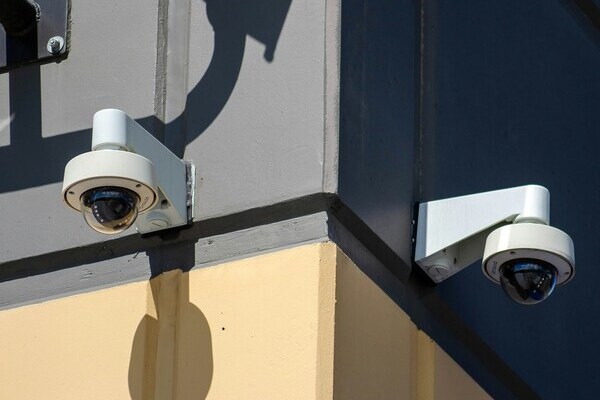
Video surveillance assemblies must maintain stable power and high-speed signal integrity while controlling heat in a compact enclosure. Camera modules combine image sensors, processors, memory, Ethernet or wireless links, infrared LEDs, and sometimes motors; poor grounding or power filtering can appear as image noise, link drops, or unexpected resets.
Route differential pairs to the specified impedance, limit stubs, and keep switching nodes away from sensor clocks and analog rails. During Security System Components pcb assembly, X-ray is useful for BGA and QFN hidden joints, but it does not replace a powered test. Stream video at the intended resolution, switch day and night modes, exercise infrared or pan-tilt loads, and monitor temperature and network stability.
Security Devices
Detector and alarm PCBAs must distinguish a real event from noise while remaining dependable during long standby periods. The PCB design should protect low-current sensing paths from contamination and interference, control battery drain, and make alarm outputs tolerant of wiring faults and supply variation.
Smoke detectors. Separate sensing circuits from buzzers, radios, and switching regulators. Test the sensor interface, alarm driver, indicator, communication, and fault reporting with an approved stimulus method.
Motion sensors. PIR and microwave circuits are sensitive to placement, shielding, enclosure geometry, and power noise. Test sensitivity, warm-up, tamper input, and reporting in the assembled enclosure.
Burglar alarms. Verify each supervised zone, siren or relay output, keypad bus, battery charging path, and mains-failure transition. For Security System Components with long field life, define acceptable quiescent current and record it during functional testing.
Why PCBgogo Fits Security System PCB Assembly
A manufacturing partner for security electronics must control materials, assembly, inspection, and testing across prototypes and repeat builds. PCBgogo supports PCB Assembly for Security Systems with published capabilities that align with the key production risks in these products.
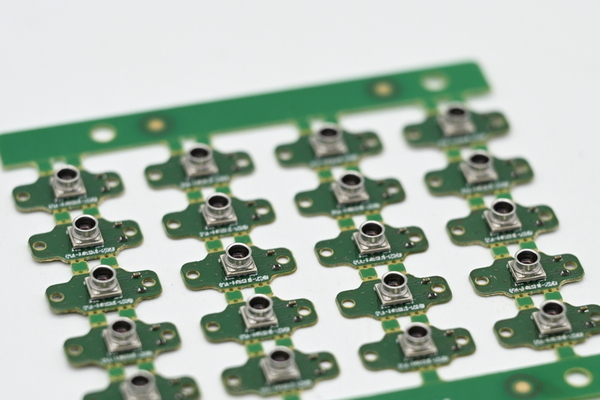
One stop production. PCB fabrication, sourcing, SMT, through-hole and mixed-technology assembly, inspection, and testing can be managed in one workflow, reducing handoffs.
Inspection matched to defect risk. Incoming inspection, SPI, AOI, and X-ray address component, printing, placement, polarity, and hidden-joint defects. Electrical and customer-defined functional tests extend coverage beyond visual acceptance.
Controlled quality requirements. PCBgogo lists ISO 9001 quality management, UL certification, RoHS and REACH compliance, and assembly to IPC-A-610 Class 2 or Class 3 requirements according to the project. The customer should state the required class, records, and acceptance criteria on the order.
Prototype to production support. Orders can start at one assembly and scale to volume production. This lets teams validate Security System Components pcb assembly, test fixtures, firmware, and documentation before a larger release.
Practical engineering input. The BOM, placement file, drawings, programming data, and test procedure support manufacturability review and correct revision control. More than ten years of manufacturing experience supports transfer from prototype to repeat production.
PCBgogo - Reliable, High-Quality PCB Manufacturing
PCBgogo is a one-stop PCB and PCBA manufacturing factory, helping you save time and costs while ensuring consistent, reliable quality.
Get a Free Quote >
Conclusion
Reliable Security System Components start with application-specific PCB design and finish with inspection and functional tests that reproduce real loads and fault conditions. PCBgogo is a trusted one-stop PCB manufacturing partner with more than ten years of experience, helping ensure your security solution is built on high-quality, high-reliability PCB assemblies.
Frequently Asked Questions
What files are needed for Security System Components pcb assembly?
Provide PCB fabrication data, a BOM with exact manufacturer part numbers, centroid or pick-and-place data, assembly drawings, and polarity notes. Include firmware files, programming instructions, test procedures, acceptance limits, and enclosure or cable details when they affect function.
Which inspections are most useful for PCB Assembly for Security Systems?
SPI checks solder paste before placement, AOI checks visible assembly features, and X-ray checks hidden joints beneath packages such as BGA and QFN. Electrical and functional tests are still required to confirm power, sensing, communications, outputs, and fault handling.
Should a security PCBA use IPC Class 2 or Class 3?
The correct class depends on the product's reliability requirement, operating environment, regulatory plan, and customer specification. Define the class before quotation, then align the drawing, workmanship acceptance, inspection records, and supplier agreement with that requirement.
How can field failures be reduced before volume production?
Build a pilot run with production-intent parts and processes, then test it in the final enclosure under expected power, load, communication, and environmental conditions. Close issues through revision control before volume production.