日本語
日本語
 한국어
한국어

Circuit Card Assembly Explained: Process & Application Guide
- what is a circuit card assembly
- circuit card assembly manufacturers
- circuit card assembly manufacturing process
- circuit card assembly definition
Modern electronics all depend on something most people never really think about: circuit card assembly. It’s inside your smartphone, your laptop, even the radar systems used in aviation. Pretty much every modern electronic device relies on it to work properly—but outside of engineering or manufacturing circles, the term itself is rarely mentioned.
So what exactly is circuit card assembly, and why does it matter so much in today’s tech-driven world? How is it actually built, and who are the key players behind it? In this guide, we’ll take a closer look at what circuit card assembly is, how the process works, the manufacturers involved, and why it has become such an essential part of modern electronics.
What Is a Circuit Card Assembly?
A Circuit Card Assembly (CCA) refers to a printed circuit board (PCB) fitted with a full set of electronic parts—including resistors, capacitors, integrated circuits, connectors and other devices—all soldered in place to form a functional electronic unit.
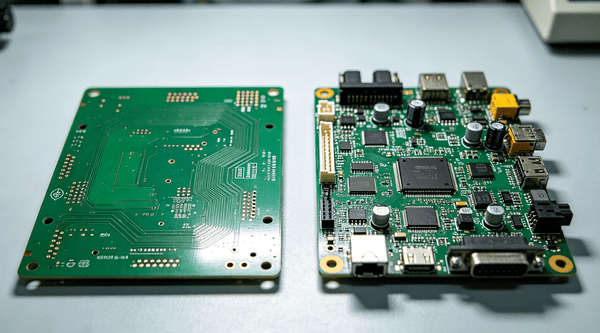
One simple way to tell what a CCA actually is is to compare it side by side with a bare PCB. A bare PCB is just a substrate board (fiberglass being the most prevalent material) etched with conductive copper traces. On its own, it has no electronic functionality whatsoever. Once you mount and solder all required functional components onto that blank board, it becomes a finished CCA: a fully functional assembly ready for integration into end products. You can picture a bare PCB as a structural blueprint on paper, while the CCA is the fully constructed, operable hardware built to match that blueprint.
Key Components of a Circuit Card Assembly
Every CCA consists of three primary elements working together:
The Printed Circuit Board forms the structural and electrical backbone. It is built from a substrate (FR-4 fiberglass being the most common), layers of copper traces that carry electrical signals, a solder mask that protects those traces, and a silkscreen layer that labels component positions for assembly and repair.
Electronic Components are the functional heart of the assembly. These include passive components like resistors and capacitors, which regulate current and store charge, as well as active components like transistors and integrated circuits, which process and switch signals. Modern CCAs may carry hundreds or even thousands of individual components on a single board.
Connectors allow the CCA to interface with the rest of a device or with external systems. Board-to-board connectors link multiple PCBs within a product; I/O connectors (such as USB or HDMI ports) connect to external devices; and wire-to-board connectors attach cables from sensors, motors, or power sources.
The Circuit Card Assembly Manufacturing Process
The circuit card assembly manufacturing process is a precise, multi-step workflow that transforms a blank PCB into a functioning electronic module.
1. PCB Fabrication
Before assembly begins, the board itself must be fabricated. This involves etching copper layers according to a circuit schematic, drilling vias and component holes, and applying the solder mask and silkscreen.
2. Solder Paste Application
A laser-cut stainless steel stencil is laid over the PCB, and solder paste — a mixture of tiny tin-silver-copper alloy spheres and flux — is precisely applied to exposed component pads. Consistent paste thickness (typically around 0.15 mm) is critical; any misalignment can cause defects like solder bridges or cold joints.
3. Component Placement
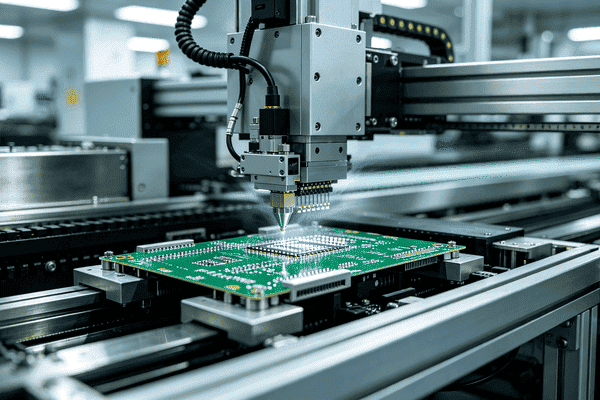
Automated pick-and-place machines, guided by computer-aided design (CAD) files, rapidly position surface-mount components onto the solder-pasted pads. Modern machines can place upward of 100,000 components per hour with micron-level accuracy — a level of precision impossible to achieve at scale by hand.
4. Reflow Soldering
The populated board passes through a reflow oven, where carefully controlled temperature zones raise the board to around 250°C. This melts the solder paste, which then solidifies as it cools, creating permanent electrical and mechanical bonds between the components and the board.
5. Through-Hole Component Insertion
Not all components are surface-mount. Larger parts such as electrolytic capacitors, transformers, and heavy connectors use through-hole technology — their leads pass through drilled holes in the board and are soldered on the opposite side using a wave soldering process.
6. Inspection and Testing
This is arguably the most important stage. Automated optical inspection (AOI) systems scan the board for defects such as missing components, misalignment, or excess solder. X-ray inspection checks for hidden solder joints beneath components like ball grid arrays (BGAs). In-circuit testing (ICT) verifies electrical continuity, while functional testing simulates real operating conditions to confirm the assembly performs as designed.
7. Conformal Coating and Packaging
For CCAs destined for harsh environments — automotive, aerospace, marine, or industrial applications — a conformal coating is applied to protect against moisture, dust, and chemical exposure. The finished assembly is then packaged and shipped for integration into the end product.
Types of Circuit Card Assembly
There are three primary assembly types, each suited to different design requirements:
Surface Mount Technology (SMT) Assembly mounts components directly onto the PCB surface without drilling holes. It enables high component density, smaller board footprints, and high-speed automated production, making it the dominant method for modern consumer electronics and communications devices.
Through-Hole Assembly threads component leads through drilled holes for soldering on the reverse side. It provides stronger mechanical bonds than SMT, making it preferred for components subject to physical stress — such as connectors that users plug and unplug frequently, or capacitors in high-vibration environments.
Mixed-Technology Assembly combines both SMT and through-hole methods on a single board. Many real-world CCAs use this hybrid approach: compact ICs placed with SMT for density, alongside robust through-hole connectors or power components for durability.
Circuit Card Assembly Manufacturers
The global CCA manufacturing market is extensive, ranging from large turnkey contract manufacturers to specialized regional assemblers. When evaluating circuit card assembly manufacturers, buyers typically consider:
Certifications: ISO 9001 for quality management; IPC-A-610 for workmanship standards; AS9100 for aerospace; ISO 13485 for medical devices
Technology capabilities: Whether the manufacturer supports fine-pitch SMT, BGA soldering, flex/rigid-flex PCBs, or HDI (high-density interconnect) boards
Testing infrastructure: AOI, X-ray, ICT, and functional test capacity
Volume flexibility: Prototype and low-volume NPI (new product introduction) runs versus high-volume production
Supply chain integration: Component sourcing, materials management, and logistics
Beyond mainstream large-scale suppliers, specialized service providers fill a critical gap in flexible, low-batch CCA production and rapid prototyping.
As a reliable option for small-batch and iterative manufacturing, PCBgogo delivers one-stop solutions covering PCB fabrication, SMT assembly, component sourcing, prototype development, and small-to-mid volume production. It balances consistent manufacturing quality with rapid iteration cycles, making it well-suited for R&D teams and businesses optimizing product designs before mass production. When screening and benchmarking CCA suppliers for upcoming projects, you may request a customized quotation from PCBgogo to compare costs, lead times, and technical capabilities with other industry providers and make a more informed sourcing decision.
Industries That Depend on Circuit Card Assemblies
Circuit card assemblies are foundational to virtually every sector of modern technology:
Consumer electronics: Smartphones, laptops, wearables, and home appliances
Automotive: Engine control units, ADAS sensors, infotainment systems, and EV battery management
Aerospace and defense: Avionics, radar, guidance systems, and satellite communications — where reliability under extreme conditions is mandatory
Medical devices: Diagnostic equipment, implantable electronics, and patient monitoring systems requiring strict quality validation
Industrial automation: PLCs, motor drives, robotics controllers, and IoT sensors
In aerospace and defense applications especially, CCAs must meet demanding environmental standards, operating reliably across wide temperature ranges, under vibration, and in high-humidity conditions.
Emerging Trends in CCA Technology
The field continues to evolve rapidly. High-density interconnect (HDI) PCBs pack more components into smaller board areas using finer trace widths, smaller vias, and tighter component spacing — enabling the miniaturization seen in modern wearables and mobile devices. Advanced packaging techniques like package-on-package (PoP) stacking allow memory and processing chips to be vertically integrated in a single compact module.
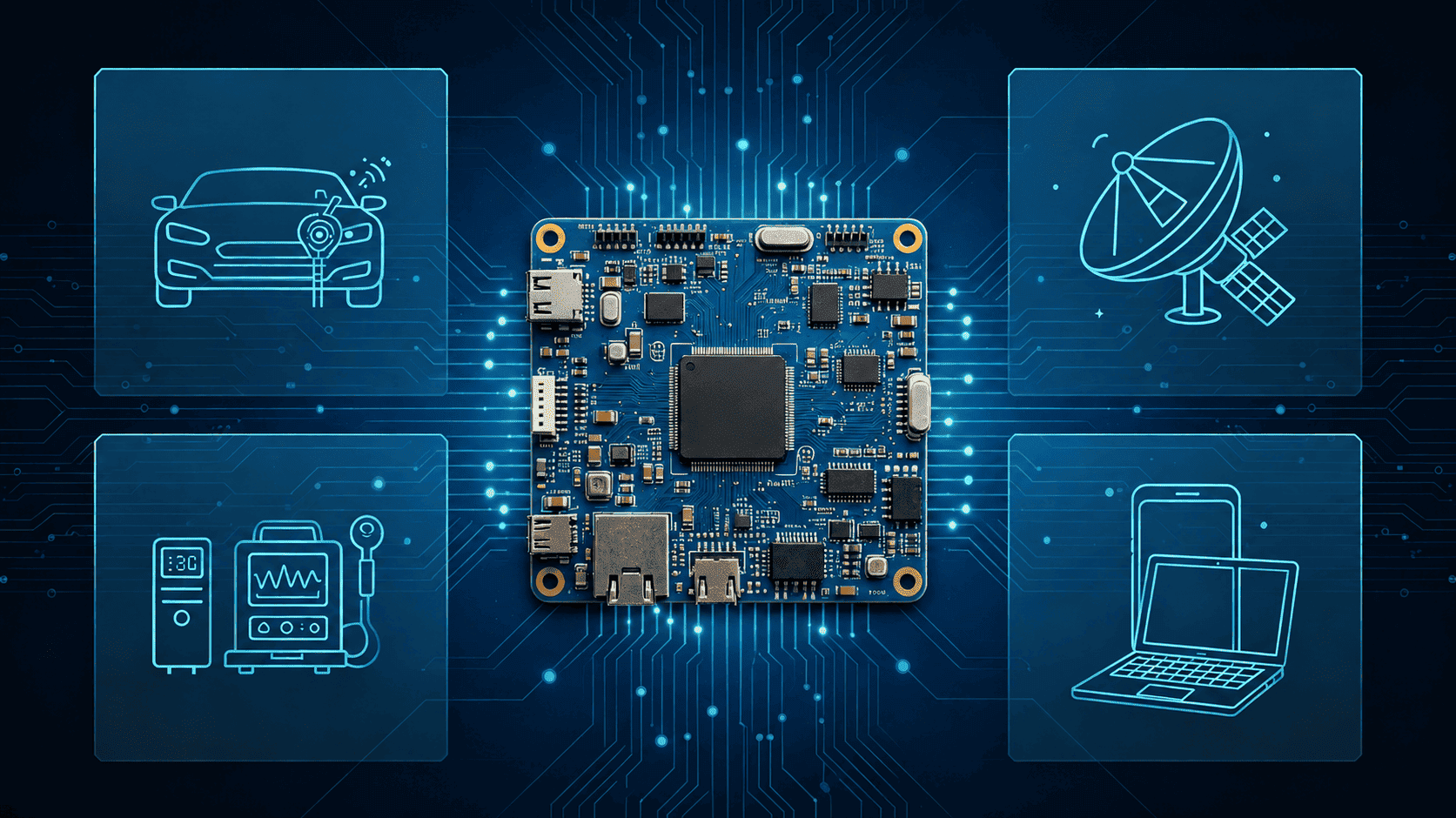
On the materials side, high-frequency laminates such as PTFE and Rogers-series substrates are replacing standard FR-4 in 5G, radar, and millimeter-wave applications where signal loss at high frequencies is a critical concern.
Automation and artificial intelligence are also transforming the manufacturing floor. Machine vision systems now detect subtle defects invisible to the human eye, while AI-driven process control adjusts reflow oven profiles and solder paste parameters in real time to reduce defect rates.
Conclusion
A circuit card assembly is far more than a populated circuit board — it is the operating heart of nearly every modern electronic product. Understanding what a CCA is, how it is manufactured, and what separates high-quality assembly from poor execution is essential knowledge for engineers, product designers, procurement professionals, and anyone involved in bringing electronic products to market. As devices grow smaller, faster, and more capable, the precision and sophistication of circuit card assembly manufacturing will only become more critical.
Whether you are sourcing a manufacturer, designing a new product, or simply trying to understand what is inside the devices you use every day, the circuit card assembly is where electrical engineering meets the real world.