日本語
 한국어

60/40 Solder vs 63/37 Solder: A Practical PCB Guide
KEY TAKEAWAYS
60/40 solder and 63/37 solder are tin-lead alloys used for PCB assembly and rework. The practical difference is melting behavior: the 63/37 alloy changes between solid and liquid at 183°C, while the 60/40 alloy remains pasty from about 183°C to 190°C. Choose 63/37 for faster freezing and 60/40 when a short working range helps manual shaping.
Introduction
Two solder wires can look identical yet behave differently at the same iron setting. During prototype or legacy PCB repair, that difference can determine whether a joint freezes cleanly or becomes disturbed.
This guide compares both alloys for PCB assembly and turns their metallurgy into practical choices for hand soldering, rework, and inspection.
What Is Solder
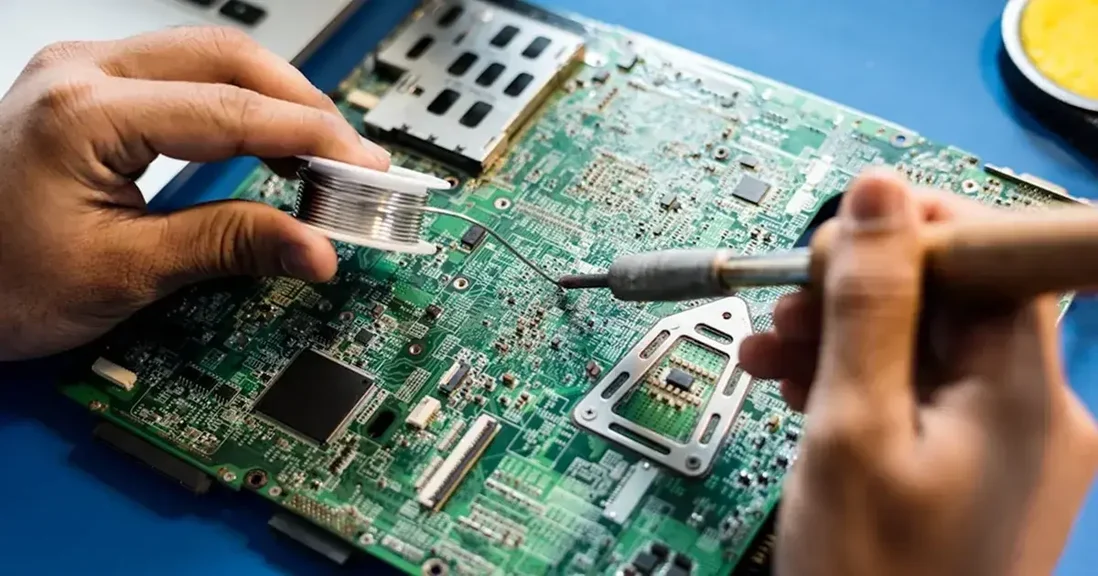
Solder is a fusible metal alloy that creates an electrical and mechanical bond between component leads and PCB pads at a temperature below the melting point of the parts being joined. In electronics, flux removes light oxides and helps molten solder wet copper, component finishes, and plated through-holes.
Tip temperature, dwell time, flux, pad finish, thermal mass, cleanliness, and movement during cooling also affect the result. Excessive temperature can burn flux, damage pads, or overheat components.
Types of Solder Used in PCB Work
PCB solder is broadly divided into leaded and lead-free families. Both alloys flow readily and remain common in controlled repair and legacy-equipment workflows where applicable rules permit them.
Lead-free solder, often based on tin, silver, and copper, serves products subject to lead restrictions and usually requires higher process temperatures. Always match the alloy to the approved bill of materials and avoid uncontrolled mixing during rework.
Difference Between 60/40 and 63/37 Solder
60/40 solder contains 60% tin and 40% lead. It begins melting at about 183°C and becomes fully liquid near 190°C, creating a roughly 7°C plastic range.
63/37 solder contains 63% tin and 37% lead. This eutectic alloy melts and solidifies at 183°C without a plastic range, reducing the time in which movement can disturb the joint.
The table shows the decision-relevant differences.
| Attribute | 60/40 Solder | 63/37 Solder |
|---|---|---|
| Composition | 60% tin and 40% lead | 63% tin and 37% lead |
| Melting behavior | About 183°C to 190°C | 183°C eutectic point |
| Cooling behavior | Passes through a plastic state | Changes directly from liquid to solid |
| Handling advantage | Slightly more time to shape a joint | Faster freeze and clearer process timing |
| Main process risk | Movement during the plastic range can disturb the joint | Short working time can punish slow positioning |
| Typical fit | General hand soldering and legacy repair | Precision hand work, rework, and repeatable joints |
Advantages and Disadvantages of 60/40 Solder
60/40 solder offers familiar flow and a short interval for adjusting a hand-soldered connection, provided the lead and board remain still through solidification.
Its main disadvantage is the plastic range. Movement between about 190°C and 183°C can produce a rough, disturbed joint. Because it contains lead, use fume extraction, hand-washing, controlled storage, and compliant waste handling; local product rules may prohibit it.
Advantages and Disadvantages of 63/37 Solder
63/37 solder provides a single melting point and fast solidification. Its clear transition suits fine-pitch touch-up, connector repair, and repeatable manual work.
The tradeoff is a shorter working window. Align parts before heating and feed the required amount promptly instead of reshaping the cooling fillet. It contains lead and requires the same workplace controls and regulatory review as the 60/40 alloy.
How to Choose Between 60/40 and 63/37 Solder for PCB Assembly
Choose between 60/40 solder and 63/37 solder based on product compliance, joint stability, and the soldering process.
Check compliance requirements. Both alloys contain lead. Do not use them in a lead-free assembly unless the product specification and applicable regulations permit it.
Consider movement during cooling. Choose 63/37 solder for wires, connectors, or unsupported leads that may move. Its eutectic composition solidifies at 183°C without passing through a plastic range, reducing the risk of disturbed joints.
Evaluate the required working time. Choose 60/40 solder when hand soldering benefits from a brief interval for shaping the fillet. The joint must remain still while the alloy cools through its approximately 183°C to 190°C plastic range.
Match the existing assembly. During repair or rework, use the alloy specified in the manufacturing or repair documentation. Avoid mixing leaded and lead-free solder because the resulting joint may have less predictable melting and wetting behavior.
Confirm process control. Whichever solder is selected, use the correct flux, an appropriately sized tip, and enough heat to achieve complete wetting without prolonged dwell time.
For outsourced PCB assembly, specify the solder alloy, flux requirements, and lead-free status in the build documentation. PCBgogo can then review these requirements before production and reduce the risk of material or process mismatches.
PCBgogo - Reliable, High-Quality PCB Manufacturing
PCBgogo is a one-stop PCB and PCBA manufacturing factory, helping you save time and costs while ensuring consistent, reliable quality.
Get a Free Quote >
Summary
The key difference between 60/40 solder and 63/37 solder is the cooling window: 60/40 has a short plastic range, while 63/37 freezes at 183°C. Favor the eutectic alloy for fast solidification and repeatability; use the 60/40 alloy when controlled hand shaping helps. Compliance and process control decide the final selection.
Frequently Asked Questions
Is 63/37 solder stronger than 60/40 solder?
Not necessarily. Wetting, joint geometry, cleanliness, thermal exposure, mechanical support, and process control matter more than the small composition difference.
Why does 63/37 solder produce fewer disturbed joints?
63/37 solder has no plastic range. It solidifies at 183°C, leaving less time for movement to deform the joint.
Can I mix 60/40 solder and 63/37 solder during rework?
Avoid casual mixing because the resulting composition melts less predictably. Remove as much old solder as practical, apply suitable flux, and use the specified repair alloy.
What soldering iron temperature should I use?
No single setting suits every board. Tip size, station recovery, copper area, thermal mass, flux, and contact time all matter; use the lowest setting that forms a wetted joint quickly.
Are 60/40 solder and 63/37 solder RoHS compliant?
Generally, no, because both contain far more lead than the usual limit for restricted homogeneous materials. Check current market requirements and any applicable exemptions.