日本語
日本語

What is "FR-4" in PCB? A Look at the "Foundation" Material of Circuit Boards
Ever wondered what that green board inside your smartphone or computer is made of? For most of us, the visible components like chips and resistors are the stars of the show, but the very foundation they are built on is often overlooked. This material, which provides the structural support and electrical insulation for almost all printed circuit boards (PCBs), is known as FR-4. You can think of it as the "canvas" on which the electronic masterpiece is painted, or the "foundation" that holds a building together.
What Exactly is FR-4?
FR-4 isn’t a single material but rather a composite. The "FR" stands for "Flame Retardant," and the "4" refers to its specific grade. At its core, FR-4 is a woven fiberglass fabric (a bit like a dense cloth) that has been impregnated with a flame-retardant epoxy resin. This combination creates a material that is not only strong and rigid but also excellent at providing electrical insulation.
This special blend of fiberglass and epoxy resin gives FR-4 several critical properties that make it the go-to choice for countless electronic devices:
Excellent Electrical Insulation: It prevents current from shorting between different traces on the board, ensuring that signals travel along their intended paths.
High Mechanical Strength: It provides a stable and rigid platform for all the delicate electronic components. You can solder components onto it and trust it will hold up.
Thermal Stability: FR-4 can withstand high temperatures, which is crucial during the soldering process and for the heat generated by the components during operation.
Cost-Effectiveness: It offers a great balance of performance and price, making it accessible for mass production.
FR-4 vs. Other PCB Materials: A Matter of Application
While FR-4 is the king of PCB substrates, it’s not the only one out there. The choice of material often depends on the specific demands of the application.
For instance, you've probably heard of paper phenolic PCBs, often colloquially called "cardboard." These are made from paper and a phenolic resin. While they are significantly cheaper than FR-4, they have lower mechanical strength and poor moisture resistance. You'll find them in low-cost, low-power consumer electronics like simple calculators or toys where high performance and durability aren't necessary.
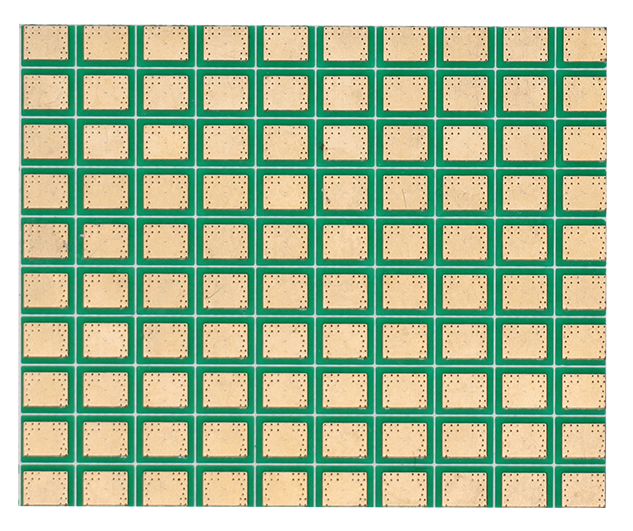
On the other end of the spectrum are materials designed for very specific, high-performance needs. Aluminum substrates, for example, are a type of metal-core PCB. The core is a thin layer of aluminum, which is fantastic at dissipating heat. This makes them ideal for applications like LED lighting, power supplies, and automotive electronics, where components generate a lot of heat and need to be cooled efficiently to perform reliably. You can’t build a high-power LED light on an FR-4 board because the heat would quickly degrade the components.
Then there are advanced materials like Rogers and Teflon-based laminates. These are used for high-frequency applications like 5G communication systems, satellite dishes, and advanced radar. These materials have specific electrical properties that allow signals to travel with minimal loss at extremely high speeds, something FR-4 just isn’t designed for. The ongoing rollout of 5G and the push for faster, more reliable communication networks means the demand for these high-frequency materials is on the rise.
The Future of PCB Materials
The world of electronics is constantly evolving, with a growing demand for smaller, more powerful, and more efficient devices. This pushes the boundaries of traditional materials. We are seeing a shift towards materials that can handle higher frequencies, dissipate heat better, and even be more environmentally friendly. The industry is also exploring flexible and stretchable PCBs, often using polyimide, to enable wearable technology and medical devices that can conform to the human body.
As a company deeply involved in this industry, we at PCBgogo have witnessed this evolution firsthand. For us, understanding the unique requirements of each project is paramount. We don’t just fabricate boards; we advise on the right materials and processes to ensure your design performs exactly as intended. Whether you need a simple FR-4 board for a hobby project or a complex aluminum-core PCB for a cutting-edge LED system, our expertise in materials and manufacturing is what guarantees quality. We believe that choosing the right "foundation" is the first and most critical step in bringing any electronic idea to life.