日本語
 한국어

Top Metals for CNC Machining: A Practical Selection Guide
The top metal for CNC machining depends on what the part must do after machining. Aluminum is often the top all purpose choice for light, corrosion resistant components, brass offers excellent machinability, steel provides strength and wear resistance, and titanium serves high strength to weight applications where cost is secondary.
Which Metals Are Most Suitable for CNC Machining?
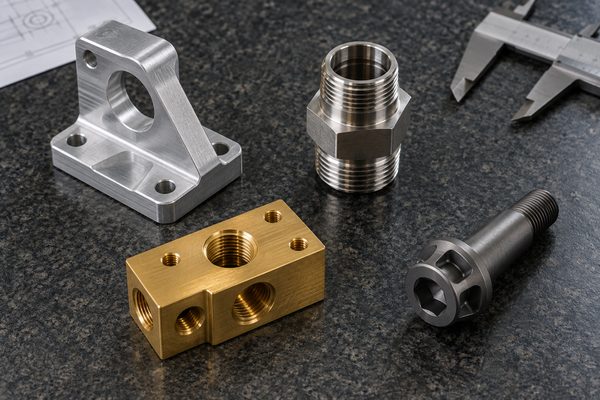
The metals most commonly used in CNC machining are aluminum, carbon and alloy steel, stainless steel, brass, copper, titanium, and nickel alloys. Each balances cutting behavior, mechanical performance, corrosion resistance, and price differently.
Aluminum 6061: A versatile option for housings, brackets, fixtures, and prototypes because it is light, corrosion resistant, and readily machined.
Aluminum 7075: A stronger aluminum alloy often used where structural performance matters, with less favorable corrosion and weldability characteristics than 6061.
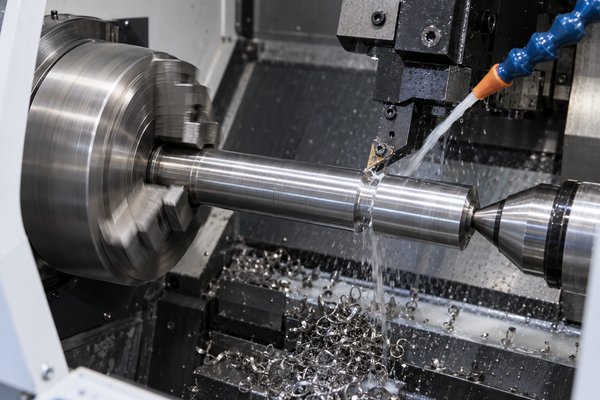
Carbon and alloy steel: Grades such as 1045 and 4140 suit shafts, machine components, and high load parts.
Stainless steel: 303 improves machinability, while 304 and 316 are common when corrosion resistance drives the selection.
Brass: Free machining brass gives clean chips and fine surface finish, making it useful for fittings, valves, and turned parts.
Titanium: Ti 6Al 4V combines low density with high strength, but machining is slower and tooling demands are higher.
Aluminum is a common general choice and free machining brass is among the easiest metals to cut. These are useful defaults, not universal rules.
What Actually Determines the Top Material Choice?
Material selection should begin with the component's job in the assembly.
Load and wear: Steel is usually preferred over aluminum for heavily loaded bearing surfaces, gears, and abrasion prone parts.
Weight target: Aluminum and titanium reduce mass, though titanium adds substantial machining cost.
Corrosion environment: Stainless steel, aluminum, and titanium react differently to salt, chemicals, moisture, and galvanic couples.
Electrical or thermal function: Copper is valuable for conductivity, but it can be difficult to control because it is ductile and prone to smearing.
Production quantity: A material that is cheap per kilogram may be expensive per finished part if it needs slow cutting or frequent tool changes.
PCBgogo supports CNC machining across aluminum, stainless steel, mild and alloy steel, brass, copper, titanium, and engineering plastics. Its DFM review can compare feature access and manufacturing constraints before the material is released for a prototype or production order.
PCBgogo - Precision Custom CNC Machining
Save time and reduce costs with reliable CNC milling and turning. Get precision custom parts with tight tolerances, simplified sourcing, and consistent production quality.
Get a Free Quote >
How Do Machinability and Design Affect Cost?
Machinability describes how efficiently a material can be cut while meeting the required tolerances and surface finish. Hard, abrasive, or work-hardening materials generally require slower cutting speeds, more frequent tool changes, and additional process control.
Part geometry can affect cost as much as material choice. Thin walls, deep cavities, small features, long-reach tooling, difficult setups, and tight tolerances increase machining time and manufacturing risk. These features can make a component expensive even when its raw material is relatively inexpensive.
Hole quality also depends on the selected cutting method. Drilling may be sufficient for general-purpose holes, while precision fits can require boring or reaming after drilling. Apply close tolerances only where the assembly function requires them, particularly for mating shafts, threads, bearing seats, dowels, and locating holes.
What Quality and Compliance Checks Apply?
ASTM or EN material specification: Verifies the selected alloy and delivery condition.
Material certificate: Records chemistry and mechanical test information for traceable jobs.
ISO 2768: Can define general tolerances when a drawing does not call out each dimension.
RoHS or customer requirements: May restrict materials or finishes for electrical and consumer applications.
The recurring tradeoff is performance versus machining cost. The strongest or most corrosion resistant alloy is not the top choice when a simpler material meets the service requirement.
Where Is This CNC Approach Used?
Applications for top metals for CNC differ by load, environment, and production quantity.
Lightweight housings: Lightweight housings use aluminum, steel, stainless steel, brass, copper, titanium, and nickel alloys where geometry, service load, and production volume justify CNC processing. The drawing should isolate functional dimensions so inspection effort follows the part's real job.
Machine shafts: Machine shafts use aluminum, steel, stainless steel, brass, copper, titanium, and nickel alloys where geometry, service load, and production volume justify CNC processing. The drawing should isolate functional dimensions so inspection effort follows the part's real job.
Corrosion resistant fittings: Corrosion resistant fittings use aluminum, steel, stainless steel, brass, copper, titanium, and nickel alloys where geometry, service load, and production volume justify CNC processing. The drawing should isolate functional dimensions so inspection effort follows the part's real job.
Electrical contacts: Electrical contacts use aluminum, steel, stainless steel, brass, copper, titanium, and nickel alloys where geometry, service load, and production volume justify CNC processing. The drawing should isolate functional dimensions so inspection effort follows the part's real job.
Aerospace brackets: Aerospace brackets use aluminum, steel, stainless steel, brass, copper, titanium, and nickel alloys where geometry, service load, and production volume justify CNC processing. The drawing should isolate functional dimensions so inspection effort follows the part's real job.
What Should Engineers Compare Before Choosing?
The table compares practical options associated with top metals for CNC.
| Option | Key characteristic | Machining or process | Typical use |
|---|---|---|---|
| Aluminum 6061 | Very good | Low | General parts |
| Brass C360 | Excellent | Medium | Turned fittings |
| Steel 4140 | Good | High | Loaded shafts |
| Titanium Grade 5 | Difficult | Very high | Weight critical parts |
What Drives a Manufacturable Design?
A manufacturable top metals for CNC specification connects function to process capability.
Functional requirement: Define what top metals for CNC must achieve before selecting a grade, tool, or process. Load, motion, environment, and mating components should translate into measurable drawing requirements.
Material condition: Record the incoming and final condition of aluminum, steel, stainless steel, brass, copper, titanium, and nickel alloys. Hardness and heat treatment can change cutting behavior, distortion risk, and the operation that should create the final dimension.
Datum strategy: Build the setup around functional surfaces, weight critical sections, threads, and wear interfaces. Functional datums reduce accumulated error and make the inspection report easier to compare with assembly needs.
Tool access: Review reach, corner radius, chip evacuation, and holder clearance before programming CNC milling, turning, drilling, and finishing. Better access usually reduces setup count and avoids unnecessarily long tools.
Tolerance allocation: Apply close limits only to features that control fit, sealing, location, or motion. General surfaces can use a broader standard tolerance without weakening performance.
Workholding: Clamp against stable reference surfaces and support flexible areas near the cut. The setup must resist cutting force without temporarily bending the workpiece.
Surface finish: Specify roughness where friction, sealing, fatigue, or appearance requires it. A low Ra value on every surface increases cycle time and inspection with little functional return.
What Workflow Reduces Rework?
A reliable top metals for CNC workflow closes decisions in a deliberate order.
Confirm the material specification and delivery condition for aluminum, steel, stainless steel, brass, copper, titanium, and nickel alloys.
Mark functional surfaces, weight critical sections, threads, and wear interfaces as critical, reference, or general features on the drawing.
Choose a setup sequence for CNC milling, turning, drilling, and finishing that preserves the same functional datums.
Review the main process risks, especially selecting by price alone, poor chip control, tool wear, and galvanic corrosion, before approving the first article.
Define inspection records for alloy identity, dimensional tolerance, surface finish, and coating condition and agree on sampling before production.
FAQs
What is the easiest metal to CNC machine?
Free machining brass is widely regarded as one of the easiest metals to cut. Aluminum 6061 is also a common and forgiving choice for general CNC work.
Is aluminum better than steel for CNC machining?
Aluminum is usually faster and easier to machine, but steel is better where stiffness, strength, wear resistance, or high temperature performance is required.
Can titanium be CNC machined?
Yes. Titanium is routinely CNC machined, but low thermal conductivity and high cutting forces make it more demanding than aluminum or brass.
Choose the top metal by first defining load, environment, mass, and cost limits. Then ask the machining supplier to review features that could turn a good material choice into an unnecessarily expensive part.