日本語
日本語
 한국어
한국어

Stainless Steel CNC Machining: Process, Grades, and Applications
KEY DEFINITION Stainless steel CNC machining uses computer controlled cutting tools to mill, turn, and drill stainless steel stock into precision parts. It works by removing material in controlled passes while managing the metal's low thermal conductivity and tendency to work harden. Common grades include 303, 304, 316, and 17-4 PH, each suited to different corrosion resistance and strength needs. The process is used across medical, food, marine, and aerospace industries.
Cut a block of aluminum and a block of stainless steel side by side, and the difference shows up immediately in the chips, the heat, and the tool wear. Stainless steel holds its shape and resists corrosion far better than most metals, but that same toughness makes it one of the more demanding materials to machine accurately. This guide walks through what the process actually involves, which grades fit which jobs, and how shops manage the challenges that come with cutting stainless steel to tight tolerances.
What Is Stainless Steel CNC Machining?
Stainless steel CNC machining is the process of shaping stainless steel stock into a finished part using computer-controlled milling, turning, or drilling equipment guided by a CAD model. A CAM program converts the part's digital design into toolpaths and G-code, which the machine follows to remove material in precise, repeatable passes. Stainless steel qualifies for the process because of its chromium content, typically a minimum of 10.5%, which forms a thin passive oxide layer that resists rust and corrosion. That same chromium and nickel content, along with molybdenum in some grades, also raises strength and resists deformation, which is why stainless steel behaves differently under a cutting tool than aluminum or mild steel. Engineers turn to it whenever a part needs to survive moisture, chemicals, or repeated sterilization without degrading.
The Stainless Steel CNC Machining Process
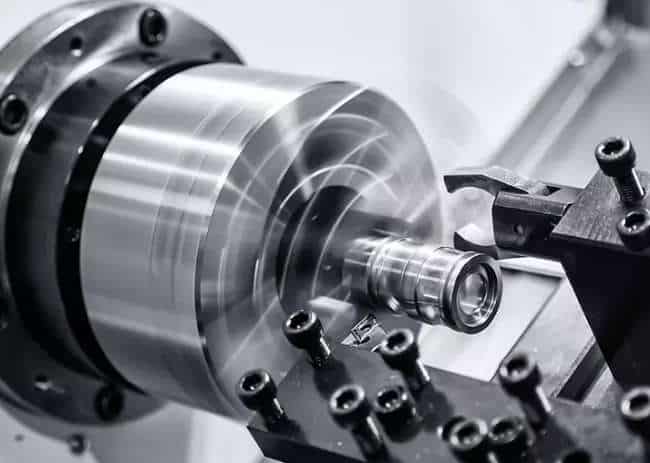
Stainless steel CNC machining relies on three core operations, each suited to a different part geometry. A shop typically starts with a DFM review of the CAD file, then selects the process and tooling based on the grade and the part's tolerances.
CNC milling: A rotating multi-point cutter removes material from a fixed workpiece to produce flat faces, pockets, slots, and complex 3D contours. It is the default choice for housings, brackets, and parts with non-cylindrical features.
CNC turning: The stainless steel stock rotates on a lathe while a stationary tool cuts its outer diameter, bore, or profile. Turning is the standard route for shafts, bushings, fittings, and other cylindrical parts.
CNC drilling and tapping: Dedicated operations bore holes and cut internal threads to size, often as a secondary step after milling or turning has shaped the part body.
Post machining finishing: Bead blasting, passivation, or electropolishing follow machining to remove surface contamination and restore the chromium oxide layer that gives stainless steel its corrosion resistance.
Because stainless steel work hardens quickly, the tool and cutting parameters matter more here than with softer metals, which is why grade selection comes before process planning.
Stainless Steel Types and Grades for CNC Machining
Stainless steel used in CNC machining falls into three practical families: austenitic, martensitic, and free machining grades, each defined by its chromium, nickel, and carbon balance. Austenitic grades such as 304 and 316 make up the majority of CNC machined stainless steel parts because of their weldability and corrosion resistance. Grade 304 contains roughly 18% chromium and 8% nickel, while grade 316 adds 2 to 3% molybdenum and slightly more nickel, which sharply improves resistance to chloride pitting in marine and chemical environments, based on a straightforward comparison where 304 has 18% chromium and 8% nickel while 316 has 16% chromium, 10% nickel, and 2% molybdenum. Martensitic and precipitation hardening grades trade some corrosion resistance for higher strength and hardness after heat treatment.
| Grade | Family | Corrosion resistance | Machinability | Common use |
|---|---|---|---|---|
| 303 | Austenitic (free machining) | Moderate | Excellent | Fasteners, fittings, high volume parts |
| 304 | Austenitic | Good | Fair | Food equipment, enclosures, brackets |
| 316 | Austenitic | Very good (chloride resistant) | Fair to difficult | Marine hardware, medical devices, chemical parts |
| 410 | Martensitic | Moderate | Fair | Valve components, shafts needing hardness |
| 17-4 PH | Precipitation hardening | Good | Difficult | Aerospace and high strength structural parts |
Grade 303 earns its "free machining" label from added sulfur, which breaks chips cleanly but reduces corrosion resistance compared to 304. For parts that need both strength and corrosion resistance in demanding conditions, 316 is the more common upgrade from 304, though it comes with a higher material cost and slower cutting speeds.
Advantages of Stainless Steel CNC Machining
Stainless steel earns its place in CNC production because of a specific mix of properties that few other metals match at a comparable cost. These advantages explain why it remains a default choice across so many industries despite being harder to cut than aluminum.
Corrosion resistance: The chromium oxide layer self-repairs when scratched, so parts continue resisting rust even after machining or light surface damage.
High strength to weight performance: Austenitic and precipitation hardening grades deliver tensile strength well above aluminum, allowing thinner walls without sacrificing structural integrity.
Hygienic surface finish: A smooth, non-porous machined surface resists bacterial growth, which is why stainless steel dominates food processing and medical device production.
Temperature tolerance: Grades like 316 hold mechanical properties across a wide range, from cryogenic exposure up to several hundred degrees Celsius, without becoming brittle or losing strength.
Long service life: Because the material resists wear and corrosion, machined stainless steel parts typically outlast equivalent parts in mild steel or plastic, lowering total lifecycle cost even when the upfront material price is higher.
These advantages come with tradeoffs in machining difficulty, which is where process planning becomes critical.
Stainless Steel CNC Machining Challenges and Solutions
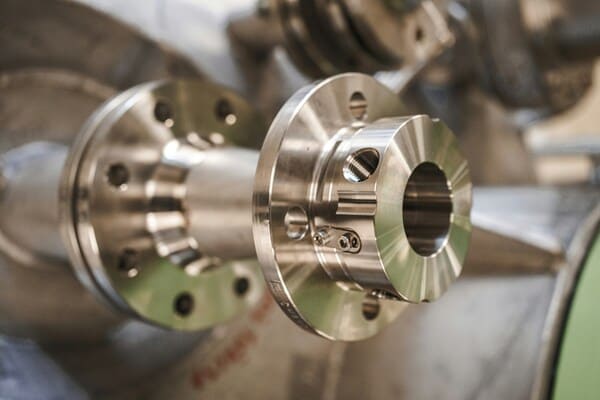
Stainless steel presents three recurring machining challenges: work hardening, heat buildup, and long stringy chips. Each has a known cause and a practical fix that shops apply during process planning rather than after parts fail inspection.
Work hardening: Austenitic grades harden in the cutting zone when a tool rubs instead of cutting cleanly, especially at light depths of cut, where avoiding excessive flank wear helps prevent a dull cutting edge from creating a work hardening zone. The fix is maintaining a minimum stable depth of cut and swapping inserts before they dull, rather than relying on lighter passes.
Heat concentration: Stainless steel's thermal conductivity is roughly a third of carbon steel's, so heat stays at the cutting edge instead of dissipating into the workpiece. High pressure or flood coolant and coated carbide tooling manage this heat buildup and slow tool wear.
Long chip formation: Ductile grades like 316 produce continuous chips that can tangle around the tool and mar the surface finish. Chip breaker geometry and climb milling techniques keep chips short and clear of the cutting path.
Higher tooling cost: Wear-resistant coated carbide or diamond-coated tools cost more than standard tooling but last longer against stainless steel's abrasive, work hardening behavior, which usually offsets the higher unit price over a production run.
Getting these variables right on the first article, rather than after a batch of rejected parts, usually comes down to the review a machinist does before cutting starts. PCBgogo's CNC machining service includes a CAD file and DFM review before quoting, where engineers check tolerance requirements against the selected stainless steel grade and flag features like deep cavities or thin walls that tend to trigger these exact problems.
Applications of Stainless Steel CNC Machining
Stainless steel CNC machining shows up wherever a part must survive corrosive exposure, repeated sterilization, or mechanical stress without degrading. The specific grade selected usually maps directly to the environment the part will face.
Medical instruments: Surgical forceps, catheter components, and implant housings rely on 316L for its biocompatibility and resistance to repeated autoclave sterilization.
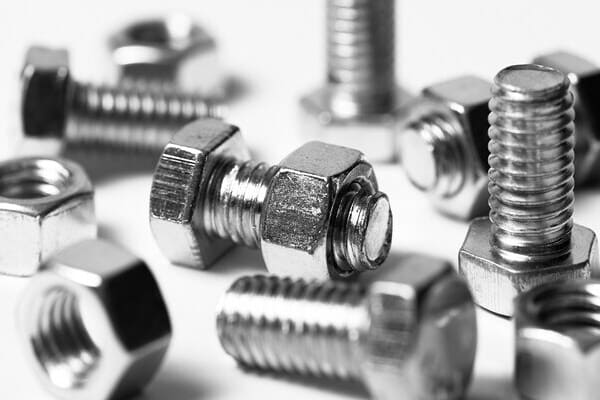
Marine hardware: Propeller shafts, fasteners, and deck fittings use 316 for its resistance to saltwater and chloride pitting.
Food and beverage equipment: Mixing components, valves, and processing line hardware use 304 for its hygienic, easy-to-clean surface and resistance to acidic food contact.
Aerospace fasteners and brackets: 17-4 PH stainless steel provides the strength-to-weight ratio needed for structural fittings that must also resist corrosion at altitude.
Automotive exhaust and fluid systems: 304 and 409 grades withstand heat cycling and road salt exposure in exhaust components and brake line fittings.
The Bottom Line
Stainless steel CNC machining trades some cutting speed and tooling cost for corrosion resistance, strength, and a service life that few other materials match. Getting good results starts with matching the grade to the application, then planning tooling and coolant strategy around that grade's specific work hardening and heat behavior. A machining partner that reviews these factors before cutting starts, rather than after a batch fails, is usually the difference between a smooth production run and a costly rework cycle.
Frequently Asked Questions
Is stainless steel harder to CNC machine than aluminum?
Yes. Stainless steel work hardens under light cuts and has roughly a third of aluminum's thermal conductivity, so heat stays concentrated at the cutting edge. This means slower cutting speeds, more tool wear, and higher tooling costs compared to aluminum.
Which stainless steel grade is easiest to machine?
Grade 303 is the easiest to machine because its added sulfur content produces short, manageable chips and lower cutting forces. The tradeoff is reduced corrosion resistance compared to 304 or 316.
What is the difference between 304 and 316 stainless steel for CNC parts?
316 adds molybdenum, which significantly improves resistance to chloride pitting in marine and chemical environments compared to 304. 304 costs less and machines slightly easier, making it the default choice unless the part faces saltwater or acidic exposure.
Can stainless steel CNC machined parts be welded or polished?
Yes. Austenitic grades like 304 and 316 weld well due to their low carbon content in the L variants, and machined surfaces can be bead blasted, passivated, or electropolished to improve corrosion resistance and appearance.
How long does stainless steel CNC machining typically take?
Turnaround depends on part complexity, tolerance requirements, and quantity, but simple prototype parts can often be completed in a matter of days while complex or high-volume production runs take longer for tooling setup and quality inspection.