日本語
 한국어

Soft Machining: Process, Materials, and Hard Machining Comparison
Soft machining is the material removal stage performed while a workpiece is still relatively easy to cut, often before its final heat treatment. It is used to remove most stock efficiently, establish datums and major geometry, and leave a controlled allowance for post heat treatment finishing.
What Does Soft Machining Mean in CNC Production?
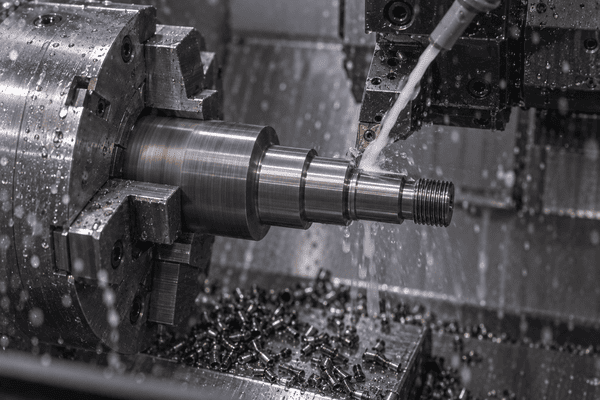
Soft machining means machining a part before it reaches its final hardness, not simply machining any soft material. A gear shaft, for example, may be rough and semi finish turned in annealed steel, heat treated for wear resistance, then ground at bearing journals. This sequence reduces tool wear and removes bulk material before the expensive finishing stage.
The term is also used for lower hardness materials such as aluminum, brass, copper, and engineering plastics. These materials often cut quickly, but they still need proper control because ductility can create long chips, burrs, smearing, or part distortion.
Which Materials and Processes Are Used for Soft Machining?
Soft machining covers conventional subtractive operations chosen for the feature geometry.
Annealed alloy steel: Rough turning, milling, drilling, and threading are usually completed before quenching, carburizing, or nitriding.
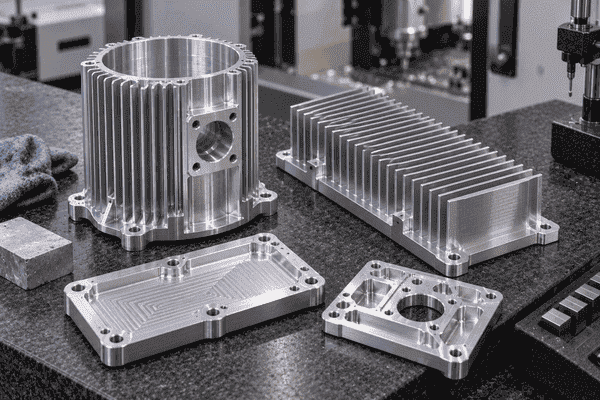
Aluminum alloys: High speed milling is effective for housings and structural parts, though thin walls require support and balanced toolpaths.
Brass and copper: Brass often machines cleanly, while copper can smear and requires sharp tools and chip control.
Engineering plastics: POM, nylon, PTFE, and PEEK can be machined, but heat and clamping force can change dimensions.
Soft state stainless steel: Stainless steel is commonly machined before final strengthening treatment, with care to avoid work hardening.
Milling makes pockets and complex faces, turning forms rotational diameters, and drilling creates holes. The correct process follows the feature, tolerance, and final material condition rather than the name of the material alone.
What Determines a Reliable Soft Machining Route?
Soft machining must anticipate what heat treatment will change.
Stock allowance: Leave only the material needed for post heat treatment finishing. Excess allowance increases grinding time, while too little may leave distortion uncorrectable.
Datum stability: Machine stable reference features early so the part can be re located after heat treatment.
Wall balance: Keep mass distribution and machining loads balanced to reduce movement in thin or asymmetrical sections.
Tool engagement: Avoid dwell and rubbing, especially in stainless steel, because they raise heat and promote work hardening.
Clamping force: Support flexible parts without squeezing them into a temporary shape that relaxes after unclamping.
PCBgogo provides CNC milling, turning, and mill turn machining for prototypes and production parts. For a part that will be hardened later, its DFM review can identify which dimensions should remain as finishing stock after the thermal cycle. PCBgogo CNC machining
PCBgogo - Precision Custom CNC Machining
Save time and money with reliable CNC milling & turning. Get tight?tolerance custom parts, streamlined sourcing, and consistent production quality for your projects.
Get a Free Quote >
How Does Soft Machining Differ From Hard Machining?
Hard machining removes material from a hardened workpiece, usually when final form accuracy, hardness, or localized wear performance cannot be achieved earlier. It can reduce the need for grinding in some geometries, but it requires rigid machines, suitable cutting tools, and conservative process control.
Soft machining normally offers higher material removal rates and longer tool life. Hard machining is reserved for dimensions that must be achieved after heat treatment, such as bearing seats, precision bores, and hardened gear profiles. The choice is not either or. Many precision parts use both stages in a planned sequence.
Which Quality Controls Matter After Soft Machining?
Soft machining inspection should protect the next operation rather than falsely treat the part as final.
Material certification: Confirms the incoming material and condition are suitable for the planned heat treatment.
Datum inspection: Verifies that center holes, reference faces, and locating diameters are usable after the next operation.
Allowance check: Confirms enough material remains for grinding or finish machining.
Hardness verification: Confirms the post treatment condition before final cutting.
The core challenge is balancing low cost stock removal with predictable post treatment geometry. Distortion, residual stress, long chips, burrs, and thin wall movement are usually controlled by process planning, not by a single cutting parameter.
Where Is This CNC Approach Used?
Applications for soft machining differ by load, environment, and production quantity.
Gear blanks: Gear blanks use annealed steels, nonferrous alloys, and engineering plastics where geometry, service load, and production volume justify CNC processing. The drawing should isolate functional dimensions so inspection effort follows the part's real job.
Transmission shafts: Transmission shafts use annealed steels, nonferrous alloys, and engineering plastics where geometry, service load, and production volume justify CNC processing. The drawing should isolate functional dimensions so inspection effort follows the part's real job.
Mold inserts: Mold inserts use annealed steels, nonferrous alloys, and engineering plastics where geometry, service load, and production volume justify CNC processing. The drawing should isolate functional dimensions so inspection effort follows the part's real job.
Aluminum housings: Aluminum housings use annealed steels, nonferrous alloys, and engineering plastics where geometry, service load, and production volume justify CNC processing. The drawing should isolate functional dimensions so inspection effort follows the part's real job.
Prototype fixtures: Prototype fixtures use annealed steels, nonferrous alloys, and engineering plastics where geometry, service load, and production volume justify CNC processing. The drawing should isolate functional dimensions so inspection effort follows the part's real job.
What Should Engineers Compare Before Choosing?
The table compares practical options associated with soft machining.
| Option | Key characteristic | Machining or process | Typical use |
|---|---|---|---|
| Annealed steel | Before hardening | High stock removal | Gears and shafts |
| Aluminum | Final or intermediate | Fast cutting | Housings |
| Brass | Usually final | Clean chip control | Fittings |
| Engineering plastic | Usually final | Low cutting force | Insulators |
What Drives a Manufacturable Design?
A manufacturable soft machining specification connects function to process capability.
Functional requirement: Define what soft machining must achieve before selecting a grade, tool, or process. Load, motion, environment, and mating components should translate into measurable drawing requirements.
Material condition: Record the incoming and final condition of annealed steels, nonferrous alloys, and engineering plastics. Hardness and heat treatment can change cutting behavior, distortion risk, and the operation that should create the final dimension.
Datum strategy: Build the setup around stable datums, bulk geometry, finishing stock, and thin sections. Functional datums reduce accumulated error and make the inspection report easier to compare with assembly needs.
Tool access: Review reach, corner radius, chip evacuation, and holder clearance before programming rough turning, milling, drilling, and semi finishing before heat treatment. Better access usually reduces setup count and avoids unnecessarily long tools.
Tolerance allocation: Apply close limits only to features that control fit, sealing, location, or motion. General surfaces can use a broader standard tolerance without weakening performance.
Workholding: Clamp against stable reference surfaces and support flexible areas near the cut. The setup must resist cutting force without temporarily bending the workpiece.
Surface finish: Specify roughness where friction, sealing, fatigue, or appearance requires it. A low Ra value on every surface increases cycle time and inspection with little functional return.
What Workflow Reduces Rework?
A reliable soft machining workflow closes decisions in a deliberate order.
Confirm the material specification and delivery condition for annealed steels, nonferrous alloys, and engineering plastics.
Mark stable datums, bulk geometry, finishing stock, and thin sections as critical, reference, or general features on the drawing.
Choose a setup sequence for rough turning, milling, drilling, and semi finishing before heat treatment that preserves the same functional datums.
Review the main process risks, especially residual stress, burrs, long chips, and post treatment movement, before approving the first article.
Define inspection records for machining allowance, datum condition, wall thickness, and post treatment hardness and agree on sampling before production.
FAQs
Is soft machining always done before heat treatment?
Usually, but not always. The term can also describe the machining of low hardness metals and plastics that do not require heat treatment.
How much allowance should be left before heat treatment?
Allowance depends on material, section thickness, heat treatment method, geometry, and the final tolerance. The finishing allowance should be agreed with the manufacturer rather than copied from a generic value.
Can soft machining achieve tight tolerances?
Yes, but heat treatment can alter dimensions. Critical surfaces often need a final operation after treatment if the part must hold close fit or runout requirements.
Soft machining is most valuable when it removes inexpensive material early while preserving a clear path to the final condition. Treat the pre heat treatment drawing and the finishing plan as one specification.