日本語
日本語
 한국어
한국어

Copper CNC Machining: A Practical Guide to Cutting It Right
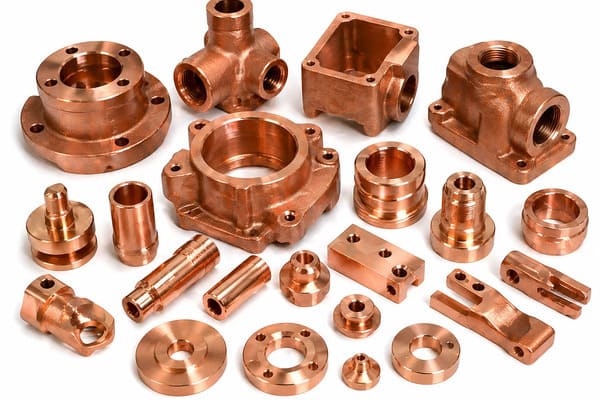
Copper CNC machining is the process of shaping raw copper stock into finished parts using computer-controlled cutting tools. Because copper is soft and gummy, it requires sharp carbide tooling, high spindle speeds, and steady chip evacuation to avoid smearing, built-up edge, and dimensional drift during machining.
Copper doesn't cut like aluminum, and it definitely doesn't cut like steel. Push a mill through it the wrong way and instead of clean shavings, the tool comes back wrapped in long, sticky ribbons of chip.
This guide walks through why copper machines the way it does, which grade actually makes sense for a given part, and what keeps a job running clean from the first cut to the finished piece.
Where Copper CNC Machining Shows Up in Real Parts
Copper earns its place in a design whenever a part needs to carry current or pull heat away faster than steel or aluminum can manage. The applications cluster around a handful of jobs where conductivity, not raw strength, is the deciding factor.
Busbars and power distribution rails: These carry heavy current between panels and switchgear, where every extra bit of resistance turns straight into wasted heat.
Heat sinks and cold plates: Copper pulls heat away from hot components faster than aluminum does, which is why it turns up in high-power electronics and dense LED fixtures.
RF connectors and waveguide components: Signal integrity depends on a conductive, dimensionally accurate surface, and machined copper delivers both without extra plating steps.
Electrical contacts and terminals: Repeated connect and disconnect cycles wear down contact surfaces over time, so copper's conductivity and machinability keep resistance low across the part's service life.
EDM electrodes: Copper's conductivity and machinability make it a common choice for electrodes used in electrical discharge machining of hardened tool steel.
Picking the right grade for each of these jobs matters just as much as getting the geometry right.
Which Copper Grade Actually Makes Sense to Machine
Not every copper alloy cuts the same way, and the grade chosen affects both machining speed and how the finished part performs once it's in service. Electrolytic tough pitch copper, known as C110 or ETP, is the default choice for general electrical parts because it balances conductivity with reasonable machinability. Oxygen-free copper, C101, trades a little machinability for higher purity, which matters in vacuum and high-reliability electronics work. Tellurium copper, C145, adds a small amount of tellurium specifically to improve machinability, which makes it the practical pick for parts with tight tolerances or intricate pocketing.
A quick comparison across the three most common grades:
| Grade | Conductivity | Machinability | Typical Use |
|---|---|---|---|
| C110 (ETP) | ~101% IACS | Fair | General electrical parts, busbars |
| C101 (OFHC) | ~101% IACS, oxygen-free | Fair to poor | High-purity electronics, vacuum parts |
| C145 (Tellurium Copper) | ~90-95% IACS | Good, free-machining | High-volume parts, connectors, complex geometry |
For parts where conductivity has to be as high as possible, ETP or oxygen-free copper is worth the extra machining effort. For parts where geometry and cycle time matter more, tellurium copper usually wins.
What Actually Determines a Clean Copper Cut
Feed rate, tool choice, and chip control decide whether a copper job finishes clean or turns into a fight against smeared burrs and dulled tools.
Tool material and coating: Sharp, polished carbide clears chips better than high-speed steel and resists the built-up edge that ruins surface finish on softer metals like copper.
Rake angle: An 18 to 25 degree rake shears copper cleanly instead of pushing it, which is the difference between a crisp chip and a smeared one.
Spindle speed and chip load: Copper generally likes higher cutting speeds paired with a steady, moderate feed. Too light a feed just rubs the material instead of cutting it.
Chip evacuation: Copper chips curl into long, stringy ribbons that reweld to the part if they're left sitting in the cut, so air blast or flood coolant needs to keep pace with the tool.
Wall thickness and fixturing: Copper is soft enough to flex under clamping pressure, so thin walls and deep pockets need extra support to hold tolerance through the whole job.
Getting all five of these right on a first article usually takes some trial and error. PCBgogo's CNC machining service reviews the CAD file and requested tolerances before cutting starts, which catches thin walls, unrealistic accuracy calls, and material mismatches before they turn into scrapped stock and lost time.
Standards That Keep Machined Copper Parts Consistent
A handful of published standards define what "copper" means on a drawing and how a finished part gets checked against it.
ASTM B152/B152M: Specifies the chemical composition and mechanical requirements for copper sheet, strip, and plate stock.
ASTM B187/B187M: Covers copper bus bar and rod used in electrical distribution equipment.
ISO 9001: Defines the quality management system a shop uses to control process consistency, rather than specifying anything about the part itself.
CMM inspection: Coordinate measuring machine checks confirm the machined dimensions match the drawing after the part comes off the mill.
None of these standards guarantee machinability on their own. They confirm material composition and dimensional accuracy, and it's still on the shop to control the actual cutting process.
Common Problems in Copper Machining and Where the Industry Is Headed
Most copper machining problems trace back to the same root cause: heat and material that won't let go of the tool cleanly.
Built-up edge: Copper's gumminess causes material to weld onto the cutting edge, which degrades surface finish until the tool is swapped or resharpened.
Work hardening: Chips that get recut instead of cleared harden the surface they pass over, making the next pass tougher and accelerating tool wear.
Faster tool wear: Copper dulls cutters quicker than a comparably soft aluminum grade because of that adhesion, so tool changes happen more often on longer runs.
Tighter tolerances in electronics: As connectors and RF components shrink, copper parts increasingly need tolerances that older tooling setups struggle to hold consistently.
Rising demand from EV thermal management: Battery cooling and power electronics in electric vehicles are pushing more copper machining volume than the industry saw a decade ago.
The Bottom Line
Copper machines cleanly once the tooling, speed, and chip evacuation are dialed in for its particular gumminess. Choosing the right grade for the job, whether that's ETP copper for conductivity or tellurium copper for easier cutting, matters as much as the machine parameters themselves. Bringing a shop in early, before the design is locked, tends to save more time than chasing feeds and speeds after the fact.
Frequently Asked Questions
Can copper be CNC machined safely without special equipment?
Yes. Standard 3-axis or 4-axis CNC mills handle copper without modification. The main differences from machining steel or aluminum are sharper tooling, higher spindle speeds, and closer attention to chip evacuation.
What tool coating works best for copper?
Polished, uncoated carbide performs well, and carbide with a TiN, TiAlN, or DLC coating extends tool life further. The coating mainly helps resist built-up edge on longer production runs.
Why does copper wear out cutting tools faster than steel?
Copper is soft, but it's also gummy. It smears and adheres to the cutting edge rather than abrading it the way steel does, and that adhesion is what shortens tool life.
What feed rate and speed work best for copper milling?
Copper generally responds well to higher cutting speeds paired with a moderate, steady chip load. The exact numbers depend on tool diameter and machine rigidity, so it's worth having a shop familiar with the material dial in the specifics.
Is copper more expensive to machine than aluminum?
Usually, yes. Copper stock costs more per pound than aluminum, and higher tool wear adds to per part cost. For parts where conductivity is the priority, that tradeoff is typically worth it.