日本語
日本語
 한국어
한국어

CNC Workholding: Methods, Fixtures, and Setup Decisions
CNC workholding is the system used to locate, support, and clamp a part so it remains stable during machining. Good workholding controls the part without blocking tools, distorting thin walls, or adding unnecessary setups.
Which CNC Workholding Methods Fit Common Parts?
The right workholding method depends on part geometry, material, force direction, and the number of operations.
Machine vises: A fast, rigid option for prismatic parts and fixture plates.
Soft jaws: Machined to match a turned or irregular profile, reducing marking and improving repeatable location.
Collets and chucks: Common for shafts, pins, and cylindrical parts on a lathe.
Vacuum fixtures: Useful for thin plates with enough surface area, but cutting forces and leakage must be managed.
Custom fixtures: Justified when a part needs repeatable orientation, multiple operations, or higher production volume.
Workholding should secure the part without distortion while giving the cutting tool adequate access to all required features.
What Actually Makes a Setup Reliable?
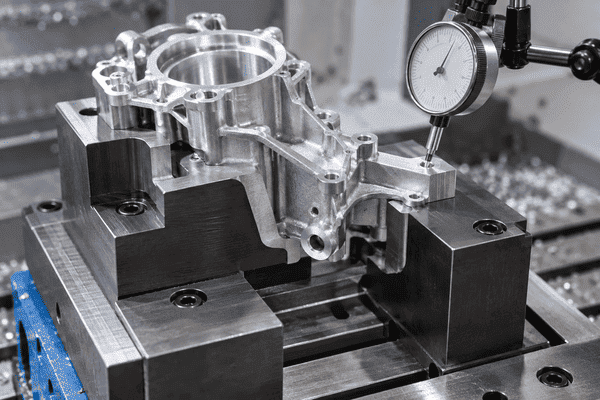
Reliable workholding follows a locating scheme that resists the cutting force while leaving the required features accessible. The 3 2 1 principle uses three support points, two side location points, and one end stop to constrain the part predictably. Clamps should hold the workpiece against those locators, not push it away from them.
PCBgogo CNC milling supports 3 axis, 4 axis, and 5 axis CNC milling as well as CNC turning for custom parts. A DFM review can flag operations that need a dedicated fixture, a soft jaw profile, or a change in datum before a complex part reaches the machine.
Which Errors Raise Risk and Cost?
Vibration, tool collision, workpiece lift, insufficient support, excessive clamp force, and poor chip evacuation are common setup failures. Thin parts need broad support and low profile clamping. A fixture that saves one setup can improve positional accuracy because it reduces datum transfer error.
Where Is This CNC Approach Used?
Applications for CNC workholding differ by load, environment, and production quantity.
Prismatic vise setups: Prismatic vise setups use workpieces ranging from rigid steel blocks to thin aluminum and plastic parts where geometry, service load, and production volume justify CNC processing. The drawing should isolate functional dimensions so inspection effort follows the part's real job.
Soft jaw turning: Soft jaw turning use workpieces ranging from rigid steel blocks to thin aluminum and plastic parts where geometry, service load, and production volume justify CNC processing. The drawing should isolate functional dimensions so inspection effort follows the part's real job.
Thin plate vacuum fixtures: Thin plate vacuum fixtures use workpieces ranging from rigid steel blocks to thin aluminum and plastic parts where geometry, service load, and production volume justify CNC processing. The drawing should isolate functional dimensions so inspection effort follows the part's real job.
Five axis fixtures: Five axis fixtures use workpieces ranging from rigid steel blocks to thin aluminum and plastic parts where geometry, service load, and production volume justify CNC processing. The drawing should isolate functional dimensions so inspection effort follows the part's real job.
Multi part production plates: Multi part production plates use workpieces ranging from rigid steel blocks to thin aluminum and plastic parts where geometry, service load, and production volume justify CNC processing. The drawing should isolate functional dimensions so inspection effort follows the part's real job.
What Should Engineers Compare Before Choosing?
The table compares practical options associated with CNC workholding.
| Option | Key characteristic | Machining or process | Typical use |
|---|---|---|---|
| Machine vise | Prismatic parts | High | Low |
| Soft jaws | Profiled or round parts | High | Medium |
| Vacuum fixture | Thin plates | Moderate | Medium |
| Custom fixture | Repeat production | Very high | High |
What Drives a Manufacturable Design?
A manufacturable CNC workholding specification connects function to process capability.
Functional requirement: Define what CNC workholding must achieve before selecting a grade, tool, or process. Load, motion, environment, and mating components should translate into measurable drawing requirements.
Material condition: Record the incoming and final condition of workpieces ranging from rigid steel blocks to thin aluminum and plastic parts. Hardness and heat treatment can change cutting behavior, distortion risk, and the operation that should create the final dimension.
Datum strategy: Build the setup around functional datums, accessible faces, thin walls, and repeatable locating surfaces. Functional datums reduce accumulated error and make the inspection report easier to compare with assembly needs.
Tool access: Review reach, corner radius, chip evacuation, and holder clearance before programming locating, supporting, and clamping before milling or turning. Better access usually reduces setup count and avoids unnecessarily long tools.
Tolerance allocation: Apply close limits only to features that control fit, sealing, location, or motion. General surfaces can use a broader standard tolerance without weakening performance.
Workholding: Clamp against stable reference surfaces and support flexible areas near the cut. The setup must resist cutting force without temporarily bending the workpiece.
Surface finish: Specify roughness where friction, sealing, fatigue, or appearance requires it. A low Ra value on every surface increases cycle time and inspection with little functional return.
What Workflow Reduces Rework?
A reliable CNC workholding workflow closes decisions in a deliberate order.
Confirm the material specification and delivery condition for workpieces ranging from rigid steel blocks to thin aluminum and plastic parts.
Mark functional datums, accessible faces, thin walls, and repeatable locating surfaces as critical, reference, or general features on the drawing.
Choose a setup sequence for locating, supporting, and clamping before milling or turning that preserves the same functional datums.
Review the main process risks, especially part lift, distortion, chatter, collision, and trapped chips, before approving the first article.
Define inspection records for fixture location, clamp contact, setup runout, first article dimensions, and repeatability and agree on sampling before production.
Which Quality Controls Belong in the Plan?
Quality control for CNC workholding is a stack of material, process, and dimensional checks.
Incoming control: Verify material identity and condition before machining. This prevents a correct program from producing parts in the wrong alloy or hardness.
First article inspection: Measure the complete first setup before releasing the batch. The result confirms both the program and the datum transfer strategy.
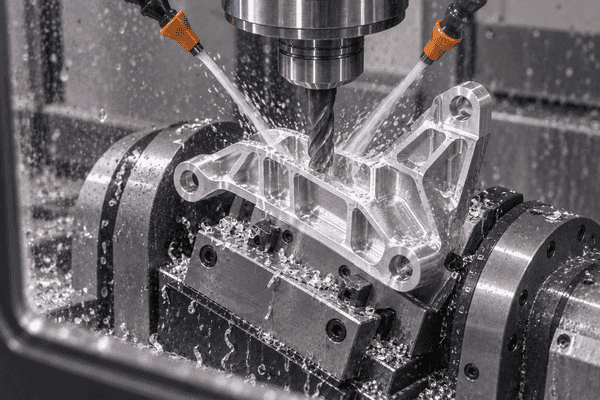
In process checks: Monitor tool wear and the dimensions most sensitive to part lift, distortion, chatter, collision, and trapped chips. Scheduled checks are more reliable than waiting for the final inspection to reveal drift.
Final verification: Report fixture location, clamp contact, setup runout, first article dimensions, and repeatability using instruments with suitable resolution and calibration status. A quality certificate does not replace part specific evidence.
Which Challenges and Trends Matter Now?
The central challenge for CNC workholding is improving precision and speed without specifying cost that the function does not need.
Higher mix production: More variants make flexible fixtures and documented setup offsets increasingly important.
Tighter functional fits: Designers are specifying closer fits while also expecting shorter lead times, which increases the value of early DFM review.
Digital inspection records: Structured measurement data helps teams connect drawing revisions, process changes, and nonconformance decisions.
Cost pressure: The strongest savings usually come from sensible tolerances, accessible geometry, and fewer setups rather than a lower hourly machine rate.
FAQs
What is the best CNC workholding method?
There is no single best method. A vise is excellent for many prismatic parts, while soft jaws, collets, vacuum fixtures, or custom fixtures fit other geometries.
Why are soft jaws used in CNC turning?
Soft jaws can be machined to the part profile, giving more contact area, repeatable location, and lower risk of marking delicate surfaces.
How does workholding affect tolerance?
Workholding affects deformation, vibration, datum consistency, and tool access. All of these can change the final dimension and geometric tolerance.
Workholding should be designed at the same time as the toolpath. If the part cannot be clamped and cut without compromise, the drawing is not yet production ready.