日本語
日本語
 한국어
한국어

CNC Fillet Design Guide: How to Choose the Right Radius
KEY DEFINITION
A CNC fillet is a rounded transition between two part surfaces. For an internal milled corner, choose the largest functional radius that allows a rigid standard cutter, make the part radius larger than the cutter radius when possible, and increase the radius as pocket depth grows. Use chamfers for simple edge breaks and lead-ins.
The easiest fillet to draw can become the slowest feature to machine. A tiny internal radius may force a small, flexible tool into a deep pocket, while an unnecessary floor blend can add a separate three-dimensional finishing operation.
This guide connects CNC fillet geometry to cutting tools, strength, cost, CAD decisions, and drawing requirements.
What Is a CNC Fillet?
A CNC fillet is a concave rounded transition on a machined part, although the term is often used loosely for both inside fillets and outside rounds. The feature is defined by a radius, such as R2 mm.
Some fillets are unavoidable because a rotating cutter cannot create a zero-radius vertical inside corner. Others reduce stress concentration, protect edges, improve handling, guide flow, or create a visual blend.
Autodesk Fusion supports constant, variable, asymmetric, tangent continuous, and curvature continuous fillets. Each can imply a different toolpath and inspection burden, so prefer a constant radius unless function demands a complex blend.
The first design task is therefore to identify which physical corner is being rounded.
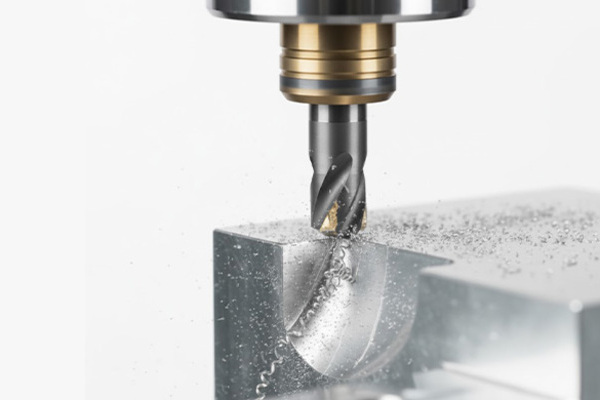
How Do the Four Common CNC Fillet Locations Differ?
The four common CNC fillet locations are vertical inside corners, pocket floors, external edges, and three-dimensional surface blends.
| Fillet location | Typical tool or method | Main design concern | Relative cost risk |
|---|---|---|---|
| Vertical inside corner | Flat end mill | Cutter diameter, reach, engagement | High when the radius is small or deep |
| Wall to floor transition | Bull nose, corner radius, or ball end mill | Tool corner profile and extra finishing | Medium to high |
| External vertical round | Contouring or corner rounding tool | Function, handling, appearance | Usually lower |
| Freeform surface blend | Ball end mill with three-dimensional paths | Stepover, finish, tool access | High |
A flat end mill naturally leaves a vertical inside radius close to its own radius. A square end mill can leave the pocket floor flat, while a bullnose tool leaves a small floor radius, and a ball end mill can generate a larger blend.
Autodesk gives a useful example: a 3 mm diameter tool produces 1.5 mm vertical radii, while a 1 mm tool corner radius produces 1 mm floor fillets. Separating these dimensions can avoid an unnecessary floor blend.
How Should You Choose an Internal CNC Fillet Radius?
Choose an internal CNC fillet radius by balancing function, cutter diameter, pocket depth, access, and corner engagement. There is no universal minimum because shops use different tooling and processes.
Use this five-step selection process:
Classify the function: Mark the corner as process required, stress critical, assembly related, safety related, or cosmetic.
Check tool access: Confirm that the cutter and holder can reach full depth without a collision.
Select a rigid cutter: Favor the largest standard diameter that fits the geometry.
Give the tool clearance: Make the part radius larger than the cutter radius when possible. Equal radii cause high corner engagement.
Standardize the radii: Reuse a small set of values to reduce tool changes and inspection setups.
An Autodesk manufacturing guide recommends keeping wall height below flute length and, as a starting point, making fillet radius greater than one third of wall height. Treat this as a DFM discussion starter, not a universal limit.
Why Do Small or Deep CNC Fillets Cost More?
Small or deep CNC fillets cost more because they require narrow tools with long reach, lower rigidity, lighter cuts, and extra finishing passes.
Tool deflection: A long, small cutter bends more readily, affecting size and finish.
Corner engagement: A tool that nearly matches the pocket radius can experience high load as it turns.
Tool changes: Unrelated radii may require several cutters, offsets, and checks.
Three-dimensional finishing: Floor blends may require a ball end mill with small stepovers.
Special processes: A sharp corner may need EDM, broaching, filing, or relief.
Protolabs notes that milled inside corners receive a natural radius and square corners can require EDM or very small tools. It recommends a 45-degree chamfer as a quicker external edge treatment when function permits.
When Should You Use a Fillet, Chamfer, or Corner Relief?
Use a fillet for smooth load transfer, a chamfer for an edge break or lead-in, and a corner relief when a square feature must fit a milled pocket.
CNC fillet: Use a radius at rib roots, bosses, and loaded wall transitions.
Chamfer: Use an angled cut for deburring, screw entry, pin alignment, or economical edge treatment.
Dogbone relief: Extend a circular cut beyond the corner so a square tab can seat fully.
T-bone relief: Place relief mainly along one wall to control its location.
Secondary process: Reserve EDM or broaching for corners that prohibit relief or radius.
Fillets do not guarantee structural safety. NASA turbopump design criteria relate fillet radius to stress concentration and apply concentration factors in fatigue assessment. Critical radii require analysis or validated test data because thickness, load, material, finish, and nearby geometry all matter.
What Should a CNC Fillet Drawing Specify?
A CNC fillet drawing should control only radii that affect function, fit, strength, safety, or appearance.
Radius and scope: Call out every critical value or use a clearly scoped general note.
Tolerance: Match limits to function and the available inspection method.
Location: Identify the blend extent when CAD tangent propagation could be ambiguous.
Surface requirement: Control finish or profile where sealing, fatigue, contact, or appearance requires it.
Edge treatment: Keep a general deburr note separate from controlled rounds.
Variable or curvature continuous blends may need a surface profile tolerance tied to datums. Agree on inspection before release.
What CNC Fillet Checks Should Happen Before Quoting?
A prequote CNC fillet review should confirm function, access, tooling, tolerance, and mating clearance.
Remove cosmetic fillets: Keep only rounds that earn their machining time.
Separate wall and floor radii: Do not round every pocket edge automatically.
Increase deep pocket radii: Allow a larger, more rigid cutter.
Use repeated values: Ask which cutter sizes the shop stocks.
Check square mating corners: Add dogbone or T-bone relief where needed.
Review tool approach: Look for holder collision and extra setups.
Relax noncritical tolerances: Match limits to function and inspection.
Autodesk documents that toolpath fillets smooth cutter motion, helping maintain feed rate and reduce marks. A toolpath fillet changes motion, while a part fillet changes finished geometry.
Frequently Asked Questions About CNC Fillets
What is the minimum CNC fillet radius?
There is no universal minimum CNC fillet radius. The achievable value depends on cutter size, feature depth, reach, material, machine rigidity, finish, tolerance, and the shop's available tools.
Why can a CNC mill not make a sharp internal corner?
A rotating milling cutter has a circular cross section, so it leaves a radius where two vertical inside walls meet. A sharp corner requires a relief feature, a different process such as EDM, or manual cleanup.
Should the part radius equal the end mill radius?
The part radius should usually be larger than the end mill radius when space permits. Extra clearance reduces the sudden increase in cutter engagement that occurs when tool and corner radii nearly match.
Are fillets stronger than chamfers?
Fillets generally distribute stress more gradually than chamfers at a loaded transition, but performance depends on the complete geometry and loading. A chamfer is often the better choice for deburring and assembly lead-ins.
Do external fillets add as much cost as internal fillets?
External fillets are usually less constrained by cutter diameter and corner engagement, but a precise blended round can still add tooling, finishing, and inspection time. A simple chamfer or general edge break is often cheaper when appearance and handling allow it.
Conclusion
Good CNC fillet design starts with function, then gives the manufacturing process enough radius, access, and tolerance to use rigid standard tooling. Separate wall corners from floor blends, use reliefs for square mating tabs, and review every critical radius with the machine shop before release.