日本語
日本語
 한국어
한국어

What Is Aluminum CNC Machining? A Complete Guide
QUICK ANSWER
Aluminum CNC machining is a subtractive manufacturing process that uses computer-controlled cutting tools to remove material from solid aluminum stock, producing precision parts through milling, turning, drilling, and tapping. Success depends on matching the right alloy, tooling, and cutting strategy to the part.
Machining aluminum successfully comes down to matching the alloy, the cutting process, and the tooling to the part in front of you. Get any one of those wrong, and you end up with chatter, chip welding, or a part that fails inspection.
This guide walks through what aluminum CNC machining actually involves, which alloys work best, and how to run the process from raw stock to finished part.
What Is Aluminum CNC Machining?
Aluminum CNC machining is a subtractive manufacturing process in which computer-controlled cutting tools remove material from a solid aluminum block to produce a precision part. The machine reads a CAD-derived toolpath and directs the cutter through operations like milling, turning, drilling, and tapping to reach the final geometry.
Aluminum is one of the most commonly machined metals because it combines low density, a strong strength-to-weight ratio, natural corrosion resistance, and forgiving machinability. Unlike steel, aluminum cuts with less tool pressure and lower heat generation, which allows higher spindle speeds and faster feed rates without sacrificing surface finish. That combination is why aluminum shows up constantly in electronics enclosures, automotive brackets, and aerospace structural components.
Best Aluminum Alloy for CNC Machining
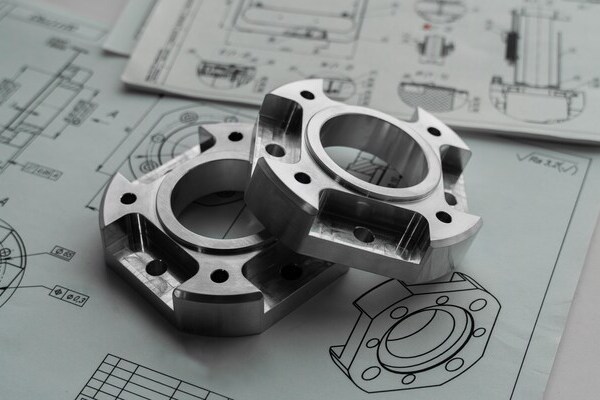
The right alloy depends on the balance between strength, corrosion resistance, and cost that a given part actually needs. Four alloys account for most CNC aluminum work.
| Alloy | Key Traits | Common Applications |
|---|---|---|
| 6061-T6 | Balanced strength, easy to cut, good corrosion resistance | Brackets, enclosures, general-purpose parts |
| 7075-T6 | Very high strength, more tool wear | Aerospace structures, high-stress components |
| 2024 | Strong fatigue resistance, lower corrosion resistance | Aircraft frames, load-bearing structural parts |
| 5052 | Excellent corrosion resistance, good formability | Marine parts, fuel tanks, sheet metal components |
6061-T6 is the default choice for most projects because it machines cleanly and holds tight tolerances without excessive tool wear. Reach for 7075 only when the application genuinely demands maximum strength, since it costs more and cuts harder. The T6 or T651 temper designation matters as much as the alloy number itself: T651 includes an extra stress-relief step that reduces warping when machining large plates or removing a significant percentage of the starting stock.
CNC Processes for Aluminum
Aluminum parts typically pass through a combination of subtractive operations, each suited to a different geometry.
CNC milling: A rotating multi-point cutter removes material to produce flat surfaces, pockets, slots, and contoured geometry. Milling is the primary process for housings and structural parts.
CNC turning: The aluminum stock rotates while a stationary tool shapes the outer or inner diameter, producing shafts, bushings, and other cylindrical features.
Drilling and tapping: Drilling creates holes, boring refines them to tighter tolerances, and tapping cuts internal threads directly into the part.
Surface finishing: Anodizing, bead blasting, and polishing follow the cutting operations to add corrosion resistance or a specific surface appearance.
Most production parts combine two or more of these processes in a single job, which is why sequencing and fixturing planning happen before the first cut.
How to CNC Machine Aluminum
Step 1: Prepare the CAD model and toolpath: Start from a clean CAD file with realistic tolerances and clearly labeled critical dimensions. STEP and IGES formats preserve geometry accurately during CAM programming, which reduces the risk of rebuild errors.
Step 2: Select the alloy and stock size: Choose the alloy and temper based on the part's mechanical requirements, then size the raw stock with enough margin for secure clamping.
Step 3: Set up workholding: Clamp the stock against flat, clean locating surfaces. Unstable fixturing is one of the most common causes of dimensional drift and chatter in aluminum parts.
Step 4: Rough out the geometry: Remove the bulk of the material first using higher engagement passes, leaving stock for a finishing pass on critical surfaces.
Step 5: Run the finishing pass: Reduce cutting engagement and use a sharp, appropriately coated end mill to achieve final dimensions and surface finish.
Step 6: Deburr and inspect: Remove sharp edges, then check the part against the drawing using calipers, gauges, or CMM inspection depending on tolerance requirements.
Step 7: Apply surface finishing if specified: Anodizing, bead blasting, or polishing happen after machining is complete and the part has passed dimensional inspection.
Best Tools & Cutting Strategies for Aluminum
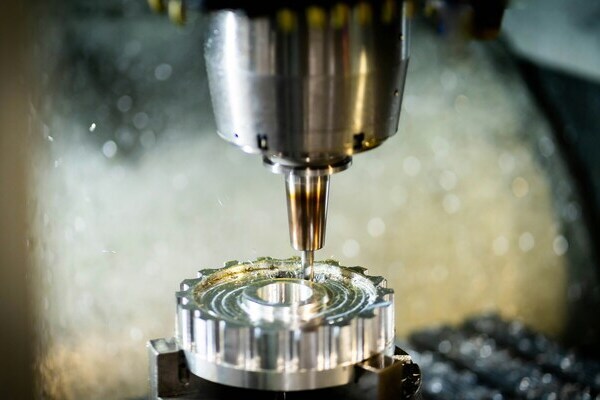
Aluminum responds best to sharp, polished carbide tooling that clears chips quickly instead of packing them into the cut. According to Harvey Performance, two- and three-flute end mills are the standard choice for aluminum because higher flute counts leave less room for aluminum's relatively large chips. Two-flute tools maximize chip clearance for slotting, while three-flute tools offer a stronger core for side milling and finishing passes.
Feed rate calculation follows a simple relationship: spindle speed multiplied by the number of flutes multiplied by the chip load per tooth. Sandvik Coromant's milling formulas identify spindle speed, cutting edge count, and feed per tooth as the core variables in this calculation, and starting values should always come from the tool manufacturer's data before adjusting for stock diameter and machine rigidity.
Chip evacuation matters as much as speed. An air blast, mist system, or flood coolant clears chips before they get recut, since recutting is what destroys surface finish and shortens tool life. Fine aluminum dust also needs proper handling: OSHA notes that finely divided aluminum dust can become combustible under certain conditions, so shops should use appropriate ventilation and dust collection rather than treating it like ordinary shop debris.
Applications of Aluminum CNC Machining
Aluminum's machinability and strength-to-weight ratio make it the default metal across several industries.
Consumer electronics: Laptop frames, phone housings, and camera bodies rely on tight machining marks and consistent fitment for a premium feel.
Automotive and aerospace components: Brackets, structural plates, and engine bay parts use aluminum to cut weight without sacrificing strength under stress.
Robotics and automation: Motor mounts, sensor brackets, and linear guide plates depend on predictable tolerances to keep motion systems accurate.
Product development: Functional prototypes use aluminum when a design needs more strength and dimensional stability than 3D-printed plastic can provide.
Once a part moves from prototype to production volume, having a manufacturing partner that can hold the same tolerances across every run becomes the real differentiator. This is where working with a fabricator that runs AOI and dimensional inspection on every batch, like PCBgogo's CNC machining service, keeps parts consistent from the first unit to the thousandth.
Advantages of CNC Machining Aluminum
Aluminum outperforms steel on the metrics that matter most for prototyping and mid-volume production. It cuts at higher spindle speeds with lower tool wear, which translates directly into shorter cycle times and lower per-part machining cost. Its corrosion resistance holds up in outdoor and marine environments without heavy protective coatings, and its strength-to-weight ratio lets designers cut mass from a part without giving up structural performance. Aluminum also takes a clean surface finish straight off the mill, which means fewer secondary finishing operations compared to steel parts.
The Bottom Line
Aluminum earns its place as the go-to CNC material because it balances machinability, strength, and cost better than almost any alternative. Getting consistent results comes down to picking the right alloy and temper, using sharp carbide tooling with proper chip evacuation, and building the process around stable workholding from the first cut to the final inspection.
FAQ
What is the easiest aluminum alloy to CNC machine?
6061-T6 is generally the easiest alloy to machine. It cuts cleanly at high speeds, resists chip welding, and is widely available in the sizes most CNC shops need.
Is 6061 or 7075 better for CNC machining?
6061 is better for general-purpose parts because it machines faster and costs less. 7075 is the better choice only when a part genuinely requires higher strength, such as aerospace or high-load components.
Do you need coolant to CNC machine aluminum?
Not always. Many aluminum jobs run dry with an air blast to clear chips, though flood coolant or mist lubrication can reduce built-up edge and improve finish on deeper cuts.
How thin can aluminum walls be in a CNC part?
Most reliable designs keep wall thickness above 1 mm. Thinner walls increase the risk of vibration and warping, especially on taller or unsupported features.
What file format is best for CNC aluminum machining?
STEP and IGES files are the most reliable formats because they preserve exact geometry through the CAM programming process, unlike STL files, which require surface reconstruction.