日本語
日本語
 한국어
한국어

QFN vs. QFP: Which IC Package Is Right for Your PCB Design?
When you're picking a chip package for your next board, the decision usually comes down to two familiar shapes: the leadless QFN and the gull-winged QFP. Both are quad flat surface-mount packages, both show up constantly in schematics, and both can quietly derail a project if the wrong one is matched to the wrong application. If you've searched “qfn vs qfp package,” you're probably trying to figure out which one fits your space, thermal, and assembly requirements — not just which one is more popular.
This guide breaks down exactly how QFN and QFP differ, when each one makes sense, and what to keep in mind for PCB layout and assembly. We'll also show how PCBgogo's fabrication and assembly services take the guesswork out of building boards with either package.
What Is a QFN Package?
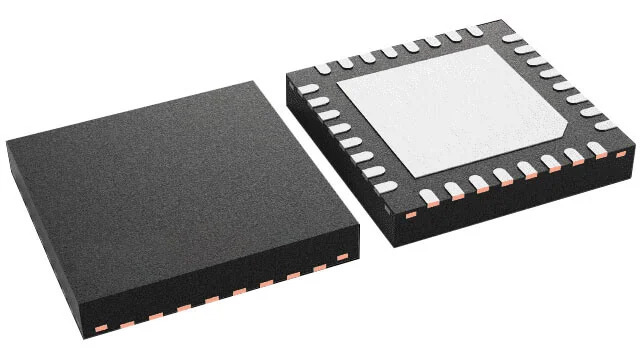
QFN stands for Quad Flat No-Lead. As the name suggests, it has no protruding leads at all. Instead, electrical connections are made through flat metal pads on the underside of the package, soldered directly to the PCB. Most QFN packages also include a large exposed pad at the center that connects straight to the die, giving the chip a very short, low-resistance path to dump heat into the board.
Because there's nothing sticking out the sides, QFN packages are compact, low-profile (often under 1 mm tall), and mechanically robust. That's why they've become the default choice for RF modules, power management ICs, wearables, and other designs where every square millimeter counts.
What Is a QFP Package?
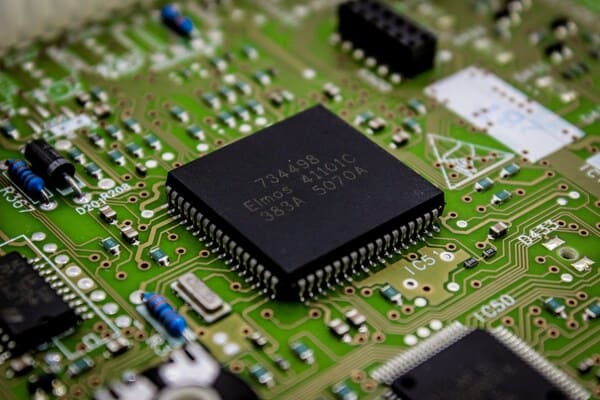
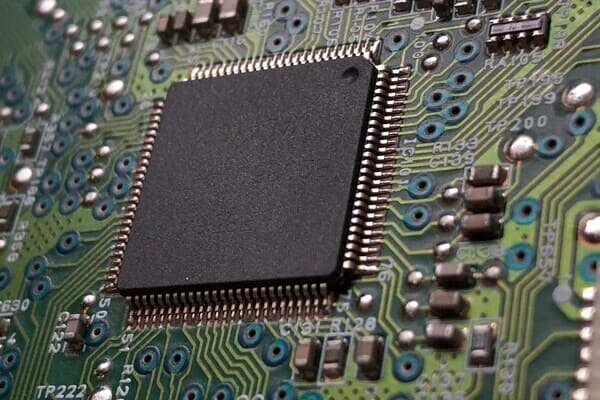
QFP stands for Quad Flat Package. Unlike QFN, it uses gull-wing leads that extend outward from all four sides of the body and bend downward to meet the PCB pads. Those visible leads create solder joints you can actually see and probe, which is a big part of QFP's appeal.
QFP has been an industry staple since the 1980s and still shows up in microcontrollers, FPGAs, DSPs, and industrial controllers — anywhere a high pin count and straightforward rework matter more than shaving off a few millimeters of board space.
QFN vs. QFP: Key Differences at a Glance
| Factor | QFN | QFP |
|---|---|---|
| Lead structure | No leads; bottom-side metal pads | Gull-wing leads on all four sides |
| Footprint | Compact; a 32-pin QFN can fit in roughly 5×5 mm | Larger; a comparable QFP may need 7×7 mm or more |
| Profile height | Low, typically 0.75–1.0 mm | Generally taller due to lead geometry |
| Thermal performance | Excellent, thanks to the exposed thermal pad | Moderate; heat mostly escapes through the leads |
| Electrical performance | Lower parasitic inductance and capacitance, better for high-frequency signals | More inductance from longer lead paths, fine for moderate speeds |
| Pin count range | Typically 8 to 100+ pins | Typically 32 to 300+ pins |
| Solder joint inspection | Hidden under the package; needs X-ray | Fully visible; easy optical inspection |
| Rework | Difficult, requires specialized equipment | Straightforward with hot air or a soldering iron |
| Assembly tolerance | Tighter; leadless design is less forgiving of misalignment | More forgiving; leads self-center during reflow |
| Typical cost | Slightly higher due to tighter process control | Generally more cost-effective, mature process |
| Common applications | Wireless modules, PMICs, wearables, IoT sensors | MCUs, FPGAs/DSPs, industrial controllers, automotive ECUs |
Structure and Footprint
The core difference between these two packages comes down to one design choice: does the IC use leads, or does it rely on bottom pads? That single decision cascades into everything else — size, thermal path, assembly method, and even how you troubleshoot a failed board.
QFN's leadless design lets it shrink dramatically compared to QFP for the same pin count, and it also sits lower on the board. If your design is fighting for millimeters — a fitness tracker, a hearing aid, a slim IoT sensor — QFN usually wins on footprint alone.
QFP trades that compactness for accessibility. The extending leads take up more board real estate, but they also make the package easier to place, solder, and inspect, which matters a lot during prototyping or low-volume runs.
Thermal and Electrical Performance
Heat dissipation is where QFN tends to pull ahead. The exposed thermal pad sits directly beneath the die and, when properly connected to the PCB's ground plane through thermal vias, creates a short, low-resistance path for heat to escape. This makes QFN a strong fit for power ICs and RF amplifiers that run hot in a small space.
QFP packages dissipate heat mainly through the leads and the board copper around them, which works fine for moderate power levels but can't match QFN's efficiency in high-power, compact designs.
On the electrical side, QFN's short pad connections introduce less parasitic inductance and capacitance than QFP's longer gull-wing leads. That translates into cleaner high-speed and high-frequency signal integrity — a meaningful advantage for RF front ends, high-speed data interfaces, and anything operating above a few hundred MHz. QFP is generally fine for moderate switching speeds where lead-length inductance isn't a major factor.
Assembly, Inspection, and Rework
This is where a lot of design decisions get made in practice, especially for teams weighing prototyping speed against production efficiency.
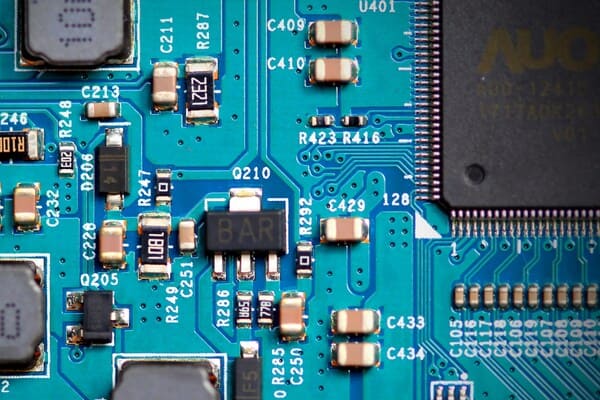
QFP assembly follows familiar SMT practices. Solder paste is stencil-printed, the component is placed, and reflow soldering forms the joints — the leads even help self-center the part during reflow. Once soldered, every joint is visible, so a quick visual or optical inspection can catch bridging, tombstoning, or insufficient solder. Rework is straightforward: a hot air station or soldering iron can lift and replace a QFP without much drama.
QFN assembly demands more precision. Because the solder joints and thermal pad are hidden underneath the package, you can't just look at the board to confirm a good connection — X-ray inspection is typically required to check for voiding, especially under that center thermal pad. Stencil design has to balance enough paste for a solid thermal and electrical connection without so much that it causes bridging between adjacent pads. Misaligned QFN placement is also harder to catch and fix after the fact, since there's no lead to visually confirm contact.
This is exactly the kind of process control where a fabrication partner's experience matters. At PCBgogo, our assembly lines are set up to handle both package types — including the stencil aperture design, controlled reflow profiles, and automated X-ray inspection that fine-pitch QFN parts require — so you're not the one troubleshooting voids or bridging after the fact.
When to Choose QFN
QFN is generally the better call when:
Board space is tight. Wearables, hearing aids, compact IoT sensors, and anything with a strict form factor benefit from QFN's smaller footprint and lower profile.
Thermal performance matters. Power management ICs, RF power amplifiers, and other heat-generating components dissipate more efficiently through a QFN's exposed pad.
You need high-frequency signal integrity. RF modules and high-speed interfaces benefit from QFN's lower parasitic inductance.
You're moving to volume production with a mature, validated design, where the tighter assembly tolerances of QFN are less of a risk than during early prototyping.
When to Choose QFP
QFP tends to make more sense when:
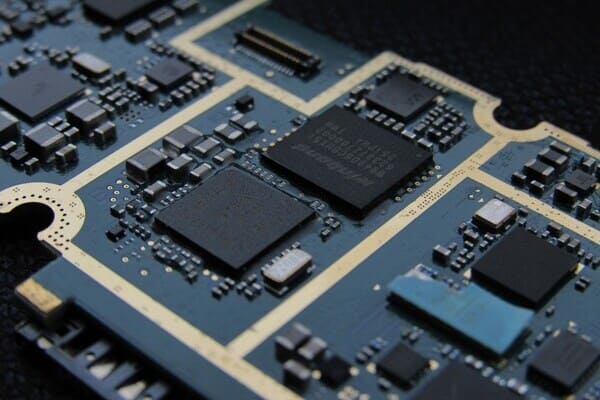
You need a high pin count. Complex microcontrollers, FPGAs, and DSPs with 100+ pins are often only available or practical in QFP.
You're still prototyping. Visible leads make debugging, probing, and rework far easier while a design is still being validated.
Rework and field repair matter. Industrial equipment and automotive systems that need occasional hand rework benefit from QFP's accessible leads.
Moderate signal speeds are enough. If your design runs under a few hundred MHz, QFP's added lead inductance generally isn't a problem.
A common and reasonable approach: start a design in QFP during validation, then migrate the same IC family to QFN once the board is stable and ready for size optimization in production.
PCB Layout Tips for Both Packages
Follow the datasheet footprint precisely. Both packages are sensitive to pad size and spacing — don't eyeball it.
Add thermal vias under the QFN's exposed pad. A grid of small vias connecting the pad to internal ground/copper planes significantly improves heat transfer.
Match stencil thickness to the package. QFN and fine-pitch QFP generally need thinner stencils (around 0.1–0.15 mm) to avoid excess paste and bridging.
Plan for X-ray inspection if you're using QFN. Since joints aren't visible, build inspection into your process rather than relying on visual QC alone.
Leave clearance for QFP leads. They're more fragile and can bend or shift during handling if neighboring components crowd them.
Run a DFM check before fabrication. Catching footprint or clearance issues on paper is far cheaper than catching them after a failed reflow run.
Build Your QFN or QFP Design with PCBgogo
Choosing between QFN and QFP is only half the equation — the other half is finding a manufacturing partner who can actually deliver a clean, reliable build for whichever package you choose. PCBgogo handles both:
Precision stencil and reflow control for fine-pitch QFN parts, including nitrogen reflow options to reduce voiding under thermal pads
Automated optical and X-ray inspection to catch hidden defects on leadless packages before they ship
Full turnkey PCB fabrication and assembly, from prototype quantities to production volume, with fast turnaround
Free DFM checks on every order, so footprint or clearance issues are flagged before your board goes into production
Engineering support if you're unsure whether your current design is ready for a QFN transition or should stay in QFP a little longer
Whether you're prototyping a new sensor board in QFP or scaling a production-ready QFN design, PCBgogo's assembly lines are built to handle the tolerances both packages demand. Get an instant quote and upload your Gerber files to see pricing and lead time for your next build.
FAQ
Is OFN better than QFP?
Neither is universally better — QFN wins on size, thermal performance, and high-frequency signal integrity, while QFP wins on ease of inspection, rework, and cost-effective handling of high pin counts. The right choice depends on your specific priorities.
Can I replace a QFP with a QFN version of the same chip?
Sometimes, if the manufacturer offers both package options for the same die. You'll need to redesign the footprint, add thermal vias, and re-verify your assembly process, since QFN requires tighter placement tolerances and X-ray inspection.
Why is QFN harder to solder than QFP?
Because QFN's connections are hidden pads on the underside rather than visible leads, you can't visually confirm solder joint quality, and there's more risk of voiding under the thermal pad without the right stencil design and reflow profile.
Does QFN always run cooler than QFP?
Only if the thermal pad is properly connected to the PCB with thermal vias and adequate copper. Without that connection, QFN loses much of its thermal advantage.
What pin counts are typical for each package?
QFN generally ranges from around 8 to 100+ pins, while QFP covers a much wider range, from about 32 up to 300+ pins, making it the go-to choice for very high I/O count devices.