日本語
日本語
 한국어
한국어

PCB Manufacturing Service for Prototypes vs Mass Production: What's Different?
If you've ever wondered why a PCB manufacturer quotes you a completely different price, lead time, and process for 10 boards versus 10,000 boards, you're not alone. Prototyping and mass production sit on opposite ends of the manufacturing spectrum, and understanding the difference is essential before you scale your project. This guide breaks down exactly what changes between the two stages — and how to choose a PCB manufacturing partner, like PCBgogo, that can carry your project smoothly from the first prototype to full-volume production.
What Is PCB Prototyping?
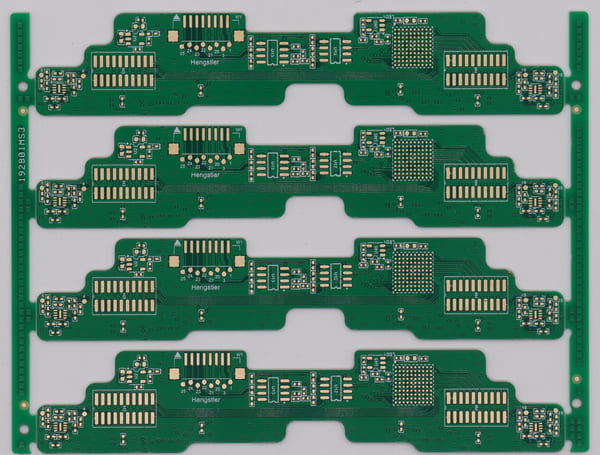
PCB prototyping is the process of producing a small batch of circuit boards — typically anywhere from one to a few dozen — to verify that a design works as intended before committing to larger-scale manufacturing. Engineers use prototypes to check routing, component placement, signal integrity, thermal behavior, and mechanical fit inside an enclosure.
Because prototypes are meant to be tested, revised, and sometimes rebuilt several times, speed and flexibility matter far more than unit cost. A good prototyping service should turn boards around in a day or two, accept design revisions without friction, and offer small minimum order quantities so teams can iterate quickly.
What Is PCB Mass Production?
Mass production begins once a design has been validated and is ready to ship in commercial volumes — often hundreds, thousands, or tens of thousands of units. At this stage, the priorities shift: instead of speed and flexibility, the focus is on consistency, cost efficiency, supply chain reliability, and rigorous quality control across every single board that comes off the line.
Mass production also introduces processes that don't typically appear in prototyping, such as automated optical inspection (AOI), in-circuit testing (ICT), functional testing, and batch traceability — all designed to catch defects before they reach the customer, at a scale where manual inspection alone isn't practical.
Prototype vs Mass Production: Key Differences at a Glance
The table below summarizes the core differences engineers and procurement teams should understand when planning a PCB project from concept to volume shipment.
| Factor | PCB Prototyping | Mass Production |
|---|---|---|
| Typical Quantity | 1–50 boards | 500 to 100,000+ boards |
| Primary Goal | Validate design, test functionality, and confirm mechanical fit | Achieve consistent quality and stable output at scale |
| Lead Time | 24 hours to a few days | 1–4 weeks depending on volume, materials, and design complexity |
| Cost per Board | Higher unit cost due to small production quantities | Lower unit cost through economies of scale |
| Tooling | No hard tooling required; flexible for design modifications | Uses fixtures, stencils, and jigs optimized for repeatable production |
| Design Changes | Expected and easier to implement during development | More costly after tooling and production processes are established |
| Quality Control | Basic electrical testing and visual inspection | AOI, X-ray inspection, ICT, functional testing, and batch traceability |
| Material Sourcing | Standard stock materials with flexible selection | Bulk procurement with possible alternate component approval processes |
| Communication | Direct engineer-to-engineer communication | Structured project management with production milestones |
When Should You Move From Prototype to Mass Production?
There's no universal rule, but most experienced product teams look for the following signals before committing to full-scale production:
The design has passed multiple rounds of functional and environmental testing without major issues.
A small pre-production or pilot run (sometimes called a "pilot batch") has been built and validated under real-world conditions.
The bill of materials (BOM) is finalized and all components are confirmed available at the required volume.
Manufacturing documentation — Gerber files, assembly drawings, and test procedures — is complete and unambiguous.
You have a realistic demand forecast to justify the tooling and inventory commitment mass production requires.
Skipping straight from an untested prototype to a large production run is one of the most common (and expensive) mistakes in hardware development. A pilot run of a few hundred units bridges the gap, exposing manufacturing-specific issues — like a footprint that's hard to solder consistently — before they multiply across a full order.
Common Challenges When Scaling Up
Design for Manufacturability (DFM) Gaps
A design that assembles fine by hand in small quantities can run into trouble on automated production lines. Component spacing, panelization, and solder mask tolerances all need a second look before scaling up.
Component Sourcing at Volume
Parts that were easy to source in quantities of ten can face longer lead times or allocation issues at quantities of ten thousand. Mass production requires a manufacturer with strong supplier relationships and, ideally, alternate-part approval processes.
Maintaining Consistent Quality
Manual visual inspection works for a handful of boards; it doesn't scale. Mass production needs automated inspection and testing built into the workflow so quality doesn't drift as volume increases.
Communication Overhead
A larger order usually involves more stakeholders, more documentation, and more coordination around scheduling and shipping. Working with a manufacturer that assigns clear project support avoids costly miscommunication.
Why PCBgogo Supports Both Stages Seamlessly
One of the biggest advantages of working with a single PCB manufacturing service across both stages is continuity — the same fabrication standards, the same team familiar with your design, and no re-qualification of a new vendor mid-project. PCBgogo is built to support exactly that transition:
Fast prototyping turnaround: PCBgogo offers rapid PCB fabrication and assembly, with options as fast as 24 hours for prototypes, so design iterations don't stall your development timeline.
Low minimum order quantities: Order as few as 1 board for testing, with transparent instant online quoting.
Scalable mass production capacity: The same facilities that handle prototype runs are equipped for high-volume PCB fabrication and turnkey assembly, with capacity for large orders without switching suppliers.
Built-in DFM checks: Files are reviewed for manufacturability before production begins, reducing the risk of costly errors when scaling from prototype to volume.
Rigorous quality control: AOI, X-ray inspection, and functional testing are applied at the mass production stage to maintain consistent quality across every batch.
Responsive engineering support: A dedicated support team helps troubleshoot design or sourcing issues at any stage, from the first prototype to reorders.
Whether you're validating your first board or preparing a production run of thousands, PCBgogo's PCB manufacturing service is designed to grow with your project — so you can move from prototype to mass production without losing time, quality, or control over your budget.
Frequently Asked Questions
Can I use the same manufacturer for both prototyping and mass production?
Yes, and it's usually the better approach. Using the same manufacturer avoids re-validating a new supplier's processes and materials, and it keeps your design history and testing data in one place. PCBgogo supports both stages under one roof.
How many boards should a pilot run include before mass production?
It varies by product complexity, but many teams run a pilot batch of a few hundred units — enough to catch manufacturing-specific issues without committing to the full tooling and inventory cost of mass production.
Does mass production always mean lower cost per board?
Generally yes, due to economies of scale in materials, labor, and machine setup. However, the total cost also depends on component pricing at the time of order and any last-minute design changes, which are far more expensive to make once production is underway.
What files do I need ready before requesting a mass production quote?
At minimum, you'll need finalized Gerber files, a complete bill of materials (BOM), assembly drawings, and any specific testing requirements. Having these ready in advance speeds up the quoting and DFM review process significantly.
Ready to Move From Prototype to Production?
Understanding the differences between PCB prototyping and mass production helps you plan realistic timelines, budgets, and quality expectations at every stage of your product's development. When you're ready to take the next step, PCBgogo offers instant online quoting for both prototype and volume orders, so you can see real pricing and lead times before committing.
Get a quote today at www.pcbgogo.com and take your project from prototype to production with confidence.