日本語
日本語
 한국어
한국어

PCB Lead Time: What Actually Determines Your Delivery Date
QUICK ANSWER PCB lead time is the span from order confirmation to shipment. Standard fabrication for simple boards commonly runs several days to two weeks, while many manufacturers quote around 20 working days as a baseline for complex production. Assembly (PCBA) typically adds separate processing time on top of that. Actual timelines vary by layer count, materials, and order complexity.
Send the same PCB design to three manufacturers, and you may receive three very different lead times: five days, twelve days, or a request to review your files before confirming a schedule. These differences aren't arbitrary; PCB and PCBA lead times depend on everything from board specifications and material availability to assembly complexity and order volume.
So, how long should your project actually take? This guide explains the key factors that affect lead time, provides realistic timelines for prototypes and production orders, and shows why complex or custom builds require project-specific evaluation.
What Actually Sets a PCB's Lead Time
PCB lead time is shaped by five interacting variables: layer count, material choice, via and drilling complexity, surface finish, and order quantity. A two-layer board with standard FR4 laminate and a common finish moves through fabrication quickly, because every step is a known, repeatable process. Add layers, switch to a specialty laminate, or call for laser-drilled microvias, and each of those choices adds its own processing stage. Order quantity matters too: a small prototype run and a full production panel move through the same equipment at very different speeds.
Because these factors compound rather than add up individually, the same design can quote anywhere from a few days to several weeks depending on which combination applies.
Typical PCB Fabrication Lead Times by Board Type
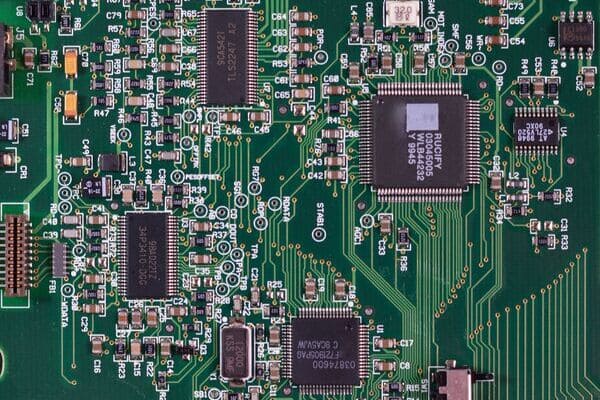
Fabrication lead time typically falls into three broad bands based on board complexity. The table below outlines the general ranges manufacturers commonly quote, though any individual order can move faster or slower depending on the exact specification.
| Board Type | Typical Fabrication Time | What Drives It |
|---|---|---|
| Simple 1- to 2-layer prototype | A few days up to about a week | Standard FR4, common finishes, low layer count |
| Standard multilayer (4 to 8 layers) | About one to two weeks | Additional lamination cycles, tighter tolerances |
| HDI, high layer count, or complex builds | Two weeks or more | Blind or buried vias, laser-drilled microvias, specialty laminates |
These are fabrication-only estimates. Once a board needs components mounted, PCB assembly time gets added on top, which is where a lot of project schedules go wrong.
PCB Assembly Lead Times
PCBA lead time covers everything after bare-board fabrication: component placement, soldering, inspection, and testing. It typically adds separate days on top of the fabrication timeline rather than running in parallel with it. Component sourcing is usually the single biggest variable: if every part on the bill of materials is in stock, assembly can move through placement and reflow relatively fast. If even one component is on backorder, the whole board waits, regardless of how simple the layout is.
Industry data commonly cited by contract manufacturers puts basic PCBA turnaround at a few days for simple, fully-stocked boards, stretching to a week or more once component density, mixed-technology assembly (SMT and through-hole), or functional testing enter the picture. That's why two boards with nearly identical layouts can carry very different PCBA quotes: the difference usually isn't the board, it's the parts list.
Custom PCB Manufacturing Lead Time: Why Complex Builds Skip the Standard Clock
Custom PCB manufacturing lead time refers to builds that fall outside a fabricator's standard process window, usually because a specification needs its own evaluation rather than a stock quote.
High layer counts and mixed stack-ups: Boards pushing into double-digit layer counts, especially with blind, buried, or laser-drilled microvias, require additional lamination and alignment steps that don't fit a standard turnaround table.
Specialty laminates: Materials outside common FR4, such as specific high-frequency or high-Tg laminates, often depend on separate procurement, which can add lead time independent of the board's actual complexity.
Tight tolerances: Impedance control, fine trace and space requirements, or tight registration tolerances slow a board down because they demand more careful, lower-throughput processing.
High-mix or high-complexity assembly: Boards combining fine-pitch BGAs, dense component placement, or a long, varied bill of materials need more assembly and inspection time than a straightforward SMT run.
First-of-a-kind builds: A design with no manufacturing history at a given factory typically needs a DFM review before a firm date can be confirmed, since dating an unreviewed design accurately isn't realistic.
For any of these, a generic lead time chart is a starting point at best. Getting a real number means having the fabricator's engineering team look at the actual files.
What Actually Slows PCB Orders Down
Incomplete or unclear files: Missing drill files, ambiguous stack-up notes, or an unclear fab drawing send a design back for clarification before production can even start.
Component shortages: A single hard-to-source part on the BOM can hold up an otherwise-ready PCBA order for weeks.
Late design changes: A revision submitted after files are released for production often resets part of the schedule rather than simply extending it.
Underestimating shipping: Production lead time and delivery time aren't the same number. A board finished on schedule can still arrive late if freight, customs, or holidays aren't built into the plan.
Most of these delays are avoidable with early planning, which is exactly where a manufacturer's DFM process and communication style start to matter.
How PCBgogo Structures Lead Time Across Prototypes, PCBA, and Custom Builds
Given how much lead time depends on getting fabrication and assembly coordinated correctly, PCBgogo's process is built around keeping that handoff in-house rather than passing a board between separate vendors.
PCB prototypes: Standard prototype orders ship in about 1 to 3 days for qualifying board types.
PCBA (assembled boards): Assembled prototype orders typically ship in about 3 to 4 days once components and files are confirmed.
24-hour expedited service: For qualifying orders, PCBgogo offers a 24-hour expedited option when a project genuinely can't wait for standard processing.
Complex or high-difficulty builds: Boards or assemblies involving high layer counts, blind or buried vias, laser-drilled microvias, or high-density assembly are reviewed by PCBgogo’s engineering team to determine a project-specific delivery schedule. With strong daily production capacity and efficient processes, we consistently maintain fast, reliable turnaround times, so you can count on fast, reliable delivery even for complex projects.
One-stop fabrication through assembly: Because PCB fabrication and PCBA run through PCBgogo's own factory rather than a separate assembly partner, there's no handoff delay between the two stages.
Per-order DFM and engineer review: Every order gets reviewed before production starts, which is where avoidable delays like the ones covered above typically get caught early.
For an exact delivery date on a specific board, PCBgogo's online quoting tool factors in the actual specification rather than a general estimate.
Frequently Asked Questions
What is a typical PCB lead time?
It depends on the board, but simple prototypes often ship in a few days while standard production commonly runs one to two weeks, and complex or custom builds can take longer.
How long does PCB assembly (PCBA) typically take?
PCBA usually adds separate processing time on top of fabrication, commonly a few days for simple, fully stocked boards and longer once component sourcing or complex assembly is involved.
What counts as a custom PCB manufacturing lead time?
Any build that falls outside a fabricator's standard process window, such as high layer counts, specialty laminates, or tight tolerances, and it typically needs an engineering evaluation rather than a generic quote.
Does a higher layer count always mean a longer lead time?
Generally yes, since more layers mean more lamination and alignment steps, though the exact impact depends on the rest of the specification too.
Can PCB lead time be expedited without hurting quality?
Reputable manufacturers can compress schedules for qualifying orders, but very complex or high-risk boards may not be safely rushed regardless of budget.
What information should I have ready to avoid delays?
Complete Gerber and drill files, a clear stack-up, and a confirmed bill of materials for assembly orders are the biggest factors in avoiding early-stage delays.
Conclusion
PCB lead time isn't a single number; it's the sum of fabrication complexity, assembly requirements, and how ready your files are on day one. Treating lead time as a design constraint rather than an afterthought is what turns a vague estimate into a delivery date you can actually plan around.