日本語
 한국어

Guide to CNC Machining Medical Parts: Processes, Materials and Key Uses
KEY DEFINITION
CNC machining gives medical-device teams a direct route from validated CAD data to precise metal and polymer components. The best results come from matching the process, material, inspection plan, and documentation to the part's actual risk.
What Is CNC Machining
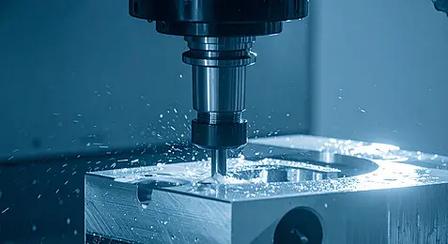
Computer numerical control machining is a subtractive manufacturing process. A machinist converts a 3D CAD model into CAM toolpaths, then the machine follows programmed coordinates, feeds, speeds, and tool changes to remove material from solid stock. Milling uses rotating cutters, while turning rotates the workpiece against a cutting tool.
For medical work, CNC is only one part of the production system. A component also needs a controlled drawing revision, approved material, defined critical features, suitable finishing, inspection evidence, and traceable records. A repeatable toolpath does not make a part medical grade or regulatory compliant by itself.
The Role of CNC Machining in the Medical Industry
Medical-device teams use CNC machining when they need production-material parts, precise interfaces, and flexible quantities without committing to a dedicated mold.
Functional prototypes: Engineers can test fit, motion, sealing, ergonomics, and sterilization behavior in the intended material.
Controlled geometry: Bores, threads, sealing faces, datums, and instrument interfaces can be manufactured and inspected against a drawing.
Flexible production: The same digital definition can support one prototype, bridge production, or repeat orders after design freeze.
How CNC Machining Is Applied to Medical Projects
A reliable project starts with intended use. The design team identifies features that affect safety or performance and marks them as critical to quality.
A Complete Quote Package Includes
3D geometry: A STEP, STP, IGES, or other agreed manufacturing model.
Controlled drawing: The current revision with datums, tolerances, threads, and critical features.
Material and finish: The exact grade, condition, surface requirement, and approved substitutions.
Production details: Quantity, target schedule, packaging, and any expected future volume.
Quality deliverables: Material certificates, first-article records, inspection reports, and required traceability.
DFM review checks cutter access, internal radii, thin walls, workholding, and inspection access.
Medical CNC Processes and Shop Floor Practice
A controlled medical CNC workflow follows six practical stages.
1. Design and drawing control: Freeze the CAD model, drawing revision, datum scheme, critical features, and acceptance criteria.
2. Material selection and receipt: Approve the exact grade and condition, inspect incoming stock, and link the material lot to the work order.
3. CAM programming and setup: Define toolpaths, feeds, speeds, fixtures, tool offsets, and an inspection plan before cutting.
4. Machining: Control tool wear, heat, deflection, and burr formation while preserving the specified datum relationships.
5. Quality control: Use CMM, optical measurement, gauges, or surface testing according to the feature and drawing requirement.
6. Post processing and release: Complete deburring, passivation or finishing, cleaning, final inspection, packaging, and the agreed records.
How Five Axis Milling and CNC Turning Produce Medical Parts
The best process follows the geometry and datum strategy, not the prestige of the machine.
Five Axis Milling
How it works: Three linear and two rotary axes reach several faces and contours in one setup.
Best for: Angled holes, instrument jaws, complex housings, and implant-related contours.
Main benefit: Less re-clamping can protect feature relationships and reduce fixture error.
CNC Turning and Swiss Machining
How it works: The workpiece rotates while a tool forms diameters, grooves, tapers, and threads.
Best for: Pins, sleeves, shafts, nozzles, connector bodies, and other rotational parts.
Process options: Swiss turning supports small slender parts; mill-turn adds off-axis drilling and milling in the same setup.
Medical Materials and How to Select Them
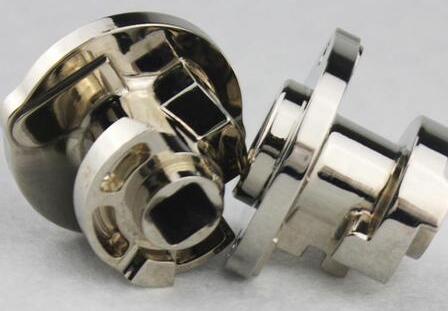
A familiar alloy or polymer name is not enough. The drawing should state the exact grade, condition, governing specification, certificate requirements, and whether substitutions need approval.
Material Selection Criteria
Contact: Patient or fluid contact type and duration.
Performance: Mechanical load, wear, corrosion, temperature, and imaging needs.
Sterilization: Compatibility with the specified cleaning and sterilization cycles.
Biological safety: The device manufacturer's applicable evaluation and risk controls.
Documentation: Material identity, lot traceability, certificates, and change approval.
| Material | Why it is used | Typical use | Selection check |
|---|---|---|---|
| 316L or 316LVM stainless steel | Corrosion resistance and cleanability | Instrument and fluid-handling parts | Specify the exact grade and required passivation or surface condition |
| Ti 6Al 4V or ELI | High strength to weight and established medical use | Fixation, dental and implant-related components | Control heat, galling, grade identity and material records |
| Cobalt chromium alloys | High wear and corrosion resistance | Bearing surfaces and high-load components | Expect difficult machining and demanding finishing |
| PEEK | Chemical resistance, low weight and sterilization options | Instrument, device and selected implant-related parts | Verify resin grade, sterilization compatibility and dimensional stability |
| PEI PTFE and POM | Useful thermal, friction or electrical properties | Insulators, seals, guides and equipment parts | Check creep, moisture response, chemicals and contact classification |
| Aluminum 6061 or 7075 | Lightweight and economical to machine | Equipment housings, fixtures and structural parts | Confirm coating, cleaning and whether patient contact is permitted |
For any patient-contacting component, confirm the exact material specification and biological-safety strategy with the device manufacturer's quality and regulatory teams.
How to Choose a CNC Machining Partner
A supplier should provide evidence that matches the component's risk and production plan.
1. Review the quality system: Confirm the scope of ISO 13485 certification and the procedures that apply to your work.
2. Verify process fit: Match the geometry to the shop's milling, turning, mill-turn, finishing, and volume capability.
3. Check measurement capability: Request a sample report and confirm the equipment can resolve the tightest feature.
4. Define traceability: Agree on material records, calibration, document retention, and lot or serial identification.
5. Control changes and defects: Confirm nonconformance handling, rework approval, and notification before process or source changes.
6. Assign downstream responsibility: State who controls cleaning, packaging, sterilization, and regulatory records.
Why PCBgogo Fits Medical CNC Projects
PCBgogo is a credible option for prototype-to-production teams. Its published capabilities include three- to five-axis milling, turning and mill-turn machining, 30-plus metals and engineering plastics, DFM review, CMM and optical inspection, first-article reports, and material certificates on request. PCBgogo states ISO 13485 certification. Buyers should verify the certificate scope and agree on application-specific inspection, traceability, cleanliness, and change control before ordering.
CNC Machining Applications in Medical Devices
CNC machining supports components across medical equipment, instruments, and patient-specific systems.
Surgical instruments: Handles, jaws, guides, alignment features, and instrument interfaces.
Orthopedic and dental: Screws, trial components, fixation hardware, and selected implant-related parts.
Fluid control: Manifolds, fittings, pump components, nozzles, and valve bodies.
Diagnostic and laboratory equipment: Frames, stages, housings, mounts, and precision motion components.
Robotics and prosthetics: Joints, drive components, sensor mounts, and customized interfaces.
A non-contact bracket does not need the same material evidence, surface controls, or cleaning plan as a long-term implant component. The drawing and quality plan should reflect actual use.
Future Challenges and Practical Solutions
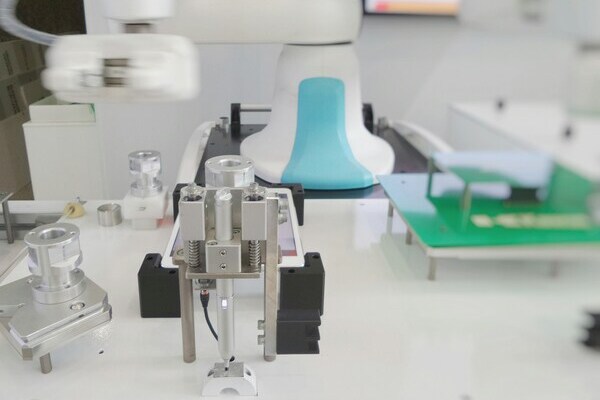
Medical CNC programs are becoming smaller, more complex, and more data dependent.
Miniaturization: Use stable workholding, short tools, in-process probing, and inspection methods suited to small features.
Difficult materials: Control heat, tool wear, coolant choice, and cutting engagement for titanium, cobalt chromium, and high-performance polymers.
Scale-up risk: Lock the datum scheme, material source, critical tools, inspection method, and finishing route before volume increases.
Digital traceability: Connect controlled revisions, material lots, process records, and inspection results without weakening review discipline.
Complex internal geometry: Use additive manufacturing for a near-net form when appropriate, then CNC finish critical interfaces and surfaces.
Conclusion
CNC machining is well suited to medical components that demand precise geometry, production-grade materials, flexible quantities, and documented inspection. Success depends on defining critical features, specifying the material, selecting milling or turning around the geometry, and establishing traceability before work begins. PCBgogo's multi-axis machining, turning, material range, DFM support, and inspection options provide a starting point for a controlled medical CNC project.
Frequently Asked Questions
Is CNC machining suitable for implant components
Yes, when the OEM specifies an appropriate material standard and controls design verification, machining, finishing, cleaning, packaging, and traceability. Machining capability or a supplier certificate does not by itself approve an implant or finished device.
What tolerance should a medical CNC part use
Use the tolerance required by the feature's function and a measurement method capable of verifying it. Applying the tightest tolerance to every dimension increases machining time, inspection cost, and rejection risk without improving the device.
When should I use five axis machining instead of turning
Choose five-axis milling for multi-face or contoured geometry that benefits from fewer setups. Choose turning for rotational parts. Mill-turn or Swiss turning is often efficient when a small cylindrical component also needs slots, flats, or off-axis holes.
What files should I send for a medical CNC quote
Send a 3D CAD file, a revision-controlled 2D drawing, exact material and condition, quantity, critical tolerances, surface and edge requirements, finishing instructions, and the certificates or inspection report you expect with the order.
What affects the cost of CNC machining medical parts
The main drivers are material, stock size, cycle time, setup count, tool access, tolerance, inspection effort, finishing, documentation, and quantity. Early DFM review often lowers cost by simplifying setups and reserving tight tolerances for functional features.