日本語
 한국어

BOM for PCBA: A Pratical Guide for PCB Assembly File
KEY TAKEAWAYS A BOM for PCBA converts a schematic into exact purchasing and assembly instructions. Use manufacturer part numbers, reference designators, quantities, packages, and DNP status; then cross-check the file against the schematic, PCB layout, and pick-and-place data before release.
A board can be electrically correct and still stall at assembly because one capacitor lacks a voltage rating or one IC has the wrong package. A production-ready BOM for PCBA closes that gap by giving engineering, purchasing, and the assembler the same controlled component data.
What Is a PCB Bill of Materials
A PCB bill of materials is the structured list of every component required to assemble a circuit board. It identifies what to buy, how many parts each board needs, and which references receive each part. It does not replace Gerber files or pick-and-place data: Gerbers define the bare board, while placement data provides X Y coordinates, rotation, and board side.
Types of Bill of Materials
The useful BOM type depends on who is using the data and how close the design is to production.
Engineering BOM: Generated from the schematic and focused on design intent, values, footprints, and candidate parts.
Manufacturing BOM: The released build record with exact manufacturer part numbers, quantities, populate status, and approved alternates.
Procurement BOM: Adds supplier part numbers, availability, pricing, and purchasing notes. For prototypes, one controlled spreadsheet often combines all three views.
What a BOM File Should Include
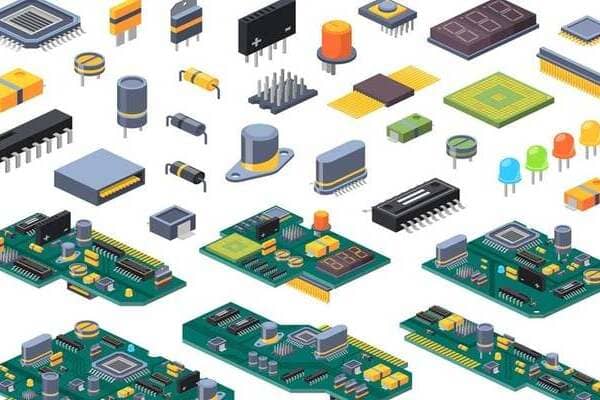
A usable BOM for PCBA needs enough information to source the exact part and verify that it matches the PCB footprint. The manufacturer part number is the primary identifier; value alone is not sufficient for capacitors, inductors, connectors, ICs, or other parts with package and rating variants.
| RefDes | Qty | Value and spec | Package | Manufacturer | MPN and status |
|---|---|---|---|---|---|
| R1, R2 | 2 | 10 kΩ, 1%, 0.1 W | 0603 | Yageo | RC0603FR-0710KL / Fit |
| C7 | 1 | 10 μF, 16 V, X7R | 0805 | Murata | GRM21BR71C106KE15L / Fit |
| R9 | 0 | 100 Ω, 1% | 0603 | Yageo | RC0603FR-07100RL / DNP |
Also include item number, project and BOM revision, supplier part number when required, and engineering-approved alternates. Start with the PCBgogo BOM template so the assembly team receives a familiar, reviewable format.
How to Create a Bill of Materials
A reliable bill of materials starts in the EDA tool and finishes with an engineering review. Altium Designer, KiCad, OrCAD or Allegro, and most schematic tools can export a raw BOM; Excel or Google Sheets is useful for controlled cleanup and review.
Export from the schematic: Generate the initial file after component properties and reference designators are stable. Avoid retyping rows manually.
Complete each line: Add exact MPNs, manufacturer, package, ratings, DNP status, supplier numbers, and qualified alternates.
Cross-check the design package: Confirm every reference against the schematic and layout, then compare populated references with the pick-and-place file. Check polarity-sensitive parts and footprint-to-package matches.
Release and lock the revision: Use .xlsx or .csv, add the same revision identifier used by the PCB files, and remove obsolete copies from the upload package.
For menu paths in KiCad and Altium plus a practical field checklist, follow PCBgogo's step-by-step guide to building a BOM.
Why the BOM Is Critical to PCB Assembly
The BOM for PCBA controls procurement accuracy, assembly consistency, and traceability. An exact MPN prevents a buyer from choosing a part that shares the same nominal value but has the wrong tolerance, dielectric, pinout, height, or temperature rating. Clear quantities and DNP instructions also prevent shortages and unintended placements.
The BOM also exposes sourcing risk before production. Engineers can identify obsolete or single-source parts, qualify footprint-compatible alternates, and estimate component cost while changes are still manageable.
How a Completed BOM Helps PCB Designers
Once released, the BOM becomes a design feedback tool rather than a one-time purchasing list.
Footprint verification: Comparing package data with land patterns catches SOIC, QFN, connector, and passive-size mismatches before assembly.
Cost control: The designer can see which components dominate material cost and evaluate approved alternatives without changing circuit function blindly.
Lifecycle planning: Active, end-of-life, and constrained parts can be reviewed before a prototype becomes a production design.
Revision traceability: A controlled bill of materials records exactly which component set belongs to each hardware revision and supports future reorders or failure analysis.
Summary
A strong BOM for PCBA is exact, revision-controlled, and verified against the full design package. When your file is ready, upload the BOM to PCBgogo for component matching, review, and a PCBA quotation before production.
PCBgogo - Reliable, High-Quality PCB Manufacturing
PCBgogo is a one-stop PCB and PCBA manufacturing factory, helping you save time and costs while ensuring consistent, reliable quality.
Get a Free Quote >
Frequently Asked Questions
Which file format should I use for a BOM for PCBA?
Use .xlsx or .csv unless the assembler requests another format. Keep one header row, one component group per line, and no merged cells so the data can be filtered and imported reliably.
Should DNP components remain in the BOM?
Yes. Keep every DNP or DNI reference in the BOM with quantity zero or a clear populate-status field, so the assembler can distinguish an intentional omission from missing data.
Can one BOM line contain several reference designators?
Yes, when every reference uses the same MPN, value, package, and populate status. The quantity must equal the number of listed references per board.
Can an alternate part be added without an engineering review?
No. An alternate must match the footprint, pinout, ratings, reflow limits, and circuit requirements. Record only approved alternates in the released bill of materials.