日本語
日本語
 한국어
한국어

Why PCB Baking is Non-Negotiable Board Processing?
In the complex landscape of electronics manufacturing, achieving high-yield, high-reliability Printed Circuit Board Assemblies (PCBAs) is dependent on meticulous process control. Before a bare Printed Circuit Board (PCB) proceeds to the Surface Mount Technology (SMT) line for solder paste printing, component placement, and reflow, a critical pre-treatment step is often required: PCB Baking. This thermal pre-conditioning process is an indispensable defense against thermal stress failures, directly impacting final product quality and long-term durability.
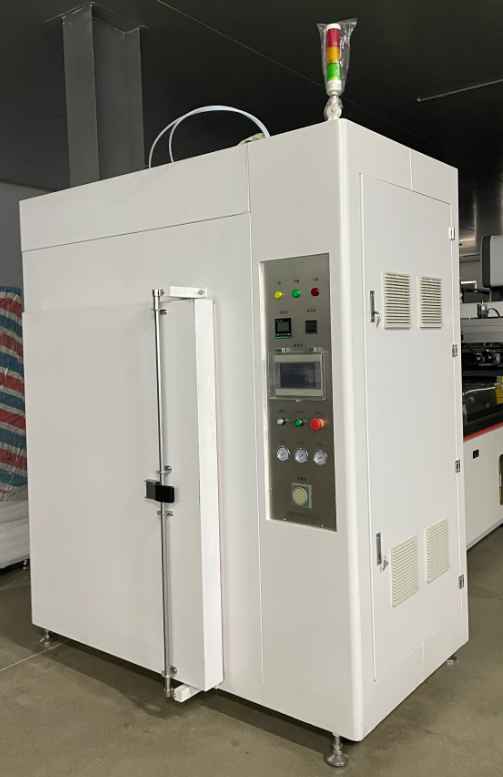
The Primary Hazard: Moisture Absorption and Internal Stress
The necessity of PCB Baking stems from the hygroscopic nature of the laminate materials, such as FR-4. Even when properly handled, PCBs, especially high-layer-count and thin boards, are susceptible to moisture absorption from the ambient air, particularly through exposed edges, vias, and micro-cracks.
The two main objectives of pre-process baking are:
Moisture Removal (Preventing Popcorning): During the high temperatures of the soldering process (e.g., $240^{\circ}\text{C}$ to $260^{\circ}\text{C}$), absorbed moisture rapidly vaporizes. The resulting internal steam pressure can exceed the laminate's bonding strength, causing irreversible damage such as delamination (separation of layers), blistering, and cracking, commonly known as the "popcorn effect." This failure mode is a critical concern, especially for components classified according to the IPC/JEDEC J-STD-033 moisture sensitivity levels. 2. Warpage and Dimensional Stability: Baking releases internal stresses locked into the board during the manufacturing and storage phases. This minimizes dimensional changes like twisting or warpage that can occur under reflow temperatures. Even minute deformations can lead to critical SMT placement errors, resulting in misaligned components, open circuits, or insufficient paste transfer.
Enhancing Solderability and Joint Integrity
Beyond structural integrity, PCB Baking significantly improves the quality of the subsequent soldering process:
Optimized Wettability: The removal of moisture and volatile contaminants from the copper pads ensures clean surfaces, allowing the solder paste to achieve optimal solderability and wetting. Poor wetting leads to solder balls, insufficient fillet formation, and non-wetting or "cold" solder joints.
Contaminant Elimination: Baking helps to drive off residues that could react with the flux in the solder paste, thereby ensuring the flux can perform its primary role of cleaning the metal oxide layers effectively.
Industry Standards for Baking Temperature and Duration
The parameters for PCB Baking are governed by strict industrial guidelines, primarily based on the board's age, layer count, and packaging condition. The goal is to heat the board high enough to evaporate moisture without initiating thermal degradation of the laminate or surface finish.
Standard Temperature: Typically set at $100^{\circ}\text{C} \pm 5^{\circ}\text{C}$. Higher temperatures are generally avoided as they can degrade certain surface finishes (like OSP) or cause material deterioration.
Baking Duration Guidelines: The required time increases exponentially with the age and exposure time of the PCB:
Conclusion: Achieving Unrivaled PCBA Quality with Precision
PCB Baking is an essential preventative measure that ensures the fundamental stability and integrity of the circuit board before the thermal rigors of the assembly process. By rigorously adhering to best practices, manufacturers can virtually eliminate common defects like delamination and warpage, leading to superior final product quality.
As a high-reliability electronics manufacturer, PCBGOGO recognizes that quality begins at the foundation. Our comprehensive PCBA and SMT process incorporates dedicated, controlled PCB Baking stations and follows strict IPC/JEDEC J-STD-033 standards. We combine this crucial pre-treatment with precision SMT assembly and advanced quality control measures to deliver circuit boards that meet the highest performance and reliability thresholds, ensuring your project is built to last.