日本語
日本語

What to Do About "Wrinkling" of Laminated Boards? Common Problems and Solutions in PCB Multilayer Board Lamination Process
Laminating a multilayer board is like "making a quilt" for a PCB, pressing layers of core boards and prepregs into one unit. But sometimes the surface ends up wrinkled like crumpled paper—a frustrating issue for PCB factories. In high-precision products like mobile motherboards and server PCBs, even tiny wrinkles can cause drilling errors or short circuits, leading to costly batch rejections.
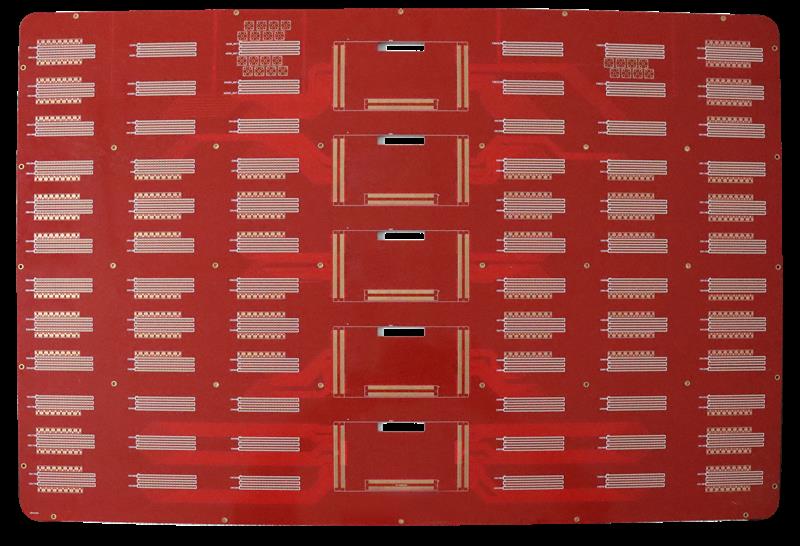
What Do Wrinkles Look Like?
Post-lamination wrinkles vary: edge waves with noticeable height differences, mid-board bulges from poorly bonded prepregs, or hidden inner core misalignments visible only in cross-sections. They typically appear at corners and long edges—high-stress areas like loose fabric seams.
Why Do Boards Wrinkle?
1. Unruly Prepregs
Prepregs act as "glue" for multilayers. Uneven resin content causes uneven lamination, while imprecise cutting leads to edge crumpling under pressure. Stale prepregs with clumped resin also create wrinkled, contour-like patterns.
2. Stubborn Core Boards
Warped core boards resist flat lamination, especially thin ones (under 0.1mm) that bend easily. Lopsided circuit distribution causes uneven thermal expansion, creating stress wrinkles—like tight spots in a stretched rubber band.
3. Troublesome Lamination Parameters
Rapid temperature spikes trap air as wrinkles by curing resin before it flows. Uneven pressure (common with warped press plates) creates crumpled centers. Insufficient curing time leaves boards soft and wrinkled.
4. Careless Stacking
Misaligned layers (even 1mm) cause uneven pressure. Unflattened prepregs trap expanding air bubbles, while loose positioning pins let boards slide—resulting in inner layer misalignment like misfolded pages.
Impact of Wrinkled Boards
Wrinkles render boards unusable via drilling errors, impedance changes, and misaligned pads. They can cause short circuits in 5G boards during copper deposition. Hidden wrinkles may fail later: thermal cycling breaks wrinkled copper foil, risking sudden failure—critical in automotive electronics.
Preventing Wrinkles
1. Material Quality Control
Test prepreg resin content batch-wise; use within 3 months. Reject core boards with >0.3% warpage. Use automatic cutters for ±0.5mm prepreg precision.
2. Optimize Lamination Parameters
Adopt step heating: 80℃ for resin flow, 180℃ for curing. Stage pressure application up to 30kg/cm2. Smart presses with ±2℃ alarm control prevent deviations.
3. Standardize Stacking
Use CCD-positioned stacking machines for precise alignment. Pre-press 10 minutes to expel bubbles. Spring-loaded pins prevent sliding.
4. Enhance Inspection
Post-lamination, laser detectors catch 0.1mm wrinkles. Cross-sections check inner alignment. 100-cycle thermal tests (85℃/-40℃) expose hidden flaws.
At PCBgogo, lamination wrinkling is "zero-tolerance". German vacuum presses and auto-stacking lines keep wrinkling below 0.05%. Our 20-layer aerospace boards achieve <0.2mm alignment error. Like mille-feuille, good materials, precise heat, and care ensure flat, uniform layers—key for PCBs and pastries alike.