日本語
日本語
 韩語
韩語

What is Automotive PCB Assembly? A Complete Guide to Automotive Electronics Manufacturing
A circuit board that works fine in consumer electronics can fail catastrophically in a vehicle. The stakes in automotive PCB assembly are simply different — boards must survive engine heat, road vibration, moisture ingress, and years of continuous use without a single critical failure. That's why automotive PCBs are treated as their own design and manufacturing discipline, with dedicated standards, inspection protocols, and material requirements.
This guide walks through what automotive PCB assembly actually involves: the design guidelines that matter, the assembly process steps, the standards manufacturers must meet, and how to choose the right fabrication partner.
Why Automotive PCB Assembly Is Different
Consumer and industrial PCBs are built to survive a controlled environment. Automotive PCBs are not. They're expected to function reliably across temperature swings from ?40°C to +150°C, absorb constant mechanical vibration, resist humidity and chemical exposure, and in some cases operate for 10–15 years without servicing.
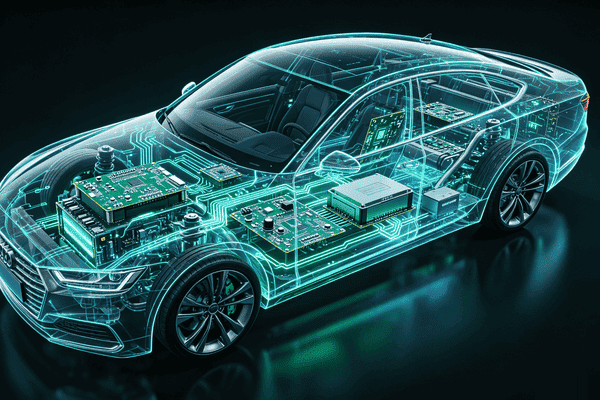
The applications span the entire vehicle: engine control units (ECUs), transmission controllers, battery management systems (BMS) in EVs, ADAS sensors, infotainment systems, lighting drivers, and safety systems like ABS and airbag controllers. Each of these has its own thermal profile, vibration exposure, and reliability requirement.
Because of this, automotive PCB manufacturing follows a separate set of industry standards and requires stricter process controls than standard commercial assembly.
Automotive PCB Design Guidelines
Getting automotive PCB design right before fabrication begins is critical — design flaws that are cheap to fix on paper become expensive after assembly. The main design considerations include:
Material selection: Material selection: FR4 is standard for lower-stress zones, but high-temperature applications often require polyimide, Rogers, or PTFE-based laminates with better Tg ratings and lower CTE mismatch.
Copper weight: Copper weight: Heavier copper (2 oz or more) is common in power distribution layers to handle current load without excessive heat buildup.
Via design: Via design: Filled and capped vias prevent moisture ingress and cracking under thermal cycling. Blind and buried vias are used to maximize routing density in complex multilayer boards.
Component placement: Component placement: Components should be oriented to minimize mechanical stress at solder joints under vibration. Heavier components may need adhesive underfill.
Thermal management: Thermal management: Thermal vias, copper pours, and in some cases metal-core substrates are used to channel heat away from critical components.
Trace routing: Trace routing: Wider trace clearances and conservative current density limits reduce the risk of conductor degradation over time.
Following IPC-2221 generic design standards alongside automotive-specific addenda (such as IPC-6012DA) at the design stage prevents costly redesigns after first-article inspection.
The Automotive PCB Assembly Process
Automotive PCB assembly follows the same general steps as standard SMT/THT assembly, but with much tighter tolerances and mandatory inspection at every stage. Here's how the process flows:
| Stage | Process | Automotive Consideration |
|---|---|---|
| 1 | Solder paste printing | No-clean or low-residue paste preferred |
| 2 | Component placement (SMT/THT) | Tight placement tolerances for vibration resistance |
| 3 | Reflow / wave soldering | Lead-free solder per RoHS; profile-controlled ovens |
| 4 | Automated Optical Inspection (AOI) | 100% inspection—no sampling in automotive |
| 5 | X-Ray inspection (BGA/hidden joints) | Required for safety-critical boards |
| 6 | Conformal coating | Moisture, chemical, and thermal protection |
| 7 | Functional testing | ICT + burn-in testing for reliability validation |
Two stages deserve extra emphasis for automotive applications: conformal coating and functional testing. Conformal coating — typically acrylic, silicone, or polyurethane — is applied to protect assembled boards from moisture, chemicals, and contaminants. In harsh-environment applications like engine bays or outdoor sensors, it's not optional.
Functional testing goes beyond in-circuit testing (ICT). Automotive boards are often subjected to burn-in testing — operating under elevated temperature and voltage for extended periods — to weed out early-life failures before the boards ever reach a vehicle.
Choosing an Automotive PCB Manufacturer
Not every PCB manufacturer is equipped to handle automotive work. When evaluating suppliers, look for:
Quality certification: IATF 16949 or ISO 9001 certification as a baseline for quality management
Material capability: Proven experience with automotive-grade materials (polyimide, high-Tg FR4, PTFE laminates)
Traceability: Full traceability on materials and components — essential for automotive audits
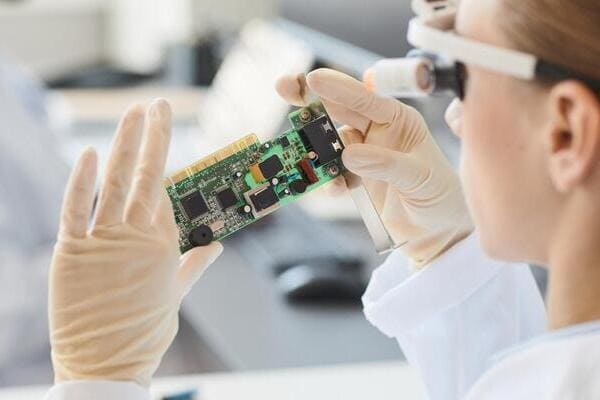
Inspection rigor: 100% AOI and X-ray inspection capability, not sampling-based inspection
Protection services: Conformal coating and underfill as standard service options
DFM support: Engineering support during DFM review — automotive designs often need fabrication-side input before the first panel is cut
At PCBgogo, we check every box above — and handle the full process under one roof, from fabrication through assembly. Turnaround is fast, quality holds up to automotive standards, and you won't be chasing three vendors to get a finished board.
If you're sourcing automotive PCB prototypes or planning a production run, get a quote at PCBgogo.com. Upload your Gerber files and our team will follow up within 24 hours.
Automotive PCB Connectors: Often Overlooked, Always Critical
Connector selection is one of the most underestimated decisions in automotive PCB design. Automotive PCB connectors must handle vibration without fretting corrosion, maintain reliable contact through wide temperature swings, and resist moisture and contaminants in under-hood or exterior-mounted applications.
Common connector families for automotive use include Molex MX150, TE Connectivity's AMPSEAL and DT series, and Aptiv's GT150 — all specifically designed for automotive electrical systems. For board-level connectors, specify components with appropriate IP ratings and vibration-rated retention mechanisms.
Connectors should be part of the design review conversation with your PCB assembly partner, not an afterthought. Placement, mounting, and strain relief all affect long-term reliability in harsh environments.
Final Thoughts
Automotive PCB assembly is a discipline where shortcuts show up later — usually at the worst time. The combination of stringent design guidelines, material requirements, mandatory inspection stages, and industry certifications exists because field failures in vehicles are both costly and dangerous.
Working with a manufacturer who understands automotive requirements from the first DFM review through final functional test is one of the most straightforward ways to reduce program risk. Whether you're developing a prototype for a new EV subsystem or scaling an existing design into production, the fabrication partner you choose directly affects the reliability of the end product.