
 日本語
日本語

When assembling a PCB, choosing the right soldering method determines the reliability, manufacturability, and cost of the final product. While both wave soldering and reflow soldering are widely used in electronics manufacturing, they serve different assembly needs. This guide focuses on the key differences between wave soldering and reflow soldering to help engineers, buyers, and OEMs make the right decision.
Wave Soldering vs. Reflow Soldering: Key Differences
1. Component Compatibility
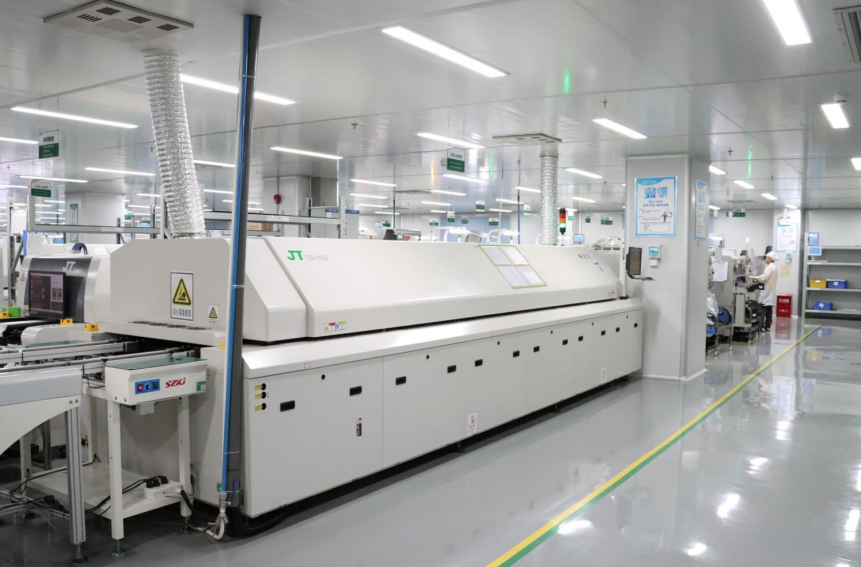
Reflow Soldering: Best suited for SMT components, especially fine-pitch ICs, BGA, QFN, and small passive parts.
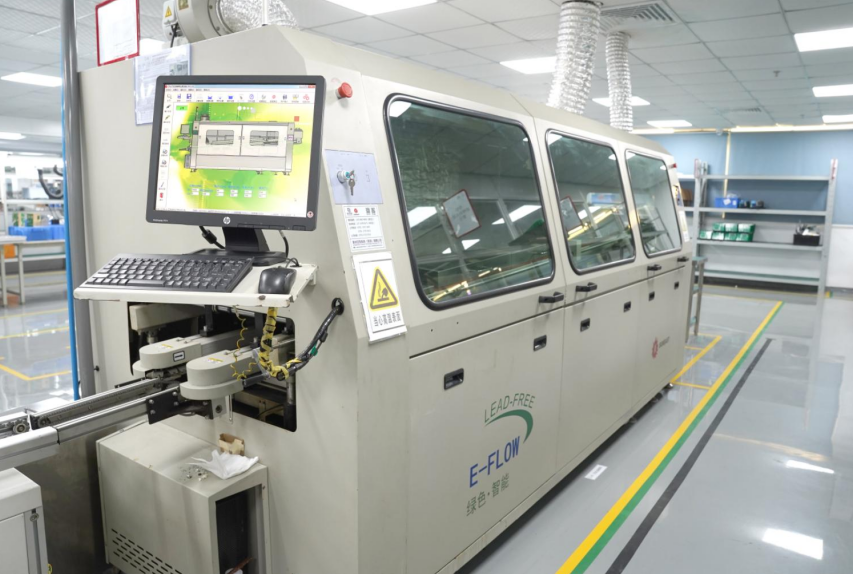
Wave Soldering: Primarily for through-hole components, such as connectors, transformers, and larger mechanical parts.
Difference:
Reflow handles delicate surface-mount parts; wave soldering is designed for mechanically strong through-hole joints.
2. PCB Density and Design Requirements
Reflow: Supports high-density layouts, HDI boards, and tightly spaced pads.
Wave: Requires larger pad spacing to prevent bridging and works best on lower-density boards.
Difference:
Reflow is ideal for compact, high-density designs; wave is better for spacious, low-to-medium density PCBs.
3. Double-Sided Assembly
Reflow: Seamlessly supports double-sided SMT assembly.
Wave: Not suitable for double-sided THT; only selected SMT pads on the bottom side can withstand the solder wave.
Difference:
Reflow enables true double-sided assembly, while wave soldering is limited on multi-layered component placement.
4. Solder Joint Characteristics
Reflow: Produces precise, uniform joints, ideal for small components.
Wave: Generates strong mechanical joints, especially in plated-through holes.
Difference:
Reflow ensures accuracy; wave prioritizes mechanical strength.
5. Common Defect Types
Reflow: Tombstoning, voids, insufficient reflow
Wave: Bridging, solder skips, insufficient hole fill
Difference:
Reflow defects are typically paste-related; wave defects are mainly caused by solder flow dynamics and PCB layout.
6. Cost and Throughput
Reflow: Higher equipment cost but optimized for precision.
Wave: Faster and more cost-efficient for high-volume THT assembly.
Difference:
Reflow is process-controlled and suitable for complex boards; wave is efficient for bulk through-hole production.
Which Soldering Method Should You Choose?
Choose Reflow Soldering when:
Your PCB is mainly SMT
You require high-density, fine-pitch placement
You need double-sided assembly
Precision and reliability are top priorities
Choose Wave Soldering when:
Your design contains large through-hole components
Strong mechanical joints are required
Spacing between pads is sufficient
You are producing medium or high-volume boards
Hybrid Approach
Most modern PCBs use reflow + wave together:
SMT parts assembled by reflow
THT parts soldered by wave or selective wave
This ensures the best combination of precision, flexibility, and strength.
Conclusion (With PCBGOGO Branding)
Wave soldering and reflow soldering each provide clear advantages depending on the component type and assembly requirements. Reflow is ideal for dense SMT layouts, while wave soldering offers unmatched strength for through-hole components. Choosing the right method—or using a hybrid approach—ensures the best performance and reliability for your PCB.
For high-quality SMT, THT, and mixed-technology assembly, PCBGOGO offers professional manufacturing capabilities, precise soldering processes, and engineering support to help you achieve reliable results every time.


