日本語
日本語

Sensor Technology Future Trends and Full-Industry Application Value
- Industry Insight
- industrial sensor manufacturers
- modern sensor applications
- sensor technology in IoT
- industrial sensor system integration challenges
From my experience working on engineering solutions and system integration on the ground, I’ve seen a clear shift happening in the sensor industry. In many projects in the past, the “good enough” approach to choosing sensors was pretty common. But in today’s complex systems, that way of thinking is getting harder and harder to justify.
This becomes even more obvious in areas like self-driving cars, smart manufacturing, and medical monitoring. What I notice is that the question is no longer just “can we detect it?” but more about “can the data reliably flow into the system and actually support later analysis and decision-making?” With these rising demands, sensors are also changing their role—from simple single-function devices to key entry points in a system-level sensing setup.
Because of this, the focus in the industry is also shifting. It’s no longer just about individual performance numbers. Instead, people are looking at the full picture, including how smart the sensor is, how small it can be, how much power it uses, and how well it fits into the overall system.
Sometimes I also ask myself: when we pick a sensor, we still tend to see it as just a “sensor,” but in real systems, is it really just an isolated part anymore?
This article will build on my hands-on engineering experience to look at this shift from both the technology side and real-world applications, and break down how sensors are moving from “single-point sensing” to “system-level sensing.”
How Sensor Technology Creates Real Industry Value?
First, let’s take a quick look at the role modern sensors play in intelligent systems. They basically act as the “perception layer” of the whole system, collecting real-time data and helping support automation and decision-making across different industries.
1. Smart City Operation and Management
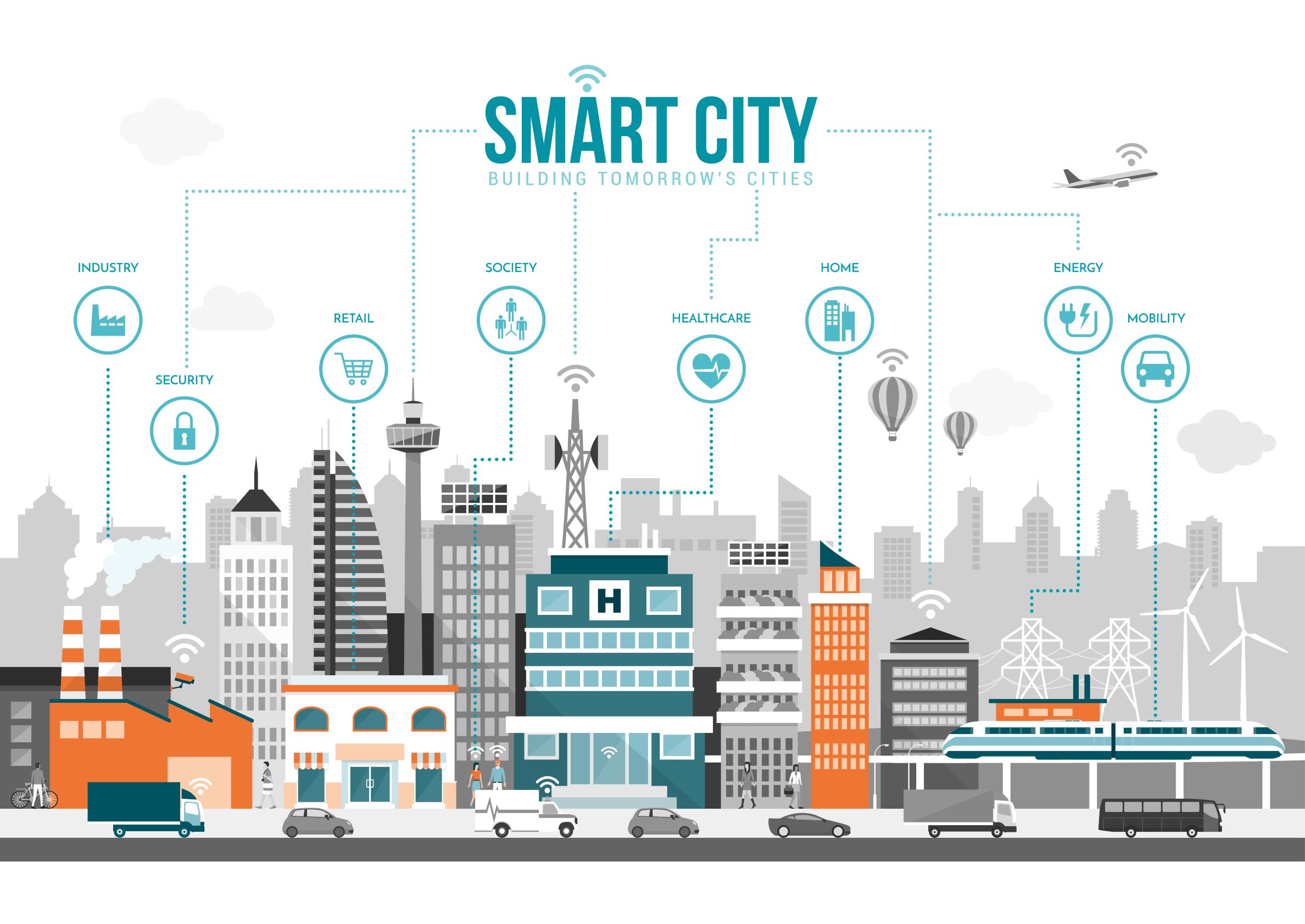
Sensors form the backbone of smart city infrastructure. Distributed sensor networks enable real-time monitoring of traffic flow, environmental quality, energy consumption, and public services.
| Application Area | Sensor Function | Core Value |
|---|---|---|
| Traffic Management | Flow and speed detection | Reduces congestion |
| Environmental Monitoring | Air, noise, and water sensing | Pollution early warning |
| Energy Systems | Consumption tracking | Energy optimization |
2. Precision Medical and Healthcare
Sensor technology is transforming healthcare from traditional diagnosis to data-driven precision medicine.
Medical sensors continuously monitor vital signs such as temperature, heart rate, blood oxygen, and ECG signals. Wearable devices further extend monitoring from hospitals to daily life.
Main applications include:
Real-time patient health monitoring
Intelligent drug delivery systems with dosage control
Wearable health devices for chronic disease management
This shift enables earlier diagnosis, personalized treatment, and improved healthcare accessibility.
3. Autonomous Driving and Intelligent Transportation
Autonomous driving relies on multi-sensor fusion to ensure safe and accurate environmental perception.
Common sensor types include MEMS accelerometers, radar, optical cameras, and pressure sensors. Together, they support real-time decision-making.
Key functions:
Lane and obstacle detection
Adaptive cruise control
Automatic parking and collision warning
Sensor integration significantly improves road safety and driving efficiency.
4. VR/AR Immersive Interaction
VR and AR systems depend heavily on motion sensing technology to deliver realistic experiences.
Sensors track head movements, hand gestures, and body posture in real time, ensuring accurate synchronization between physical actions and virtual environments.
This reduces motion sickness and enhances immersion in interactive applications such as gaming, training, and simulation.
5. Industrial Intelligent Manufacturing
In industrial environments, sensors enable automation, precision control, and predictive maintenance.
Modern industrial systems are getting more compact and tightly integrated, which puts higher demands on hardware design. In real-world applications, especially where space is limited or vibration is a factor, flexible interconnect structures are often used to improve durability and keep system integration stable.
In these kinds of designs, flexible circuit technology is commonly used to ensure stable signal transmission while also providing the mechanical flexibility required for modern industrial systems.
| Function | Role | Benefit |
|---|---|---|
| Equipment Monitoring | Detect vibration and temperature | Prevent failures |
| Production Control | Monitor process parameters | Improve automation |
| Quality Inspection | Detect defects | Increase yield |
Core Future Development Trends of Sensor Technology
Sensor technology is evolving beyond simple data acquisition toward intelligent perception systems.
1. Sensor + AI Integration
Future sensors will integrate embedded AI chips and edge computing capabilities. This allows real-time data processing and decision-making at the device level, reducing latency and cloud dependency.
2. Multi-Functional Integration and Miniaturization
Based on MEMS technology, sensors are becoming smaller while integrating multiple functions such as temperature, pressure, humidity, and motion detection in a single chip.
This reduces system complexity and supports compact device design.
3. Ultra-Low Power and Green Energy Efficiency
Energy efficiency is a major trend in sensor development. New designs focus on low-power operation, sleep modes, and energy harvesting technologies.
This enables long-term deployment in remote IoT systems without frequent battery replacement.
4. Multi-Sensor Fusion Applications
Single sensors have limitations in complex environments. Multi-sensor fusion combines optical, mechanical, and electromagnetic data to improve accuracy and reliability.
It is widely used in autonomous driving, robotics, and industrial automation.
Conclusion
In short, sensors are no longer just simple data collection devices. They’ve become a fundamental entry point for modern intelligent systems. Whether it’s smart cities, healthcare, autonomous driving, or advanced manufacturing, the stability and responsiveness of these systems often depend heavily on how well the sensor layer performs.
But from an engineering point of view, this performance is not determined by chips or algorithms alone. It also depends a lot on the underlying hardware design and manufacturing process. In real projects, I’ve seen how PCB manufacturing and supply chain partners like PCBgogo (pcbgogo.com) play a role at this stage, especially in helping improve design consistency, manufacturability, and overall production stability for MEMS-related hardware. This kind of support often becomes a key factor when moving from prototypes to scalable real-world applications.
FAQ
1. What is the main role of sensors in IoT systems?
Sensors collect real-time data from the environment and provide the foundation for intelligent decision-making in IoT systems.
2. Why is sensor fusion important in autonomous driving?
Sensor fusion combines multiple data sources to improve accuracy, reliability, and safety in complex driving environments.
3. What is MEMS sensor technology?
MEMS (Micro-Electro-Mechanical Systems) technology enables the creation of small, integrated sensors with high precision and low power consumption.
4. How do sensors improve healthcare?
Sensors enable continuous monitoring of vital signs, allowing early detection of health issues and personalized treatment.
5. What is the biggest future trend in sensor technology?
The biggest trend is the integration of AI, allowing sensors to process data locally and make real-time decisions.