日本語
日本語
 韩語
韩語

Medical PCB One-Stop Solution: A Complete Guide from Design to Assembly Process
Medical devices are getting smaller, smarter, and more interconnected, and the PCBs inside them are carrying more of that burden than ever. Whether you're developing a portable diagnostic tool, a wearable health monitor, or a next-generation surgical device, getting the assembly right is not just a manufacturing decision, it is a matter of patient safety.
If you are trying to understand how medical PCB assembly actually works, from board type selection and HDI design to regulatory standards and what to expect from your manufacturer, you are in the right place. This guide walks you through the full picture.
What Makes Medical PCB Assembly Different
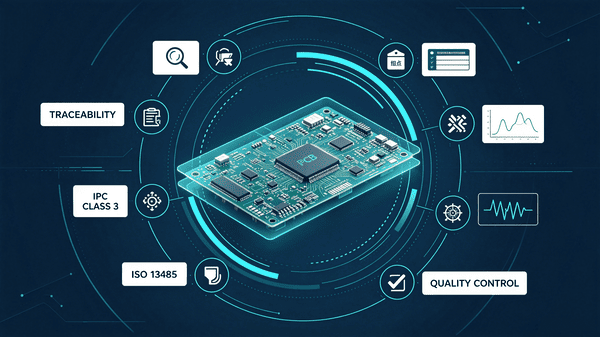
Most PCB assembly is judged on cost, speed, and yield. Medical PCB assembly adds a fourth dimension: traceability. Regulatory bodies like the FDA and ISO require manufacturers to document every step of the build—component sourcing, soldering profiles, inspection records, and rework history—so that if something fails in the field, the root cause can be tracked down precisely.
Beyond documentation, the tolerances are stricter. A consumer electronics PCB might accept a small percentage of solder defects that get caught at end-of-line testing. A medical device PCB can't rely on that buffer. Defects that reach a patient can cause misdiagnosis, incorrect drug delivery, or worse. So the entire process—from material selection to final inspection—operates at IPC Class 3 standards, the highest tier in electronics manufacturing.
The environments medical PCBs operate in also vary wildly. An implantable device needs to survive years inside the human body. A portable diagnostic tool gets dropped, exposed to moisture, and subjected to temperature swings. A wearable PCB has to stay functional while flexing against skin for months at a time. Each use case demands different materials, board constructions, and assembly approaches.
Common Board Types in Medical Device PCB Design
Choosing the right board type is foundational to a successful medical device PCB. Here's how the most common options stack up:
| Board Type | Key Characteristic | Typical Application |
|---|---|---|
| Rigid PCB | Stable, durable, cost-effective | Diagnostic equipment, imaging systems |
| Flexible PCB | Bendable, lightweight | Wearable PCB, endoscopes, patch sensors |
| Rigid-Flex PCB | Combines both structures | Implantables, surgical tools, compact monitors |
| HDI PCB | Microvias, fine traces, high density | Compact medical devices requiring miniaturization |
| High-Tg PCB | Withstands elevated temps | Sterilizable devices, autoclaved equipment |
HDI PCB for medical devices deserves special attention. High-Density Interconnect technology uses microvias (often under 0.1mm) and finer trace widths to pack far more circuitry into a smaller footprint. This is critical for next-generation devices like pill cameras, miniaturized hearing aids, and implantable biosensors where board real estate is extremely limited. HDI also improves signal integrity—important when the device is processing biological signals like ECG or EEG data that are sensitive to interference.
Wearable PCBs present a related set of challenges: they need to be thin, lightweight, and often flexible, while surviving sweat, motion, and continuous skin contact. This typically means flex or rigid-flex construction, biocompatible conformal coatings, and careful attention to component placement to avoid pressure points.
The Medical PCB Assembly Process
Medical PCB assembly follows the same fundamental steps as standard SMT assembly, but each step is executed with tighter process controls:
Step 1: Design for Manufacturability (DFM) Review: Before a board goes to fabrication, a DFM check flags potential assembly issues—pads too close together, component clearances that complicate soldering, via placements that could cause bridging. For medical devices, DFM also reviews compliance with biocompatibility and high-reliability standards.
Step 2: Material Selection: FR4 is common for standard medical boards, but high-Tg laminates, Rogers materials (for RF-heavy devices), and polyimide (for flex boards) are frequently specified. Material traceability from certified suppliers is required.
Step 3: Solder Paste Application: Stencil printing applies paste to pads with high precision. In medical assembly, paste deposit volume and consistency are monitored by Solder Paste Inspection (SPI) before components are placed.
Step 4: Component Placement: Automated pick-and-place machines handle fine-pitch SMT components. Medical assemblies often include ultra-fine-pitch BGAs, QFNs, and other advanced packages that require verified machine calibration and component traceability by lot number.
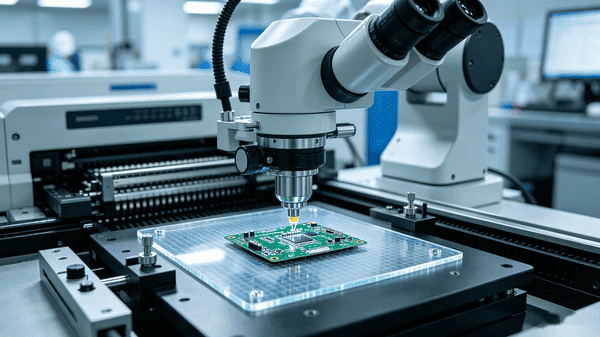
Step 5: Reflow and Wave Soldering: Soldering profiles are validated and documented. Lead-free soldering is standard for most medical devices under RoHS, though specific exemptions exist for Class III implantables where long-term reliability of tin-lead solder is preferred.
Step 6: Inspection: Medical PCB assembly relies on a layered inspection approach—Automated Optical Inspection (AOI) checks component placement and solder joint quality, Automated X-Ray Inspection (AXI) examines hidden joints under BGAs and QFNs, and In-Circuit Testing (ICT) or functional testing validates electrical performance.
Step 7: Conformal Coating and Potting: Many medical devices require conformal coating to protect against moisture and contamination. Implantable or harsh-environment devices may require full potting (encapsulation in resin).
Regulatory Standards and Certifications That Matter
When evaluating a medical PCB manufacturer, certifications aren't a checkbox exercise—they reflect real process discipline. The most important ones to look for:
ISO 13485: The primary quality management standard for medical device manufacturing. Covers everything from design controls to post-market surveillance. A medical PCB manufacturer without ISO 13485 is a significant risk.
IPC-A-610 Class 3: Defines the acceptability criteria for electronic assemblies at the highest reliability tier. Class 3 applies to life-sustaining and mission-critical devices.
IPC-6012 Class 3: The fabrication companion to IPC-A-610, governing rigid PCB performance and reliability requirements for Class 3 products.
UL Certification: Required for devices sold in North American markets; certifies that materials meet fire safety and electrical safety standards.
RoHS Compliance: Restricts hazardous substances in electrical equipment. Most medical devices must comply, though exemptions exist for certain implantable applications.
Full material traceability—being able to trace every component back to its source lot—is also a non-negotiable expectation in medical manufacturing, not just a nice-to-have.
Key Design Considerations for Medical PCBs
Getting the design right before assembly starts saves significant time and cost. These are the factors that come up most often in medical PCB design reviews:
Signal Integrity: Medical devices often process low-amplitude biological signals (ECG, EEG, EMG). Noise from power planes, ground loops, or poor trace routing can corrupt those signals. Careful layer stackup design and separation of analog and digital domains are essential.
Thermal Management: Devices like portable imaging systems or RF ablation tools generate significant heat. Thermal vias, copper pours, and sometimes embedded heat spreaders are used to keep components within safe operating temperatures.
Miniaturization: The trend toward smaller, less invasive devices puts constant pressure on board real estate. HDI technology, component embedding, and 3D packaging are all tools that medical PCB designers increasingly rely on.
Electromagnetic Compatibility (EMC): Medical devices must pass EMC testing to avoid interfering with other devices in clinical environments. PCB layout—including shielding strategies, decoupling capacitor placement, and controlled impedance routing—has a direct impact on EMC performance.
Biocompatibility: For any device that contacts or is implanted in the body, materials must meet ISO 10993 biocompatibility standards. This affects not just the PCB substrate but also coatings, adhesives, and any exposed metals.
Conclusion: Build Medical PCBs That Meet the Standard
Medical PCB assembly brings together design accuracy, material selection, regulatory requirements, and strict manufacturing control. If any part is overlooked, it can quickly impact the reliability of the final device, especially in medical applications where consistency is critical. This is why understanding the key requirements before production begins is so important for avoiding issues later in the process.
At PCBgogo, we focus on high reliability PCB fabrication and assembly for medical applications, including HDI boards for compact diagnostic devices, as well as flex and rigid flex solutions for wearables and implantable products. Our production process follows IPC Class 3 standards, with full component traceability throughout manufacturing to support quality control and compliance needs.
If you are developing a medical device PCB and need support from an experienced manufacturing partner, feel free to contact us. Our engineering team can provide tailored medical PCB solutions based on your specific requirements.
FAQ: Medical PCB Assembly
Q: What is medical PCB assembly?
A: Medical PCB assembly is the process of manufacturing and assembling printed circuit boards for medical devices — boards that must meet high reliability standards, tight precision requirements, and strict regulatory compliance.
Q: What materials are commonly used in medical PCBs?
A: High-performance laminates, biocompatible materials, and thermally stable substrates are the most common choices, ensuring durability and safety in medical environments.
Q: What certifications are required for medical PCB production?
A: The two most critical are ISO 13485 (quality management system for medical devices) and IPC-A-610 Class 3 (the highest tier of assembly acceptability standards).
Q: What does the future of medical PCBs look like?
A: Four trends are shaping the road ahead:
Wearables and remote monitoring are pushing demand for flexible, ultra-thin boards
Implantable devices are driving adoption of biocompatible materials and wireless power design
Medical IoT is making embedded BLE and 5G modules standard
On-board AI chips are enabling real-time edge analysis directly on the device