日本語
日本語
 한국어
한국어

Mastering the Reflow Profile for High-Reliability SMT Soldering
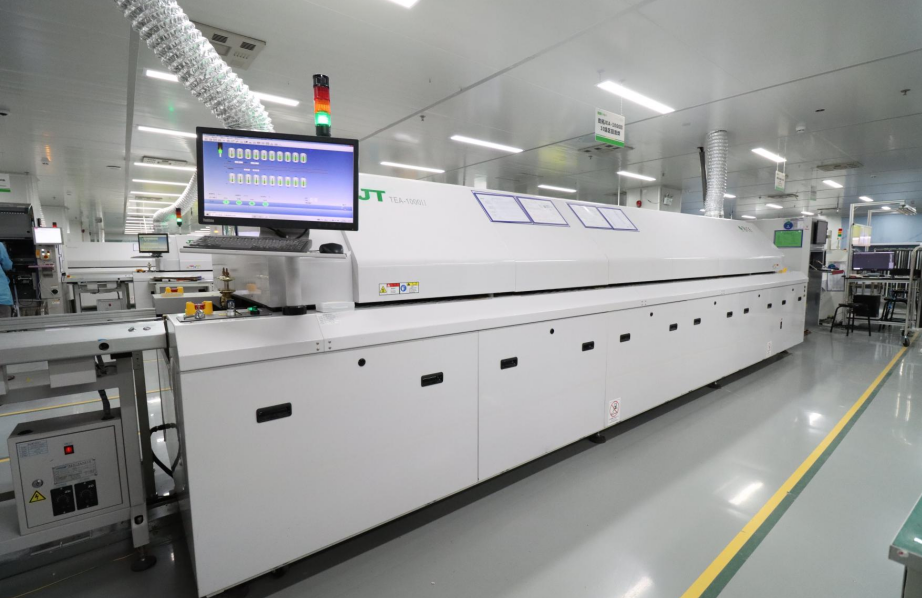
In the rapidly advancing world of electronics manufacturing, Surface Mount Technology (SMT) stands as a cornerstone, enabling the production of smaller, faster, and more reliable devices. At the heart of a successful SMT assembly process lies the critical reflow soldering stage, whose quality is predominantly governed by its Reflow Profile. This article provides a professional, in-depth exploration of the reflow soldering profile, its necessity, key zones, and best practices for achieving superior soldering results.
Why the Reflow Profile Determines SMT Assembly Quality
Stable and defect-free SMT assembly heavily depends on optimizing the reflow profile—a precise thermal process that governs how solder paste transitions from solid to molten and finally to a stable joint structure. So why is profile reflow so important for the quality of SMT assembly? Here are some answers.
Controls Solder Joint Formation:
A precise reflow profile ensures the solder paste transitions smoothly through preheat, soak, and liquidus phases, forming strong, reliable solder joints.
Prevents Common SMT Defects:
Proper thermal management reduces cold solder joints, tombstoning, solder bridging, and voiding, ensuring electrical and mechanical integrity.
Balances Thermal Stress for Components:
Modern PCBs include components with varying sizes and thermal masses. An optimized profile prevents overheating of small, sensitive parts while ensuring adequate heating of larger components.
Ensures Flux Activation:
Correct temperature ramps and soak times allow flux to remove oxides efficiently, improving solder wetting and adhesion to pads and leads.
Improves Process Consistency and Yield:
Standardized reflow profiles enable repeatable results across batches, reducing rework and increasing overall production yield in high-volume SMT assembly.
Supports High-Reliability PCBA:
A well-engineered reflow profile ensures that every solder joint is defect-free, forming the foundation for high-performance, reliable PCBA products.
Four Core Zones of an Effective Reflow Profile
An optimized reflow temperature curve consists of four thermal zones—Preheat, Soak, Reflow, and Cooling. Each plays a critical role in shaping solder joint integrity.
1. Preheat Zone: Controlled Thermal Ramp-Up
The Preheat Zone gradually increases temperature from ambient to ~150°C at a controlled rate of 1.0–3.0°C/s. This phase:
Gently drives out solvents and volatiles from the solder paste
Prevents solder spattering and solder ball formation
Reduces thermal shock to sensitive components
Ensures consistent preparation for flux activation
This zone establishes the baseline thermal stability for the entire reflow profile.
2. Soak (Thermal Equalization) Zone: Flux Activation and Temperature Uniformity
Within the Soak Zone, the board remains between 150°C and 190°C for 60–120 seconds. Its purposes include:
Equalizing temperature across components with varying thermal mass
Ensuring complete flux activation for oxide removal
Improving solder wetting and minimizing early defects
Helping reduce voiding through controlled solvent evacuation
A balanced soak stage is essential for mixed-technology assemblies and densely populated boards.
3. Reflow (Peak) Zone: The Critical Liquidus Phase
The Reflow Zone is the most important stage, where solder reaches a peak temperature approximately 20–30°C above its melting point. Typical lead-free SAC305 requires a peak of 240–250°C.
Key parameters include:
Time Above Liquidus (TAL): 45–90 seconds
IMC Formation: Stable intermetallic compounds form between component leads and pads
Wetting Quality: Controlled molten time ensures complete collapse and wetting
Insufficient heat leads to cold solder joints, while excessive heat or TAL risks component damage and accelerated intermetallic growth.
4. Cooling Zone: Solidifying Solder Joint Reliability
The Cooling Zone quickly drops the PCB temperature at ?2°C to ?4°C per second. Proper cooling:
Produces fine-grain solder microstructures
Improves tensile strength and fatigue resistance
Minimizes excessive intermetallic growth
Prevents thermal stress cracking
Fast and controlled cooling ensures stable, high-quality solder joints.
Advanced Process Considerations for Optimizing the Reflow Profile
Thermal Profiling for Complex PCB Assemblies
Boards containing both thermally massive components and micro-components require precision tuning of:
Soak duration
Peak temperature limits
Ramp rates tailored to heat-sensitive LEDs or plastics
Nitrogen Reflow for Enhanced Soldering Quality
Reflowing in a nitrogen (N?) atmosphere enhances:
Solder wetting
Reduction of oxidation
Lower voiding rates, especially under BGAs
Improved surface finish for no-clean processes
Defects Prevented by an Optimized Reflow Profile
A properly tuned reflow profile helps mitigate:
Tombstoning – caused by uneven heating or pad imbalance
Solder bridging – linked to insufficient peak temperature or long preheat
Voids – often tied to inadequate flux activation or improper soak time
Each defect type correlates strongly with specific profile misconfigurations.
Conclusion: Partner With PCBGOGO for Precise Reflow Profile Engineering
An optimized reflow profile is fundamental to achieving high-yield, high-reliability SMT manufacturing. It requires in-depth knowledge of solder alloy behavior, component sensitivity, thermal conduction paths, and profiling equipment.
PCBGOGO provides professional PCBA and SMT manufacturing backed by advanced reflow ovens, real-time thermal profiling systems, and experienced engineering teams. Whether you need lead-free reflow, complex mixed-technology assembly, or precision thermal tuning, PCBGOGO delivers the expertise and process control needed to produce reliable, defect-free solder joints for your products.