日本語
日本語
 한국어
한국어

Is Nitrogen Reflow Soldering Essential for High-Reliability PCBA?
In modern Surface Mount Technology (SMT), the reflow soldering process is paramount to the final quality and reliability of the Printed Circuit Board Assembly (PCBA). As electronic products become denser and quality requirements escalate (especially in automotive, medical, and aerospace sectors), standard air reflow is often insufficient. Manufacturers increasingly turn to Nitrogen Reflow Soldering—the process of introducing nitrogen gas (N2) into the oven's heating and cooling zones.
This technique creates an inert atmosphere, which is critical for mitigating defects and achieving the stringent quality standards required for demanding applications. Understanding the profound impact of Nitrogen Reflow Soldering is vital for any professional involved in Electronics Manufacturing Services (EMS).
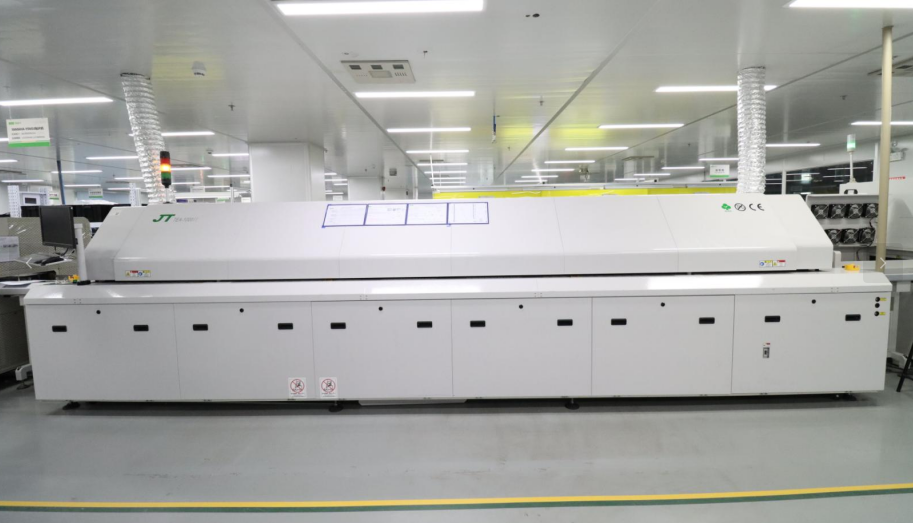
How Nitrogen Reflow Soldering Enhances Weld Quality
Nitrogen (N2) is an inert gas that fundamentally alters the chemical environment within the reflow soldering oven. This change leads to several key improvements over traditional air reflow:
1. Minimizing Oxidation During Heating
The most crucial benefit of Nitrogen Reflow Soldering is its ability to displace oxygen (O2) from the furnace chamber.
Mechanism: Nitrogen, being inert and denser than oxygen, blankets the PCB and components, significantly reducing the concentration of oxygen and other contaminants.
Result: This atmosphere prevents the oxidation of solder paste, component leads, and copper pads at high temperatures, ensuring cleaner, more reliable metallurgical bonds.
2. Enhancing Solder Wetting and Flow
Nitrogen improves the physical properties of the molten solder.
Mechanism: The inert environment decreases the surface tension of the molten solder. This allows the flux within the solder paste to work more efficiently, improving its wettability and flow characteristics.
Result: The liquid solder is able to "climb" the component leads (wicking) more effectively, resulting in brighter, more uniform, and well-formed solder joints.
3. Reducing Voiding (Solder Joint Porosity)
Voiding, or trapped gas pockets within the solder joint, is a major concern for high-reliability assemblies, particularly those with Ball Grid Array (BGA) components. * Mechanism: By isolating the solder paste from moisture and air, Nitrogen Reflow Soldering facilitates the accelerated expulsion of volatile compounds and water vapor from the paste during the reflow stage.
Result: This leads to a substantial reduction in the void rate (porosity) of the final solder joint, which is directly linked to higher mechanical strength and improved thermal and electrical performance.
Cost vs. Capability: Weighing the Trade-Offs
While the quality advantages of Nitrogen Reflow Soldering are clear, its implementation involves trade-offs that must be considered during the PCBA Manufacturing strategy phase:
The decision to utilize this technology must be based on a comprehensive assessment of the product's performance requirements, acceptable failure rates, and cost sensitivity.
Conclusion: Partnering with PCBGOGO for Advanced Reflow Soldering
Nitrogen Reflow Soldering is a powerful tool in the SMT technician's arsenal, offering definitive advantages in joint strength, aesthetics, and overall PCBA reliability—especially for complex or demanding electronics. While it introduces higher costs and complexity, the quality assurance it provides is indispensable for mission-critical applications.
If you require advanced, high-reliability PCBA Manufacturing that utilizes optimized Nitrogen Reflow Soldering processes and precise temperature control, look no further. PCBGOGO employs cutting-edge equipment and rigorous process control to ensure your assemblies meet the most rigorous industry standards, guaranteeing quality from the reflow soldering stage onwards.
Contact PCBGOGO today to discuss your project specifications and secure a quote for high-quality, high-reliability PCBA services.