日本語
日本語

How to Solve Insufficient Solder Paste Issues on SMT Production Lines?
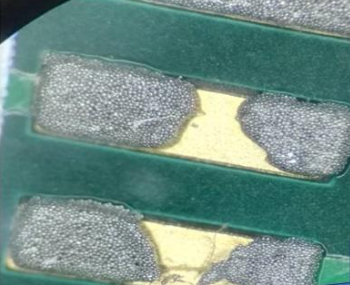
One of the most common challenges that can disrupt a smooth SMT production line is "Insufficient Solder Paste" or missing solder paste. This defect occurs when solder paste fails to transfer from the stencil to the PCB pads, leading to weak joints or open circuits.
Solving this issue requires a deep dive into stencil design, machine parameters, solder paste quality, and PCB layout. This guide explores the root causes and provides practical solutions to eliminate solder paste skipping in SMT processing.
Insufficient Solder Paste Causes and Solutions
1. Stencil Quality and Design
The stencil (or steel mesh) is the primary tool for solder paste deposition. If the stencil is flawed, the print will be as well.
Incorrect Aperture Sizes: If the openings in the stencil don't match the PCB pads, the paste cannot release smoothly.
Inappropriate Stencil Thickness: A stencil that is too thick may hold onto the paste (clogging), while one that is too thin won't provide enough volume.
Insufficient Tension: Over time, stencils lose their "spring." Low tension causes the stencil to sag or deform, leading to gaps between the mesh and the board.
Solutions:
Ensure the stencil apertures are laser-cut with precision and feature smooth internal walls to facilitate paste release.
Select the optimal thickness based on the smallest component pitch on your board.
Regularly monitor stencil tension and replace aging mesh to maintain a flat, tight printing surface.
2. Printer Parameter Settings
Even with a perfect stencil, incorrect settings on the solder paste printer can cause skipping.
Excessive Printing Speed: If the squeegee moves too fast, the solder paste doesn't have enough time to "roll" and fill the stencil apertures completely.
Low Squeegee Pressure: If the pressure is too light, the squeegee won't wipe the stencil clean, or it won't force the paste through the openings down onto the pads.
Solutions:
Calibrate the printing speed to allow the paste to fill the apertures uniformly.
Adjust squeegee pressure to ensure a clean sweep across the stencil surface without "scooping" the paste out of the holes.
3. Solder Paste Consistency
The chemical and physical properties of the solder paste are vital for a successful print.
Improper Viscosity: Paste that is too dry or too thick won't flow into small apertures. Conversely, paste that is too thin may bleed or slump.
Uneven Metal Content: Low-quality paste with inconsistent particle sizes can lead to clogging and skipping.
Solutions:
Use high-quality solder paste with a viscosity suited to your specific environmental temperature and humidity.
Perform regular quality checks and ensure the paste is properly thawed and stirred (if required) before use.
4. PCB Design and Surface Issues
Sometimes the problem isn't the process, but the board itself.
Poor Pad Design: If pads are too small or spaced awkwardly, the stencil cannot form a proper seal against the PCB.
PCB Warpage: If the PCB is not perfectly flat, there will be a gap between the stencil and the board in certain areas, causing the paste to skip those pads entirely.
Solutions:
Optimize your PCB design at the CAD stage to ensure pad dimensions follow standard DFM (Design for Manufacturing) guidelines.
Select high-quality PCB substrates with excellent flatness to ensure a tight seal during the printing stroke.
Conclusion
Solving Insufficient Solder Paste requires a holistic approach: maintaining equipment, optimizing parameters, selecting premium materials, and ensuring smart PCB design. By addressing these four areas, manufacturers can significantly increase their first-pass yield and reduce rework costs.
For high-quality results, partnering with a reliable manufacturer is key. PCBGOGO provides professional SMT assembly services with rigorous quality control at every step—from stencil tension checks to automated solder paste inspection (SPI)—ensuring your project is built to perfection.