日本語
日本語
 한국어
한국어

How to Prevent PCB Warpage During Reflow Soldering?
Printed Circuit Boards (PCBs) serve as the fundamental structural and conductive backbone for all electronic products. Much like the foundation of a building, the integrity of the PCB is non-negotiable. A critical challenge faced in surface mount technology (SMT) assembly is maintaining the board's dimensional stability, particularly when subjected to the extreme heat of the reflow soldering oven. PCB Warpage—the undesirable deformation (bending and twisting)—is a common defect that can severely compromise component placement, solder joint reliability, and the overall functionality of the final PCBA. Understanding the causes and mitigation strategies for PCB Warpage is paramount for high-yield manufacturing.
Root Causes of PCB Warpage
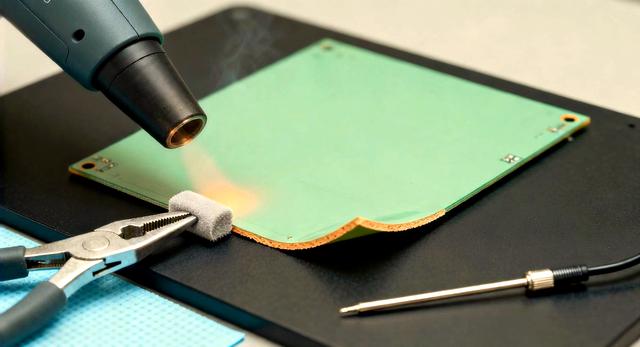
PCB Warpage arises primarily due to the complex interplay of thermal stress, material properties, and manufacturing practices. The main factor is the mismatch in the Coefficient of Thermal Expansion (CTE) between the copper layers, prepreg (resin), and fiberglass matrix of the laminated board material. When exposed to the high temperatures of the reflow oven (often exceeding 240℃), this CTE mismatch generates internal stress, leading to bending and twisting.
Key Strategies for Mitigating PCB Warpage
Preventing PCB Warpage requires a holistic approach, starting from material selection and extending through careful handling and process control during assembly.
1. Pre-Baking Treatment and Moisture Control
The Problem: PCBs are hygroscopic, meaning they absorb moisture from the surrounding air. If a PCB is exposed to ambient conditions for an extended period (e.g., more than 24 hours after being opened), the absorbed moisture rapidly turns to steam during the intense heat of reflow soldering. This internal pressure causes the layers to delaminate or the board to swell and warp.
Proactive Strategy: All unsealed or exposed PCBs must undergo baking treatment (dehumidification) prior to SMT assembly. The duration of the bake depends on the exposure time and board thickness, but generally involves heating the boards at a controlled low temperature to expel trapped moisture. This eliminates the risk of swelling, cracking, and moisture-induced PCB Warpage.
2. Utilizing High-Tg Material
The Problem: The Glass Transition Temperature ($\text{Tg}$) of a laminate material is the point at which its polymer matrix transitions from a rigid, glass-like state to a softer, rubbery state. Standard $\text{Tg}$ boards have lower heat resistance. During reflow, if the oven temperature exceeds the $\text{Tg}$, the board softens significantly, making it highly susceptible to deformation under its own weight or internal stress.
Proactive Strategy: For high-layer count boards or those subjected to multiple reflow cycles (double-sided assembly), utilizing High-Tg materials is essential. These materials maintain higher rigidity and thermal stability at elevated temperatures, dramatically reducing the risk of PCB Warpage.
3. Optimizing Board Thickness and Construction
The Problem: Thinner PCBs inherently have lower mechanical rigidity. When a large, thin panel is heated, it lacks the structural support to counteract the internal thermal stress, resulting in severe sagging or twisting.
Proactive Strategy: For large or heavy-component designs, increasing the overall PCB thickness improves the mechanical stiffness and support. Additionally, balancing the copper distribution across all layers helps equalize thermal stress, which is a key principle in reducing PCB Warpage.
4. Panelization Design and Stress Management
The Problem: When multiple small boards are paneled (arrayed) together for assembly, large panel sizes introduce greater surface area and weight, which can increase overall panel sag. Furthermore, unequal stress distribution across the panel due to routing patterns can exacerbate bending.
Proactive Strategy: Reduce the number of boards in the panel (decreasing the panel size). More importantly, the use of SMT carrier fixtures (or pallets) is highly recommended. These fixtures match the contour of the PCB and provide crucial rigid support during conveyor travel and reflow, preventing the panel from bowing under gravity and heat.
PCBGOGO's Guarantee Against PCB Warpage
In summary, preventing PCB Warpage is an integrated effort involving strict moisture control via pre-baking, careful material selection (especially High-Tg laminates), optimized design for increased mechanical rigidity, and the use of stabilizing fixtures during the reflow process. Successfully mitigating this defect is vital for ensuring high yields and long-term product reliability.
At PCBGOGO, we prioritize dimensional stability across all PCBA projects. We adhere to strict pre-assembly baking protocols and offer a range of high-performance laminate materials, including High-Tg options, tailored to meet the thermal demands of your specific application. Furthermore, for large or thin boards, we routinely employ custom-designed reflow soldering fixtures to ensure maximum planar stability throughout the high-temperature cycle. Place a quote or contact us to get high-quality PCB boards now!