日本語
日本語
 한국어
한국어

How to Prevent PCB Panel Cracking in Consumer Electronics
As consumer electronics continue their rapid evolution toward thinner, lighter, and smaller devices, PCB thickness has shrunk from the traditional 1.6 mm to 0.8 mm—or even 0.4 mm in ultra-thin designs. With this trend, panel cracking during depaneling has become a critical reliability challenge. Industry data shows that thin PCB panel cracking rates typically reach 5%–8%, and one TWS earphone manufacturer once reported 30% corner-cracking during mass production due to stress concentration during board separation—resulting in more than USD $200,000 in losses.
PCB cracking is not just a cosmetic defect. It can cause circuit fractures, impedance discontinuity, and transmission failures, ultimately degrading product reliability. With deep manufacturing experience in thin PCBs, PCBGOGO applies structural optimization, precise process control, and high-toughness materials to keep panel cracking rates below 0.1%.
This article combines IPC-6012 and IPC-2221 design guidelines with PCBGOGO’s practical engineering experience to present a complete, end-to-end reliability design framework for preventing cracking in thin PCB panels used in consumer electronics.
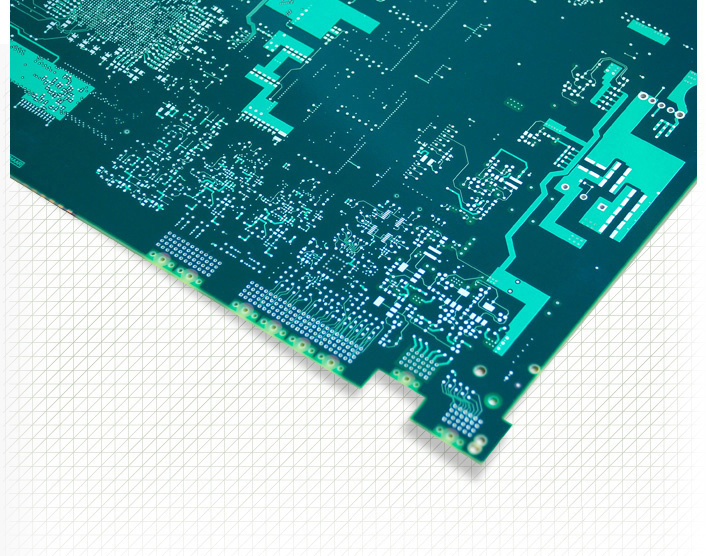
1. Root Causes of PCB Panel Cracking
Panel cracking in thin consumer-electronics PCBs typically originates from three key factors:
1. Structural design issues
Sharp corners on the PCB outline
Uneven or narrow tab-routing bridges
Asymmetric panel layout causing unbalanced stress
These all lead to stress concentration during separation.
2. Improper manufacturing process parameters
Excessively deep V-cut scoring
High-speed mechanical cutting
Aggressive drilling parameters
Improper machining introduces large mechanical stress into the panel.
3. Material mismatches in thin-PCB applications
Using rigid FR4 materials on ultra-thin boards
Poor flexural strength or low fracture elongation
These cause cracks when bending or separating the panel.
2. Core Reliability Principle: Stress Dispersion + Anti-Crack Reinforcement
Reliable panel design integrates three pillars:
? Structural Optimization — Spread Stress
Use rounded corners, uniform tab bridges, and optimized panel layouts to prevent localized stress buildup.
? Process Optimization — Reduce Mechanical Stress
Control cutting speed, V-cut depth, and drilling parameters to minimize stress introduced during manufacturing.
? Material Optimization — Increase Toughness
Use high-toughness FR4 or high-flex materials that withstand bending and depaneling without cracking.
3. How PCBGOGO Ensures Ultra-Low Panel Cracking Rates
PCBGOGO uses an integrated reliability framework across structure, process, and material selection:
Structural Optimization
Intelligent paneling software auto-adjusts corner radii, tab routing geometry, and bridge uniformity
Avoids sharp edges and stress concentration zones
Process Optimization
CNC routing with low-speed cutting ≤50 mm/s
V-cut depth controlled precisely to 1/3–1/2 of board thickness
High-precision equipment ensures ±0.05 mm scoring tolerance
Material Optimization
Recommended high-toughness materials include:
Shengyi S1130 (high-flex FR4)
Rogers RO4350B (flexible high-frequency substrate)
These materials deliver ~30% higher bending strength than standard FR4.
4. Practical Implementation Guide for PCB Panel Reliability Design
4.1 Structural Design Optimization: Minimize Stress Concentration
Key actions
Replace sharp edges with ≥1.5 mm radius corners
For thin PCBs (≤0.8 mm), prioritize tab routing with mouse-bite holes
Keep tab routing bridge width consistent at 0.4–0.5 mm
Hole-to-hole spacing: 1.2–1.5 mm
For V-cut panels: depth = 1/3 of board thickness
(e.g., 0.8 mm board → 0.27 mm depth)
Standard reference: IPC-2221 Section 7.5.1
4.2 Process Optimization: Minimize Mechanical Stress During Manufacturing
Routing process
CNC routing speed: ≤50 mm/s
Feed rate: ≤0.1 mm/tooth
Low-speed cutting reduces impact stress.
V-cut scoring
Depth tolerance: ±0.05 mm
Angle: 45°–60°
Ensures uniform stress during separation.
Drilling
Use step-drilling: pilot hole → final diameter
Reduces one-time drilling stress.
Equipment
CNC router: ≥10,000 rpm spindle
High-precision V-cut machine
All parameters comply with IPC-6012.
4.3 Material Optimization: Improve Toughness and Crack Resistance
Recommended for thin PCBs (0.4–0.8 mm):
Shengyi S1130
Bending strength: ≥500 MPa
Fracture elongation: ≥2%
Recommended for high-frequency thin PCBs:
Rogers RO4350B
Bending strength: ≥450 MPa
Thermal stability: ≥280°C
Copper thickness
Use 1 oz (35 μm) instead of 2 oz
Improves flexural resistance by ~25%
Reference standard: IPC-4101
4.4 Environmental Protection Measures: Prevent Secondary Cracking
Environmental and handling stress can cause delayed cracking. Recommended measures:
Apply conformal coating ≥50 μm along PCB edges
Perform edge deburring after depaneling
Use ESD bubble wrap + rigid carton to prevent shipping stress
Follow IPC-CC-830 for conformal coating application
5. Summary: Four Key Strategies for Preventing Panel Cracking
To ensure high reliability in thin consumer-electronics PCBs:
Structural Design
Avoid sharp corners
Use mouse-bite tab routing for thin boards
Process Control
Control routing speed and V-cut depth
Minimize manufacturing stress
Material Selection
Choose high-toughness FR4 or flexible substrates
Environmental & Handling Protection
Add edge coating, deburring, and proper packaging
PCBGOGO: Full-Stack Support for Thin-PCB Panel Reliability
PCBGOGO ensures cracking-free thin PCB manufacturing through:
Intelligent paneling tools with automatic stress-optimized layouts
High-precision V-cut and CNC routing equipment across four factories
Certified material library including Shengyi, Rogers, ITEQ, and more
Free prototyping service for 0.4–0.8 mm thin PCBs, allowing engineers to validate panel reliability before mass production
As consumer electronics move toward flexible, wearable, and foldable designs, PCBGOGO also offers FPC panel reliability guidelines. Our flexible-circuit paneling technology supports repeated bending and maintains cracking rates below 0.05%—ideal for next-generation wearables.