日本語
日本語
 한국어
한국어

How to Control Copper Balance in Multilayer PCB Production?
Even when copper balance is well controlled during the PCB design stage, warpage and delamination can still occur during mass production. The reason is simple: copper balance is not purely a design issue—it is equally a manufacturing execution problem.
From substrate pretreatment to lamination and post-processing, every production step influences how well copper balance is realized in the final multilayer PCB. This article explains how to translate copper-balanced designs into stable, repeatable production results from a production and process control perspective.
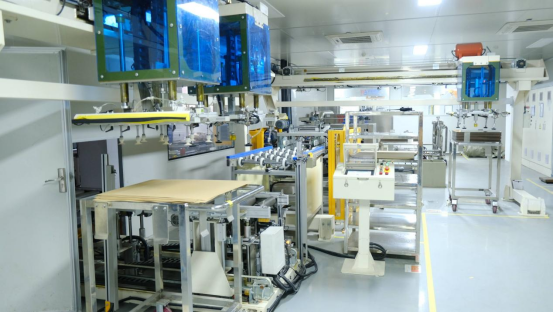
The Core Challenge in Production: Turning Designed Copper Balance into Reality
A perfectly balanced copper layout on design drawings does not guarantee a flat, reliable PCB if production parameters are poorly controlled. Issues such as uneven lamination temperature, inconsistent pressure, or inadequate substrate pretreatment can amplify copper imbalance effects.
Based on PCBGOGO’s production experience, effective copper balance control in manufacturing depends on three principles:
Reducing process variables
Ensuring uniform stress distribution
Maintaining precise temperature control
Copper Balance Control Techniques Across the Production Process
1. Substrate Pretreatment: Building a Stable Foundation
Multilayer PCB substrates (FR-4, high-Tg materials) inherently contain internal stress. Without proper pretreatment, this stress combines with copper imbalance stress during lamination, significantly increasing warpage risk.
PCBGOGO standard practices include:
Bake substrates at 120°C for 4 hours after cutting to release internal stress
Controlling cutting dimensional accuracy to ±0.1 mm to prevent lamination misalignment
Avoiding mixed substrate batches, as different batches exhibit different thermal expansion coefficients
In one case, a customer mixed substrates from different suppliers for convenience. Although the copper balance design met requirements, the final warpage rate exceeded 5%. The issue was resolved after switching to a single substrate batch.
2. Layer Stacking and Positioning: Ensuring Symmetrical Alignment
If symmetrical layers shift during stacking, copper balance is lost—even if the design itself is correct.
Key control points in production:
Use high-precision positioning pins with a tolerance ≤ ±0.02 mm
Strictly follow the designed stacking sequence; symmetrical layers must not be reversed
Apply pre-pressing after stacking:
Pressure: 0.5 MPa
Temperature: 80°C
Purpose: Initial bonding to reduce displacement during lamination
3. Lamination Process Control: Temperature and Pressure Are Critical
Lamination is the most important step for realizing copper balance. Uneven heating or insufficient pressure leads to uneven stress release and board deformation.
PCBGOGO reference lamination parameters:
Heating rate: 5°C/min to avoid localized overheating
Peak temperature:
FR-4: 170–180°C
High-Tg boards: 180–200°C
Hold time: 90–120 minutes for full resin curing
Pressure: 1.5–2.0 MPa, applied evenly
Cooling rate: 3°C/min, natural cooling to prevent secondary stress
In one subcontracted production case, increasing the heating rate to 10°C/min caused a 6-layer PCB—originally copper-balanced by design—to warp by over 0.7 mm. Restoring standard parameters reduced warpage to <0.2 mm.
4. Post-Processing Control: Minimizing Secondary Stress
Operations after lamination can still disrupt copper balance stability.
Recommended practices include:
CNC forming for cutting, with cutting speed controlled at 50 mm/s to avoid thermal stress
Step drilling:
Drill pilot holes first
Follow with finished holes to reduce localized stress concentration
Fast Troubleshooting Methods for Copper Balance Issues in Production
When warpage or delamination occurs, production teams can quickly isolate the root cause using a three-step approach:
Check the design
Copper area difference between symmetrical layers ≤ 10%
No isolated copper islands
Check the process
Review lamination temperature and pressure curves for fluctuations
Check the substrate
Confirm substrate batch consistency and pretreatment compliance
PCBGOGO operates a Copper Balance Anomaly Rapid Response Mechanism, enabling root cause identification within 2 hours, preventing large-scale production losses.
Conclusion: Copper Balance Requires Both Design and Production Discipline
Copper balance in multilayer PCBs is driven by design and manufacturing together. Design establishes the theoretical balance, while production determines whether that balance is successfully realized.
For production supervisors, controlling substrate pretreatment, stacking accuracy, lamination parameters, and post-processing steps is sufficient to maximize copper balance effectiveness in mass production. When in-house troubleshooting reaches its limits, experienced manufacturers like PCBGOGO can provide process-level optimization and customized PCB solutions to ensure stable, high-yield production.