日本語
日本語

How does Double-Sided SMT PCB: Practical Techniques to Maximize Space in Compact Electronics
In today’s electronics market, miniaturization and lightweight design are no longer optional—they are competitive requirements. From smartphones and smartwatches to portable medical devices and wireless earbuds, products are expected to be smaller, thinner, and easier to carry, while still integrating more functions than ever before.
This creates a familiar challenge for engineers: The component count keeps increasing, but PCB size must shrink.
One of the most effective and proven solutions is double-sided SMT PCB assembly. By utilizing both sides of the board for component placement, designers can significantly increase space efficiency without compromising performance or reliability. Based on real production experience, the following practical techniques explain how double-sided SMT helps products “slim down” in real-world applications.
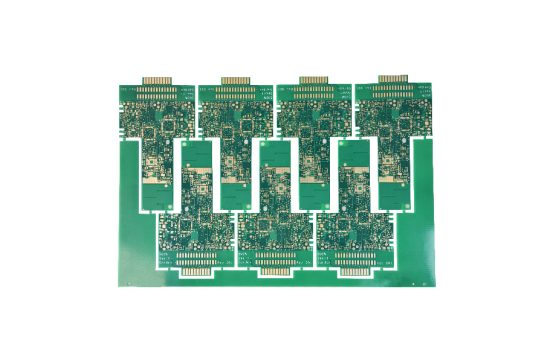
1. Functional Zoning on Both Sides: Use Space Without Creating Interference
The essence of double-sided SMT is space reuse, but effective reuse requires structure—not random placement.
A best practice is functional zoning:
Top side: core ICs, processors, high-frequency and signal-sensitive components
Bottom side: passive components such as resistors, capacitors, inductors, and power-related devices
This approach improves space utilization while maintaining signal integrity and thermal balance.
For example, in a smartwatch PCB design, placing the MCU and display driver on the top layer leaves sufficient clearance for the screen module, while power management ICs and passive components are distributed on the bottom side. This avoids stacking height issues and supports a thinner final product.
At PCBGOGO, DFM review plays a critical role at this stage. Layout optimization focuses on:
Distributing heat-generating components across both sides to prevent local hot spots
Separating high-frequency and low-frequency circuits to reduce crosstalk
Optimizing panelization to improve material utilization, often reaching up to 90%, which indirectly helps reduce board dimensions
2. Ultra-Small Components and High-Precision Placement Create Extra Space
Board layout alone is not enough. Component selection and placement accuracy directly determine how small a PCB can be.
Double-sided SMT supports ultra-small packages such as 01005 components, which occupy less than half the area of traditional 0402 parts. When applied across a dense design, this alone can reduce component area by approximately 30%, freeing valuable board space.
High placement accuracy is equally important. With advanced SMT equipment, placement tolerances can be tightly controlled, allowing:
Smaller component-to-component spacing (down to 0.2 mm)
More compact routing without sacrificing manufacturability
In one wireless earbud project, a customer aimed to reduce PCB size from 20 × 30 mm to 15 × 25 mm. This was not achievable with a single-sided board. By switching to double-sided SMT, moving passive components to the bottom side, and adopting 01005 packages, the target size was achieved without redesigning the entire circuit. Online AOI inspection ensured placement accuracy, and mass production yield remained stable above 99%.
3. Mixed Assembly Processes Eliminate the Need for Extra Adapter Boards
Many compact products require both SMT components and through-hole parts, such as connectors, sensors, or test interfaces. With single-sided boards, designers often resort to:
Enlarging the PCB
Adding an adapter or daughter boards
Both approaches increase size and assembly complexity.
Double-sided SMT enables mixed assembly:
One side assembled by reflow soldering (SMT components)
The opposite side is assembled using wave soldering or selective soldering for through-hole components
This integration removes the need for additional boards and directly reduces overall product volume.
A portable glucose meter project is a typical example. The original single-sided design required a long rectangular PCB to accommodate a test-strip connector. After switching to a double-sided SMT design, the connector was placed on the bottom side while SMT components remained on the top. The PCB became square instead of rectangular, reducing overall board area by 24% and simplifying enclosure assembly.
Final Thoughts: Space Efficiency Comes from Control, Not Compromise
The real value of double-sided SMT PCB assembly lies in controlled space optimization, not simply placing more parts on the board. When combined with:
Functional zoning
Ultra-small components
High-precision placement
Mixed assembly processes
Engineers can achieve smaller, thinner designs without sacrificing reliability or manufacturability.
If your product is constrained by limited space and growing component density, double-sided SMT is often the most practical path forward. PCBGOGO provides end-to-end support—from DFM layout optimization and component selection guidance to precision assembly and fast-turn prototyping—helping you validate compact designs quickly and move to production with confidence.