日本語
日本語
 한국어
한국어

FPC Cracking: Why It Occurs and How to Prevent?
FPC cracking, primarily caused by material fatigue, stress concentration, and improper manufacturing, can be prevented by using Adhesionless (2L) Base Materials, selecting Rolled Annealed (RA) Copper, and implementing Rounded Trace Transitions. Reducing copper thickness to 9μm/12μm and utilizing Laser Cutting instead of mechanical punching significantly enhances flexural endurance for wearable electronics.
Understanding the Root Causes of FPC Cracking
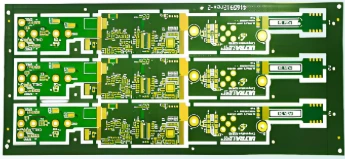
Flexible Printed Circuits (FPC) are designed to bend, but they are not indestructible. When an FPC fails in a wearable device, it is usually due to a fracture in the copper foil or a crack in the polyimide (PI) substrate.
Material Limitations
Standard FPC materials often utilize adhesive-based laminates. Under repeated stress, the acrylic adhesive layer can become brittle, leading to delamination and subsequent copper fracture.
Mechanical Stress Concentration
Sharp angles in trace routing act as "stress risers." When the FPC bends, the energy concentrates at these sharp points rather than distributing across the surface, causing the copper to snap.
Manufacturing Defect Propagation
Micro-cracks at the edges of the FPC, often caused by dull mechanical punching dies, can propagate inward during use. These tiny imperfections are the starting point for total circuit failure.
Next, we will explore ultimate solutions for Flexible PCB cracking based on these 3 key cracking reasons one by one.
Material Selection: Which is better for Durability?
The choice of raw materials is the single most important factor in determining the "flex life" of your circuit.
Transitioning to Adhesionless (2L) FCCL
Unlike 3-layer laminates, 2-layer (Adhesionless) Flexible Copper Clad Laminates eliminate the adhesive layer. This results in a thinner, more flexible stack-up that reduces the internal strain during bending.
RA Copper vs. ED Copper
Rolled Annealed (RA) copper has a grain structure that runs horizontally, making it much more resilient to bending than Electro-Deposited (ED) copper, which has a vertical grain structure prone to vertical cracking.
High-Flex Polyimide Substrates
Selecting high-performance PI (such as DuPont Kapton) ensures that the base membrane can withstand millions of cycles without losing its structural integrity or becoming brittle at extreme temperatures.
Structural Design Optimization: How to Minimize Mechanical Stress?
Engineering the layout with bending in mind can increase the lifespan of a wearable device from months to years.
The Rule of Rounded Traces
Never use 90-degree or even 45-degree angles in the bend area. Use Circular Arcs for all trace transitions to ensure that stress is distributed evenly across the copper width.
Implementing the Neutral Axis Principle
The goal of a durable FPC design is to keep the copper layer as close to the Neutral Axis (the center of the stack-up where stress is zero) as possible. This is achieved by balancing the thickness of the base PI and the Coverlay.
Optimized Copper Thickness
In the world of FPC, thinner is almost always better for bending. Moving from 18μm to 9μm/12μm copper can increase the bend cycles significantly because the outer fiber stress is significantly reduced.
Advanced Manufacturing Processes: How to Prevent Fractures?
Even a perfect design can fail if the fabrication process introduces physical vulnerabilities.
Laser Cutting vs. Die Punching
Mechanical punching creates rough edges and micro-fractures. Laser Cutting provides a clean, burr-free edge that prevents cracks from initiating at the periphery of the board.
Surface Treatment Selection
Avoid Electroless Nickel Immersion Gold (ENIG) in high-flex areas if the nickel layer is too thick, as nickel is inherently brittle. Organic Solderability Preservatives (OSP) or thin Electroless Nickel Electroless Palladium Immersion Gold (ENEPIG) are preferred for their ductility.
Controlled Etching Quality
Over-etching or under-etching can create "notches" in the copper traces. Precise chemistry control ensures smooth trace sidewalls, which are less likely to develop fatigue cracks.
PCBGOGO: Your Partner in High-Reliability FPC Solutions
As a leading global PCB manufacturer, PCBGOGO specializes in solving the industry's toughest FPC challenges. We understand that for wearable technology, a single crack means a failed product.
How PCBGOGO Resolves FPC Cracking Pain Points:
-
Premium Material Sourcing: We provide authentic 2-layer Adhesionless FCCL and RA copper options specifically for high-flex applications.
-
Precision Laser Processing: Our state-of-the-art laser cutting equipment ensures every FPC edge is perfectly smooth, eliminating the risk of edge-initiated cracking.
-
DFM Support: Our engineers review your design to identify stress concentration points, suggesting radius optimizations before production begins.
-
Strict Quality Control: Through E-testing and micro-sectioning, we ensure that the copper thickness and plating quality meet the highest reliability standards.
Use our online flexible PCB price calculator to get an instant quote for your FPC projects, and we promise to provide high-quality boards and considerate service.
FAQ: Common Questions About FPC Cracking
Why did my FPC break after only a few hundred bends?
This is likely due to using ED copper instead of RA copper, or having the copper traces too far from the Neutral Axis. If the bend radius is too tight for the total thickness of the board, failure occurs rapidly.
Does adding a stiffener help prevent cracking?
A stiffener prevents bending in a specific area. If the crack is occurring at the transition between the flexible part and the stiffener, you may need a PI Stiffener with a graduated thickness or a "soft" transition design to avoid a sudden stress pivot point.
What is the minimum bend radius for a standard FPC?
For a single-sided FPC, the general rule is a minimum bend radius of 6x the total thickness. For double-sided FPCs, it is 10x the thickness. Going below these ratios significantly increases the risk of FPC Cracking.
Is OSP better than Gold plating for flexible circuits?
For the bending zone itself, OSP is excellent because it adds no brittle metal to the copper. If soldering is required nearby, Chemical Tin or ENIG with controlled nickel thickness are viable, but OSP remains the most flexible option.