日本語
日本語

Does Copper Balance Increase Cost or Hurt Performance in Multilayer PCBs?
“Will proper copper balance increase PCB cost?”
“Does copper compensation affect signal integrity or thermal performance?”
These are common concerns—and understandable ones. Copper balance is often viewed as a trade-off between cost and performance. In reality, when done correctly, copper balance reduces total cost and improves overall PCB reliability.
The key is not whether to do copper balance, but how to do it efficiently.
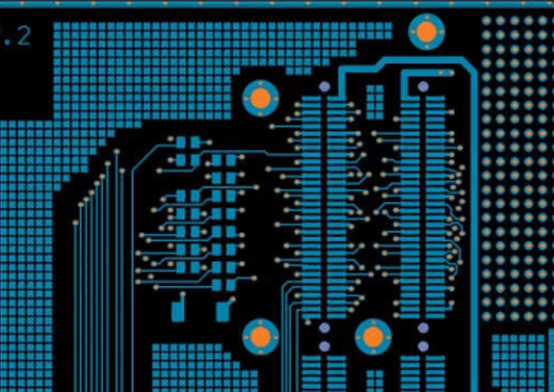
Copper Balance Does Not Mean Higher Cost
A common misconception is that adding copper for balance automatically increases material cost. In practice, the added copper volume is minimal.
For example, on a 100 mm × 100 mm, 6-layer PCB, copper compensation usually increases total copper area by less than 5%. Spread across each board, the material cost difference is almost negligible.
What is expensive is rework.
Copper imbalance is a leading cause of:
PCB warpage
Layer separation
Assembly failures
In mass production, rework rates caused by warpage can reach 20–30%, and a single rework cycle often costs more than ten times the price of proper copper balance during design.
One PCBGOGO customer skipped copper balance to “save cost” on an 8-layer board. In the first 1,000-unit build, 28% failed flatness inspection, resulting in over USD 20,000 in losses. After optimizing copper balance, defect rates dropped below 0.5% in later batches.
Proper copper balance can also improve material utilization. More uniform copper distribution often allows tighter panelization, increasing output per laminate and reducing cost per board.
Copper Balance and Performance Can Improve Together
Another concern is that copper compensation may negatively affect electrical or thermal performance. This only happens when compensation is done incorrectly.
When designed properly, copper balance supports performance rather than degrading it.
High-Speed and High-Frequency Signals
Using hatched (grid) copper instead of solid pours increases copper area while minimizing parasitic capacitance and inductance. In an 8-layer 5G board, grid copper compensation reduced crosstalk by around 20% compared to solid copper fills.
Thermal Performance
Even copper distribution improves heat spreading and prevents localized hot spots. Internal testing shows that multilayer PCBs with balanced copper can achieve 15–20% better thermal efficiency than boards with uneven copper distribution.
Mechanical Reliability
Balanced copper significantly reduces warpage and delamination, improving mechanical stability. In automotive and industrial environments with vibration or temperature cycling, product lifespan can increase by 30% or more.
By contrast, copper imbalance can directly impact performance. One server motherboard design experienced impedance deviations beyond ±6% due to uneven copper distribution, forcing a redesign and delaying product launch.
Three Practical Ways to Balance Cost, Copper, and Performance
1. Design Stage: Achieve Balance at the Lowest Cost
Extend existing copper areas (such as power or ground regions) before adding new pours
Avoid over-optimization—if the copper difference is already below 10%, further adjustment brings little benefit
Use CAD automation tools (for example, automatic copper balancing in Altium Designer) to save engineering time
2. Material Selection: Match the Laminate to the Application
Standard FR-4 is sufficient for consumer electronics and general industrial products
For high-frequency or high-temperature applications (5G, automotive), use high-Tg, low-loss materials such as Shengyi S1130 or Rogers RO4350B
These materials better tolerate internal stress and reduce risk from copper imbalance, lowering long-term reliability costs
PCBGOGO typically recommends material and copper balance strategies based on the product’s operating environment—not just board complexity.
3. Production Stage: Standard Processes Save Money
Well-balanced designs can use standard lamination parameters, avoiding extra energy and process time
During volume production, optimized panelization improves material usage while maintaining consistent copper balance across all boards
Copper Balance Is Not a Trade-Off—It’s an Optimization
Copper balance in multilayer PCBs is not a choice between cost and performance. It is a design optimization problem where the right decisions deliver both.
Done correctly, copper balance:
Reduces scrap and rework
Improves electrical and thermal performance
Enhances long-term reliability
Lowers total manufacturing cost
The goal is simple: spend less where it doesn’t matter, and design smarter where it does.
If you’re unsure how to balance copper distribution, cost, and performance in your next design, a professional DFM review—such as those provided by PCBGOGO—can help identify risks early and prevent expensive surprises later.