日本語
日本語
 한국어
한국어

Common Misconceptions About Copper Balance in Multilayer PCBs
As a PCB manufacturing and DFM specialist, one issue I encounter repeatedly is multilayer PCB warpage caused by poor copper balance—often due to assumptions that “seem reasonable” but are technically incorrect.
Statements like “the copper areas look similar,” “adding copper will always help,” or “it’s only a 4-layer board, copper balance isn’t critical” are far more damaging than many engineers realize. These misconceptions may pass prototype validation but often lead to sharp yield drops in mass production.
Below, we break down the most common copper balance myths—and explain the correct engineering approach.
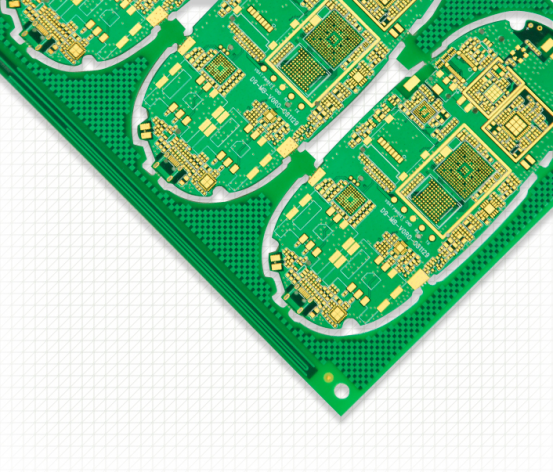
Misconception 1: “As Long as the Copper Area Is Similar, Precision Doesn’t Matter”
Many engineers rely on visual judgment or assume that a 15–20% copper area difference is acceptable. In reality, once copper imbalance exceeds a certain threshold, PCB warpage risk increases exponentially.
PCBGOGO internal production data (6-layer boards):
10% copper difference → 0.1% warpage rate
15% copper difference → 0.3% warpage rate
20% copper difference → 0.8% warpage rate, far exceeding the common 0.3 mm flatness limit
Correct Practice
Use PCB design tools to quantitatively calculate copper area
Keep the copper area difference between symmetrical layers within 10%
Avoid subjective visual estimation
If time is limited, submitting the design for a free DFM review allows automated copper balance analysis without manual calculation.
Misconception 2: “More Copper Pour Is Always Better for Balance”
A common reaction to imbalance is to aggressively add solid copper pours—especially on signal layers. However, excessive or poorly planned copper compensation can introduce new risks:
Large solid copper areas reduce heat dissipation, increasing cold solder joints
On high-speed signal layers, excessive copper increases parasitic capacitance, degrading signal integrity
Isolated solid copper regions bond poorly with the dielectric, increasing the risk of blistering or delamination during lamination
Correct Practice
Apply moderate and intentional copper compensation
Prefer hatched (grid) copper pours with a pitch of 0.8–1.2 mm
Always connect the compensation copper to the ground or power planes
Avoid sensitive signal routes and high-frequency areas
Real case:
A customer added a 10 mm × 10 mm solid copper block on a 4-layer signal layer to improve balance. During mass production, 30% of the boards delaminated. After switching to grounded grid copper, the issue was fully resolved.
Misconception 3: “4-Layer Boards Don’t Need Copper Balance”
Because 4-layer PCBs have simpler stackups, many engineers assume copper balance is optional. In practice, the opposite is true. With fewer layers, copper imbalance has a more direct mechanical impact. Significant copper differences between top and bottom layers frequently lead to warpage, affecting:
Through-hole insertion
Connector alignment
Automated soldering quality
PCBGOGO production statistics show:
Copper imbalance accounts for ~25% of defects in 4-layer boards
Second only to high-density multilayer PCBs (6+ layers)
Correct Practice
All multilayer PCBs require copper balance, regardless of layer count
For 4-layer boards, pay special attention to:
Top vs. bottom layers
L2 vs. L3 symmetry
Maintain copper area difference within 10%
Misconception 4: “Only Copper Area Matters—Distribution Is Secondary”
This is one of the most overlooked mistakes. Two layers may each have 50% copper coverage, but if copper is concentrated on opposite sides of the board, localized stress imbalance still occurs during lamination.
This often results in:
Localized warpage
Edge lifting
Partial deformation rather than uniform bending
Correct Practice
Control both the copper area and the copper distribution
Use copper density heatmaps available in most PCB CAD tools
Aim for even copper dispersion across the entire panel, not clustered regions
Misconception 5: “Manufacturing Process Adjustments Can Fix Copper Imbalance”
Some engineers assume that lamination pressure, temperature, or process tuning can compensate for design flaws. In reality:
Process optimization can only provide minor mitigation
When the copper imbalance exceeds 20%, no lamination adjustment can reliably prevent warpage
Correct Practice
Copper balance is primarily a design responsibility
Manufacturing processes are supportive, not corrective
A well-balanced design will pass production using standard, stable processes
Final Takeaway: Copper Balance Is a Design Discipline, Not a Guess
Most copper balance problems stem from:
Incomplete understanding of lamination mechanics
Overconfidence based on prototype success
Underestimating mass-production sensitivity
The key principles are simple but non-negotiable:
Quantitative copper analysis
Controlled, functional copper compensation
Uniform distribution
Design-stage validation
If there is any uncertainty, engaging a professional DFM review team—such as PCBGOGO—early in the design phase is far more cost-effective than rework or scrap after mass production. In PCB manufacturing, fixing copper balance upfront is always cheaper than fixing warpage later.