日本語
日本語
 한국어
한국어

Choosing the Right Material for an EMI Shielding Cover
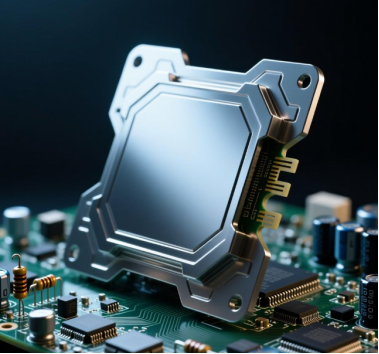
Selecting the foundation for an EMI shielding cover is a balancing act between environmental protection and electrical performance. A high-quality shield must resist atmospheric decay while maintaining its ability to block electromagnetic interference over the long term.
To choose correctly, engineers must evaluate the operating environment, corrosion resistance requirements, shielding effectiveness, and budget. Below is an analysis of common materials and surface treatments to help you optimize your hardware design.
1. Selecting the Base Material
Cold-Rolled Steel
This is the most cost-effective option and offers strong electromagnetic protection. However, its natural resistance to moisture is very poor, making it highly susceptible to rust. It is only suitable for dry, indoor environments and must be paired with a protective surface treatment. At PCBGOGO, we advise against using untreated steel for outdoor or high-humidity boards.
Stainless Steel (304/316)
Stainless steel is significantly more durable than cold-rolled steel. Grade 304 is the standard for humid environments, while Grade 316 is engineered to withstand salt spray and acidic/alkaline exposure, making it the premier choice for marine and industrial applications. While durable, its conductivity is lower than copper, which can slightly reduce shielding effectiveness.
Copper Alloys (Brass, Phosphor Bronze)
Copper alloys provide the highest level of conductivity and signal protection. Brass is generally corrosion-resistant, and phosphor bronze offers superior mechanical hardness for snap-on designs. However, copper can oxidize into "verdigris" (green oxidation) over time. These materials are best for high-frequency applications but require specialized plating to remain reliable.
2. Vital Surface Treatment Processes
Surface treatments are the primary defense for an EMI shielding cover, enhancing the durability of the base metal.
Zinc Plating: A budget-friendly layer that provides basic rust protection for steel. However, it can develop "white rust" in humid conditions and has low resistance to chemical exposure.
Nickel Plating: A dense, hard-wearing layer that offers excellent corrosion resistance and enhances electrical contact. It is the most versatile choice for consumer and industrial electronics. PCBGOGO recommends nickel plating for its balance of cost and performance.
Nickel-Gold (ENIG) Plating: This involves a layer of gold over nickel. Because gold is chemically inert, it will not oxidize, providing the highest level of corrosion protection and conductivity. It is the standard for medical, aerospace, and high-reliability precision devices.
Passivation: Used primarily for stainless steel, this chemical treatment creates a transparent oxide film that boosts the metal's natural resistance to harsh chemicals.
3. The "Environment Matching Principle"
To simplify your selection, our engineers recommend matching the material to the intended application:
Conclusion
Your choice of material must align with the overall PCB assembly strategy. For example, an EMI shielding cover with a nickel-gold finish ensures a low-resistance connection at the grounding points, which is essential for high-speed data integrity. In contrast, simpler zinc finishes require careful attention to prevent oxidation at the contact interface over time.
At PCBGOGO, we provide professional manufacturing and DFM (Design for Manufacturability) guidance to ensure your EMI shielding cover stands up to the toughest environments. By selecting the right material and plating today, you prevent costly field failures tomorrow.