日本語
日本語

A Practical Guide to SMT Stencil: Types, Working Principles, and How to Choose
If you've ever marveled at the miniature components precisely placed on a modern Printed Circuit Board (PCB), you're looking at the results of a sophisticated process. And the unsung hero that makes it all possible is the SMT stencil. This essential tool ensures that solder paste—the "glue" that holds Surface Mount Technology (SMT) components in place—is applied with surgical precision.
What Is an SMT Stencil and Why Does It Matter in PCB Assembly
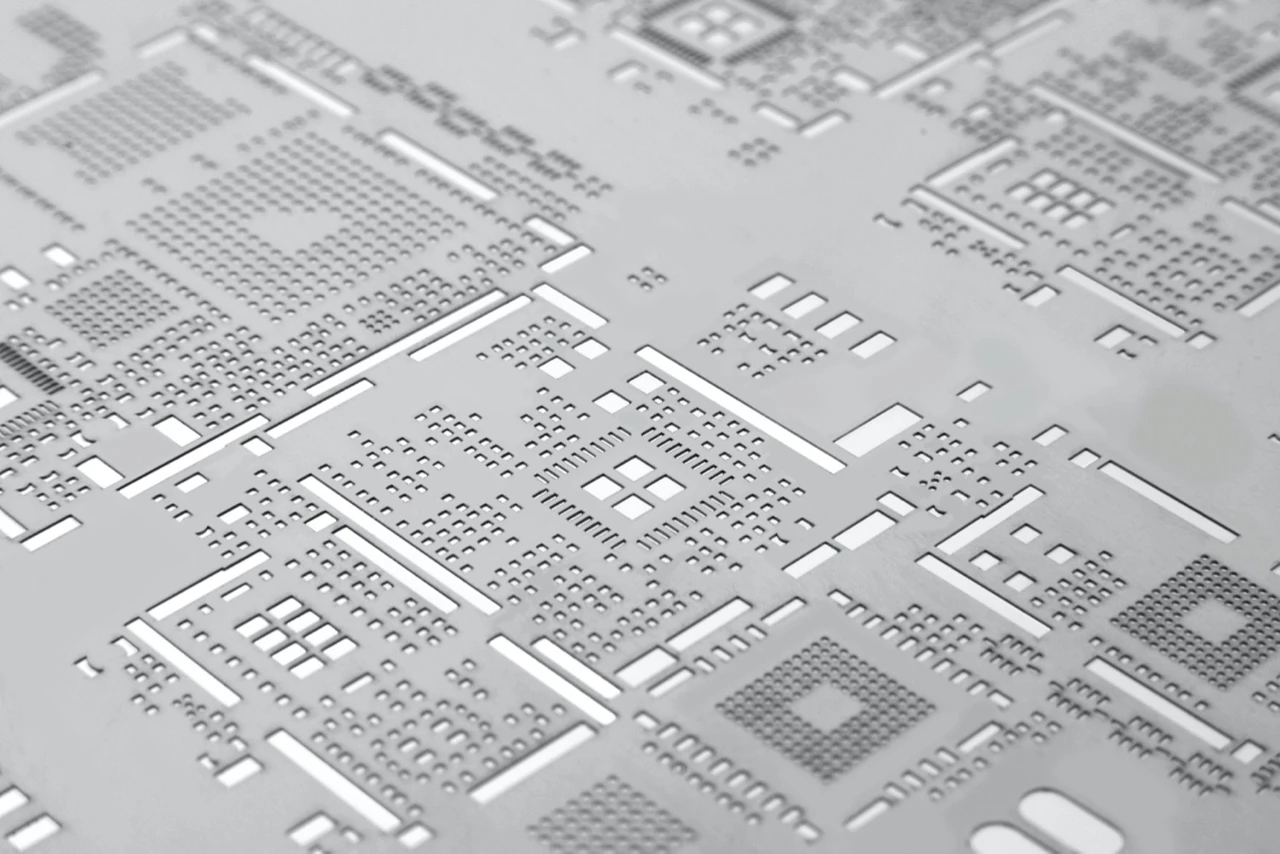
An SMT stencil is basically a thin sheet, typically made of stainless steel, with tiny, highly accurate openings (apertures) corresponding exactly to the solder pads on your bare PCB. Its sole purpose is to transfer a controlled amount of solder paste onto those pads.
Why does it matter so much? In high-volume or high-density PCB assembly, attempting to apply solder paste by hand is simply impractical, slow, and prone to costly defects like bridging or insufficient solder. The SMT stencil acts as a reliable, repeatable template.
Precision: It ensures the paste is only applied where components will be soldered.
Consistency: Every board gets the exact same volume and shape of solder deposit.
Speed: It allows for the rapid, automated application of paste across an entire board in a single pass.
Without a quality SMT stencil, achieving the perfect mechanical strength and electrical connectivity for your surface-mounted components would be nearly impossible.
Types of SMT Stencils: Introducing the Laser Cut Stencil
SMT stencils are primarily categorized by their manufacturing process and their mounting style.
Manufacturing Method Stencils:
Chemically Etched Stencils: These are an older, less precise method where the apertures are formed using acid etching. They're generally less costly but offer lower precision and can result in slightly rougher aperture walls, which can hinder the smooth release of the solder paste.
Laser Cut SMT Stencils: This is the industry standard and the best in terms of precision. A focused laser beam precisely cuts the apertures into the steel foil. This technique allows for smoother walls, tighter tolerances, and the ability to create smaller apertures for fine-pitch and BGA components. Opting for a top-tier SMT stencil manufacturer, like PCBGOGO, that uses modern laser cutting is a smart choice for better yield and reliability.
Electroformed Stencils: These are created through an additive nickel-based process, offering the smoothest aperture walls and the best paste release. They are typically the most expensive and used for extremely demanding, ultra-fine-pitch applications.
Mounting Style Stencils:
Framed (or "Glue-In") Stencils: The stencil foil is permanently stretched and bonded into a rigid metal frame. These are designed for automated screen printing machines and are used for high-volume manufacturing.
Frameless SMT Stencils: Also known as stencil foils or "re-work stencils," these are just the bare sheets of stencil material. They are designed to work with a reusable clamping system (a stencil fixture) and are often used for prototypes, small-batch runs, or when storage space is limited.
How an SMT Stencil Works
The process of using an SMT stencil is quite straightforward, yet incredibly effective:
Alignment: The SMT stencil is placed directly on top of the bare PCB. Registration points called fiducial marks on both the stencil and the board ensure a perfect, millimeter-precise alignment.
Paste Application: Solder paste, which is a viscous mixture of tiny solder balls and flux, is applied in a bead along one edge of the stencil.
Wiping (Squeegee): A metal squeegee blade (like a high-tech window wiper) passes across the stencil's surface. As the blade moves, it pushes the solder paste through the apertures and onto the exposed PCB pads below.
Separation: The stencil is then carefully lifted from the PCB. What remains is a perfectly patterned deposit of solder paste, ready for component placement.
This precise application is the core of the SMT assembly process. After the paste is printed, components are placed and the board goes through a reflow oven to melt the paste, forming permanent solder joints.
SMT Stencil Selection Guide
Selecting the right SMT stencil depends heavily on your project's volume, budget, and design complexity:
Pro Tip: If your board features fine-pitch components (pads close together, e.g., 0.5mm pitch or less) or BGAs, you absolutely need a high-quality laser cut SMT stencil with features like electropolishing. Electropolishing treats the aperture walls to make them smoother, greatly improving paste release for those tricky, tiny pads. Don't skimp on this part—it is a direct investment in your board's reliability!
Choosing the right SMT stencil and a reliable SMT stencil manufacturer is a fundamental step in achieving successful PCB assembly. It's the silent workhorse that guarantees the precision needed to bring your electronic designs to life.
Key Takeaway
In conclusion, the SMT stencil is far more than just a piece of metal—it is the foundational tool that guarantees the precision and reliability required for modern high-density electronics manufacturing. By ensuring the accurate and consistent application of solder paste, a high-quality laser-cut SMT stencil directly translates into higher yields and fewer assembly defects.
Whether you are prototyping with a frameless design or running mass production with a framed stencil, choosing a reliable partner is essential. We've highlighted that PCBGOGO provides not only comprehensive PCBA services but also the precise, high-quality laser stencils necessary to bring your most complex PCB designs from concept to reality with unmatched accuracy.